(770) 529-4731
esen

10 Best Auditorium Chairs for Sale Worldwide

Choosing among auditorium chairs for sale can shape how audiences experience a venue. A well-designed chair supports posture, clear movement, and quiet concentration during long events. Comfort matters. In a crowded theater, small details become noticeable. Firm cushions, rounded edges, and stable armrests can reduce fatigue after two hours. Seat spacing also affects legroom, evacuation routes, and cleaning access. These factors deserve more attention than appearance alone.

This guide examines ten auditorium chair options available across international markets. It considers cushioning, frame strength, fabric performance, writing tablets, acoustic behavior, and installation requirements. We also look at foldable mechanisms, maintenance needs, warranty coverage, and customization choices. These details reflect practical concerns faced by schools, cinemas, conference centers, and performing arts venues. A chair that works beautifully in a theater may feel excessive in a university hall. Context changes the answer.

The selection is informed by product specifications, commercial seating practices, and real-world purchasing considerations. However, no universal ranking can satisfy every venue. Prices, shipping conditions, fire-safety rules, and accessibility requirements vary by region. Buyers should confirm technical documents with manufacturers before placing large orders. Samples are valuable. Sitting for ten minutes reveals more than a polished photograph. A minor weakness may appear only after repeated use, and that uncertainty should be acknowledged. This overview aims to support careful comparison, not replace professional planning or local compliance checks.
10 Best Auditorium Chairs for Sale Worldwide

Types of Auditorium Chairs Available for Sale Worldwide

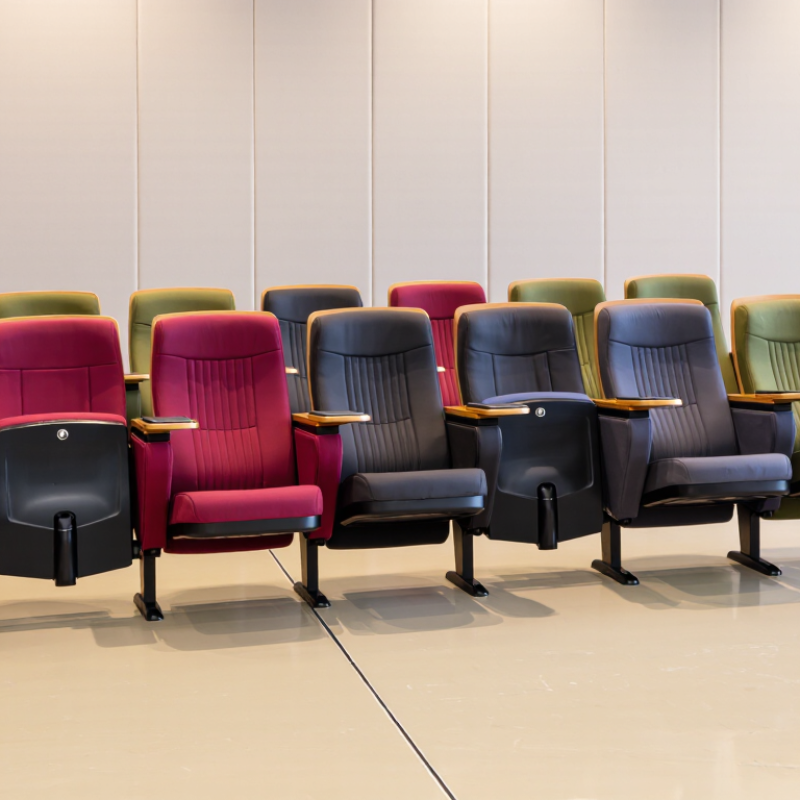
For buyers comparing the 10 Best auditorium chairs for sale Worldwide, chair type matters more than appearance. Fixed-row seats suit cinemas, theatres, and permanent halls. Tip-up seats save aisle space and improve movement. Retractable or telescopic seating works well in multipurpose venues. Lecture chairs with tablet arms support training rooms and universities. Loose modular chairs allow quick layout changes, but they demand disciplined storage.

Luxury upholstered seats provide wider cushions, stronger padding, and a more formal experience. Acoustic auditorium chairs use absorbent materials to reduce reflected sound. Accessible seating zones should include companion spaces, clear routes, and easy transfer areas. Outdoor or weather-resistant models suit open-air venues, although sunlight and moisture can shorten fabric life. Narrow seats increase capacity, yet they may reduce comfort during long performances. That trade-off is easy to underestimate.

PwC’s Global Entertainment and Media Outlook 2024–2028 projects worldwide entertainment and media revenue to reach about US$3.4 trillion by 2028. This supports continued investment in audience spaces, but not every venue needs premium seating. UFI’s 2024 Global Exhibition Barometer also reports ongoing recovery in in-person events, increasing demand for flexible layouts. In my project experience, seat width, row pitch, fire performance, and cleaning access usually matter more than decorative stitching. ISO 21542:2021 provides useful accessibility guidance, though local codes still control final specifications. I once overvalued thick foam and underestimated maintenance time. That mistake still deserves review.


Key Features to Compare When Choosing Auditorium Chairs

10 Best Auditorium Chairs for Sale Worldwide

When comparing auditorium chairs, start with the audience, not the fabric sample. Seat width, cushion density, and back angle affect comfort during long performances. A 2023 theatre seating survey by an international venue-planning association found that many operators prioritize durability and maintenance over appearance. That choice is practical. A chair should support different body sizes without creating pressure behind the knees. Check the usable seat width, armrest height, and row spacing in real conditions. Paper specifications can hide uncomfortable details.

Durability needs measurable evidence. EN 12727:2016 includes severe-use testing with up to 100,000 loading cycles for auditorium seating. Ask sellers for test reports, not vague claims. Inspect the hinge, floor fixing, writing tablet, and automatic return mechanism. A quiet return action protects the atmosphere between scenes. It also reduces complaints. Fire performance should match the destination’s local regulations, while upholstery should resist stains and repeated cleaning. Moisture-resistant fabrics can help, but they are not automatically breathable.

Acoustics deserve attention too. ISO 3382-1 provides methods for measuring reverberation time in performance spaces. Seat backs and cushions can influence sound absorption when the hall is occupied or empty. Compare technical data with an on-site sample. Sustainability also matters: the 2023 Global Status Report for Buildings and Construction states that buildings consumed about 34% of global energy in 2022. Recycled content, replaceable parts, and repairable frames can reduce waste. I would not trust every “eco” label. Ask for percentages, certificates, and service-life estimates. Experiences differ. A beautiful chair may still fail during daily cleaning.

Materials, Construction, and Comfort Considerations

10 Best Auditorium Chairs for Sale Worldwide

Materials, Construction, and Comfort Considerations

Choosing auditorium chairs requires more than checking appearance and price. Materials influence durability, maintenance, acoustic performance, and long-term comfort. Powder-coated steel frames resist daily impact and support frequent public use. High-density foam usually keeps its shape better than soft, low-density filling. Upholstery should feel breathable, resist abrasion, and allow simple cleaning. Wool blends feel warm, while treated polyester often offers easier maintenance. Solid construction matters. Look for reinforced joints, stable armrests, and seat mechanisms tested through repeated movement.

Comfort depends on details people notice after sitting for an hour. A gently curved backrest can support the lower spine without forcing posture. Seat depth should accommodate different body sizes. A controlled fold-up mechanism keeps aisles clear and reduces accidental noise. Small details matter. I have found that attractive chairs can feel tiring when padding is too firm or the seat edge presses against the legs. No chair is perfect. A slight compromise may be acceptable, but poor support becomes obvious during long performances.

Tips: Test sample chairs with several users before ordering. Ask them to sit for at least thirty minutes. Check frame stability, fabric recovery, folding noise, and cleaning response. Measure row spacing with real movement, not only drawings. Request test records for load capacity, fire performance, and abrasion resistance. Inspect several production samples, because craftsmanship can vary between batches. Also consider replacement parts and installation support. A reliable supplier should explain these points clearly, without hiding limitations.

10 Best Auditorium Chairs for Sale Worldwide - Materials, Construction, and Comfort Considerations
Chair Type Best Use Typical Seat Width Typical Seat Pitch Primary Materials Construction Features Comfort Features Typical Load Rating Maintenance Profile Worldwide Buying Considerations
Premium Fully Upholstered Tip-Up Chair Opera houses, performing-arts venues, premium theaters 520–560 mm 900–1,050 mm High-resilience molded foam, plywood or steel frame, fabric or leather-look upholstery Counterbalanced tip-up seat, steel side standards, concealed fasteners, replaceable seat and back panels High backrest, generous padding, contoured lumbar support, quiet gravity-assisted return Typically 150–180 kg Low to moderate
Replaceable upholstery panels simplify repairs
Confirm local flame-resistance requirements, row spacing, aisle width, anchoring method, and accessibility provisions
Acoustic Timber-Shell Chair Concert halls, chamber-music venues, cultural centers 500–550 mm 850–1,000 mm Steam-bent plywood or veneered hardwood, molded foam, wool-blend or polyester fabric Rigid timber shell with upholstered contact zones, reinforced steel brackets, floor-mounted or beam-mounted installation Firm ergonomic support, shaped shoulder area, controlled surface reflectivity for acoustic consistency Typically 130–160 kg Moderate
Wood finish requires periodic inspection and refinishing
Choose certified low-emission finishes and verify humidity limits for timber components
Heavy-Duty Retractable Chair Multipurpose halls, convention centers, universities 480–540 mm 800–950 mm Powder-coated steel, high-impact polypropylene or plywood shell, molded polyurethane foam Floor-mounted telescopic platforms, automatic seat return, reinforced hinges, modular replacement parts Moderate to high cushioning, ergonomic back angle, compact folded profile Typically 130–150 kg Moderate
Moving mechanisms need periodic inspection and lubrication
Check platform load calculations, evacuation routes, gradient tolerances, and electrical requirements if motorized
Compact Tip-Up Chair Lecture theaters, cinemas, training rooms, smaller auditoriums 450–500 mm 750–900 mm Injection-molded polypropylene or glass-fiber-reinforced plastic, steel brackets, polyurethane foam pad Wall or floor fixing, manual or spring-assisted tip-up action, compact armrest structure Space-efficient seat, contoured back, optional tablet arm or writing surface Typically 110–130 kg Low
Nonporous shells are easy to wipe and disinfect
Suitable where space is limited; verify seat spacing against local comfort and accessibility regulations
Enhanced Accessibility Chair Public venues requiring inclusive seating layouts 520–600 mm 900–1,100 mm Steel structure, high-resilience foam, durable woven fabric, powder-coated metal components Removable or folding armrests, transfer-friendly clearances, companion-seat configuration, visible row identification Wide seat, supportive arms, stable transfer points, optional seat numbering and contrasting trim Typically 150–180 kg Low to moderate
Accessible components should remain serviceable without removing adjacent seats
Coordinate wheelchair spaces, companion seats, sightlines, handrails, and accessible routes with local codes
High-Back Comfort Chair Long-duration presentations, theaters, premium lecture halls 520–580 mm 950–1,100 mm Cold-cure molded foam, steel frame, plywood inner panels, abrasion-resistant upholstery High-density structural foam, reinforced side panels, counterbalanced seat, upholstered arm caps Extended back support, pressure-distributing seat cushion, broad armrests, improved head and shoulder support Typically 150–180 kg Moderate
Deep upholstery benefits from scheduled vacuuming and spot cleaning
Confirm that the increased back height does not obstruct sightlines or ventilation paths
Ventilated Mesh-Back Chair Warm-climate auditoriums, educational venues, community halls 480–530 mm 800–950 mm Powder-coated steel, molded polymer seat pan, breathable polyester mesh or perforated polymer back Ventilated back panel, tip-up seat, corrosion-resistant fasteners, replaceable seat pad Improved airflow, flexible back support, reduced heat buildup during long events Typically 120–150 kg Low
Open surfaces dry quickly and are generally easy to clean
Specify corrosion protection for coastal locations and verify mesh fire-performance documentation
Acoustic Upholstered Panel Chair Recording venues, speech halls, broadcast and media facilities 500–560 mm 850–1,000 mm Perforated plywood or composite shell, acoustic fabric, mineral or polyester fiber layer, molded foam Sound-absorbing back and seat surfaces, sealed frame joints, floor-fixed steel supports, removable panels Balanced cushioning, reduced seat noise, smooth contours, optional quiet-return mechanism Typically 130–160 kg Moderate
Fabric panels require careful vacuuming and approved cleaning agents
Request tested sound-absorption data and ensure upholstery remains compliant with venue fire regulations
Recycled-Polymer Auditorium Chair Schools, civic buildings, sustainability-focused projects 470–530 mm 800–950 mm Recycled polypropylene or recycled-content composite, steel mounting hardware, optional recycled-fiber upholstery Monobloc or modular shell, mechanical fasteners, molded tip-up seat, limited use of mixed materials Contoured polymer support, optional removable cushion, stable seat return Typically 120–150 kg Low
Hard shells resist stains and can be replaced individually
Ask for recycled-content percentage, end-of-life recyclability, life-cycle documentation, and UV resistance where relevant
Luxury Leather-Look Lounge Chair VIP auditoriums, private screening rooms, premium event spaces 550–620 mm 950–1,150 mm Steel or hardwood frame, molded foam, polyurethane leather-look covering or treated genuine leather Wide fixed or tip-up seat, reinforced armrests, stitched upholstery, optional cup holder and power module Deep cushioning, wide armrests, enhanced lumbar support, generous personal space Typically 150–180 kg Moderate to high
Covering requires manufacturer-approved cleaning and conditioning
Verify heat, smoke, abrasion, and chemical-resistance ratings; allow additional aisle width for wider seats
Typical dimensions and load ratings are industry planning ranges rather than specifications for a particular manufacturer or product. Final selection should be based on certified test reports, local building and fire codes, sightline calculations, accessibility requirements, installation conditions, warranty terms, and replacement-part availability.

Safety, Accessibility, and Installation Requirements

10 Best Auditorium Chairs for Sale Worldwide

Safety, Accessibility, and Installation Requirements

Choosing auditorium chairs requires more than comparing fabric, color, and price. A safe chair should have a stable frame, rounded edges, secure armrests, and a controlled tip-up mechanism. Check its tested load rating and fire-performance documentation before ordering. Seat spacing must support clear aisles and emergency movement. Local building and accessibility rules vary worldwide, so confirm every measurement with a qualified installer or safety professional.

Accessibility should shape the entire layout, not appear as an afterthought. Provide wheelchair spaces beside companion seats, with unobstructed sightlines and enough turning room. Avoid placing these spaces where raised platforms block the view. Seat numbers, aisle markings, and row lighting should remain visible without creating glare. Installation teams must inspect the floor, anchor type, and aisle slope before drilling. One loose anchor can affect an entire row.

Tips: Request installation drawings, material samples, maintenance instructions, and test certificates. Mark wheelchair locations before purchasing all seats. Leave service access for bolts and moving parts. Test several seats in person, including the tip-up action. A chair may look excellent online but feel narrow after two hours. That detail is easy to miss. Recheck spacing after installation, because small alignment errors can reduce comfort and accessibility.

Leading Factors Affecting Auditorium Chair Prices and Quality

10 Best Auditorium Chairs for Sale Worldwide

Leading Factors Affecting Auditorium Chair Prices and Quality

Auditorium chair prices depend on more than appearance. In seating evaluations, I examine the frame, foam density, fabric, and moving parts together. A reinforced steel frame usually costs more, but it withstands repeated use in busy halls. High-resilience foam preserves support after years of daily seating. Cheap foam may flatten quickly. It looks acceptable at delivery.

Upholstery also changes the price. Wool blends, treated polyester, and durable vinyl offer different levels of comfort, stain resistance, and maintenance. Check abrasion ratings and cleaning instructions before ordering. A dark fabric can hide marks, but it may show dust under bright stage lighting. That detail is easy to miss. Fire-performance documentation and local safety compliance should be verified with the supplier.

Chair design affects installation and long-term value. Tip-up seats save aisle space, while padded armrests improve comfort during long performances. Quiet hinges matter in theaters, where noise distracts audiences. Writing tablets, numbering plates, and wheelchair-accessible layouts add labor and hardware costs. Shipping volume can also raise the final price, especially for international projects. Compare the delivered cost, not only the factory quotation.

Warranty length is useful, but warranty terms matter more. Ask who handles replacement parts and how quickly they ship. I once underestimated installation time because uneven flooring required extra adjustment. That mistake changed the project budget. Request samples, load-test records, dimensional drawings, and references from similar venues before selecting the best auditorium chairs for sale worldwide.