(770) 529-4731
esen

2026 Best Powder Pressing Machine Buying Guide?

Choosing the right Powder Pressing Machine in 2026 requires more than comparing pressure ratings or attractive price tags. Powder behavior, tooling design, production volume, and final part density must work together. A machine that performs well with ceramic powder may struggle with metal powders or fragile pharmaceutical-grade materials. The details matter.

Dr. Randall M. German, a respected powder metallurgy researcher, has emphasized, “Powder processing controls the final structure and properties.” This principle should guide every buying decision. A reliable buyer will inspect compaction force, filling accuracy, die alignment, press speed, control systems, and energy consumption. Ask for test results using your actual powder. Do not trust a polished brochure alone. Request density maps, cycle-time data, maintenance records, and references from comparable factories.

Look closely at the working area. Can operators clean the feed system without wasting material? Does the frame remain stable during repeated pressing? Small vibrations can create uneven density, visible cracks, or inconsistent dimensions. These defects may appear only after sintering, when correction becomes expensive.

Safety and service support also deserve attention. Guarding, emergency stops, dust control, training, spare parts, and remote diagnostics can influence long-term reliability. A cheaper Powder Pressing Machine may become costly when downtime and tooling changes accumulate. However, the most expensive model is not automatically the best choice. Your material, part geometry, and output target should decide.

This guide examines practical specifications, common mistakes, supplier questions, and ownership costs. Some recommendations remain conditional. Real production trials still matter. That is where confident assumptions often fail.
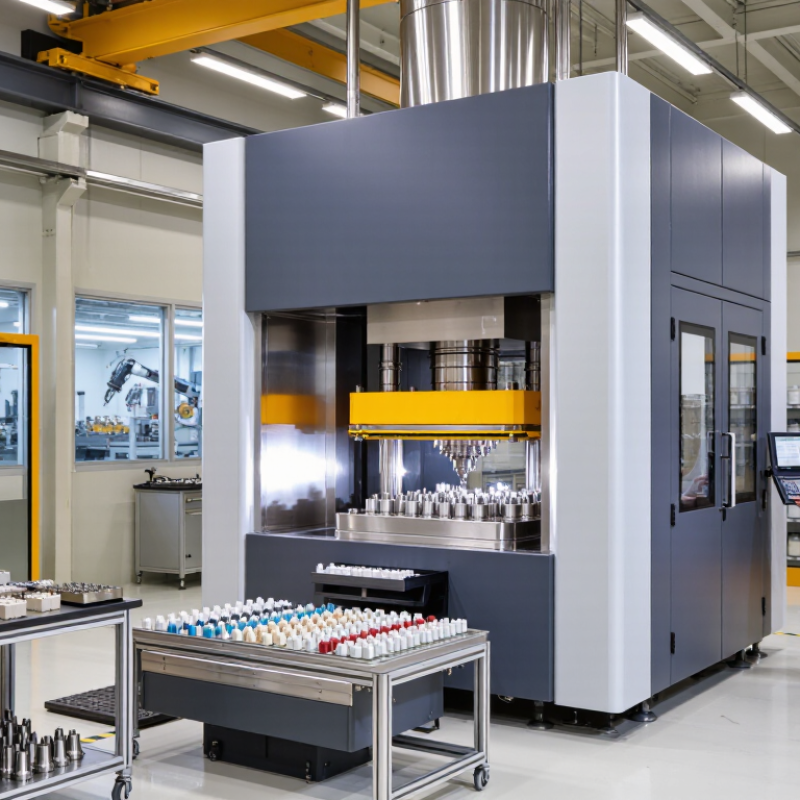
2026 Best Powder Pressing Machine Buying Guide?

What Is a Powder Pressing Machine?

A powder pressing machine compacts loose powder inside a shaped die. Pressure creates a “green compact,” which keeps its form before sintering or another finishing process. The machine does not melt the material. It controls force, movement, filling, and ejection.

Common systems use hydraulic, mechanical, or servo-driven presses. A typical cycle includes die filling, pre-compression, main pressing, and controlled release. Operators check powder flow, moisture, particle size, and lubrication because small changes can produce cracks or uneven density. The International Organization for Standardization describes apparent density testing in ISO 3923-1, showing why powder behavior matters before pressing. A dense-looking part can still be weak inside.

Industry demand is growing. Grand View Research valued the global powder metallurgy market at about USD 2.7 billion in 2023 and projected a 6% annual growth rate through 2030. Fortune Business Insights also identifies automotive, industrial, and electrical applications as major demand areas. These figures describe the wider market, not machine sales alone. That distinction is easy to miss.

Choosing equipment requires more than comparing maximum tonnage. Review die dimensions, target density, cycle speed, powder characteristics, and ejection control. In practical testing, a press may meet its rated force yet deliver inconsistent parts. That is a warning sign. Measure density at several locations, inspect edges under magnification, and record every setup change. Production data should guide the purchase, although early test results can still mislead when the powder blend changes.


2026 Best Powder Pressing Machine Buying Guide: What Is a Powder Pressing Machine?

A powder pressing machine applies controlled pressure to compact powdered materials into consistent shapes before sintering, heating, or further processing. The required pressure depends on the material, density target, tooling design, and product geometry.

The chart shows common industrial compaction-pressure ranges. Actual requirements vary by powder formulation, particle size, moisture content, tooling, and desired green density; confirm the specifications with your process engineer before purchasing.

How Does a Powder Pressing Machine Work?

A powder pressing machine converts loose metal, ceramic, or composite powder into a shaped “green compact.” The process begins when a feeder fills a hardened die cavity. Upper and lower punches then compress the powder, often under several hundred megapascals. Pressure moves through the powder unevenly, so density depends on particle size, moisture, lubrication, and fill accuracy.

The compact is ejected carefully. It remains fragile before sintering. Mechanical presses suit fast, repeatable production, while hydraulic presses provide better control for complex shapes and deeper compaction. According to the U.S. Department of Energy, powder metallurgy can achieve material utilization above 95%, reducing machining waste in suitable applications. The Powder Metallurgy Review also reports that modern compaction increasingly uses controlled filling and simulation to reduce density variation.

Real production is less tidy.

A small filling difference can create cracks, lamination, or weak edges. I would not judge a machine by rated tonnage alone. Check pressure uniformity, die guidance, ejection force, cycle stability, and powder recovery. Grand View Research projects continued growth in the global powder metallurgy market through 2030, driven by lightweight components and efficient material use. That growth may encourage faster equipment purchases, but speed can hide quality problems. Ask for trial pressing with your actual powder, target shape, and production cycle. Measure green density at several points, not only the final weight. A perfect-looking sample can still fail after sintering.

What Types of Powder Pressing Machines Are Available?

Powder pressing machines differ by force, motion, and production volume. The right type depends on powder flow, moisture, particle size, and required density. A hydraulic press applies controlled force through a single compression cycle. It suits prototypes, large components, and powders needing gradual pressure. Operators can adjust dwell time and pressure accurately. However, cycle speed is usually slower.

Mechanical eccentric presses use a moving punch and fixed compression path. They work well for repeated shapes and moderate production volumes. Rotary tablet presses use multiple punch stations around a rotating turret. This design supports continuous output and consistent dimensions. It also demands careful powder feeding. Poor flow may create weight variation between pieces.

Roller compaction machines compress powder between two rotating rolls. They produce ribbons or flakes before milling and sizing. This method can improve flow without adding liquid binders. Briquetting presses form larger blocks, often with shaped pockets and stronger compaction. Their performance depends heavily on die design and powder moisture. Small changes matter.

During testing, measure density at several points, not only the surface. Check press force, ejection behavior, tooling wear, and temperature. A powder may look stable during a short trial but behave differently after hours. That is easy to underestimate. I would also question laboratory results when the production powder has wider particle variation. Machine selection should follow documented trials, validated safety controls, and the actual material behavior.

How to Choose the Best Powder Pressing Machine in 2026?

Choosing the best powder pressing machine in 2026 starts with the material, not the advertised force. Test the actual powder. Particle size, moisture, flow, and binder content affect filling and compaction. Ask for sample trials using your intended mold, pressure range, cycle time, and target density. Measure weight variation, edge quality, cracks, and ejection force. A polished demonstration can hide difficult production problems.

Match the machine’s capacity to your real production needs. Higher tonnage may improve forming, but it can increase energy use and tooling stress. Check adjustment accuracy, pressure stability, mold compatibility, and changeover time. Servo control, pressure sensors, and production data logging can support consistent results. However, advanced controls are not automatically better if operators cannot use them confidently. Keep it practical.

Review guarding, emergency stops, noise levels, and dust-control provisions against local safety requirements. Request operating manuals, maintenance schedules, electrical documentation, and training records before purchase. Ask how quickly critical replacement parts can be supplied. A machine may be technically excellent yet unsuitable if service support is weak. I would also calculate total ownership cost, including tooling, electricity, lubrication, calibration, and downtime. My checklist is not perfect; unexpected powder behavior can still change the decision after installation. Observe a longer trial, not just one successful cycle.

2026 Best Powder Pressing Machine Buying Guide? - How to Choose the Best Powder Pressing Machine in 2026?

Practical comparison criteria and typical specification ranges for selecting a powder pressing machine in 2026.
Evaluation Dimension Typical Options or Data Range Recommended Selection Guidance Why It Matters
Machine Type Single-station, rotary, or hydraulic press Choose single-station equipment for development and low-volume work; rotary presses for continuous high-volume production; hydraulic presses for larger or difficult-to-compress parts. The machine architecture affects output, tooling flexibility, footprint, and operating cost.
Maximum Compression Force Approximately 5–100 tonnes for many laboratory and production presses; larger industrial systems can exceed this range. Select a rated force at least 20–30% above the calculated force required for the target part, while confirming the actual force per punch station. Insufficient force can cause low density, weak green strength, or incomplete forming.
Powder Compatibility Ceramic, metal, pharmaceutical, chemical, detergent, catalyst, and other free-flowing powders, subject to formulation and tooling compatibility. Verify powder flowability, moisture sensitivity, particle-size distribution, abrasiveness, and any hazardous classification before purchase. Powder behavior directly influences filling consistency, ejection, sticking, dust generation, and final density.
Part Size and Geometry Common press tooling supports small tablets, pellets, briquettes, inserts, and compacted components; maximum diameter and thickness depend on the die set and force rating. Define target diameter, thickness, aspect ratio, cavities, undercuts, embossing, and required tolerances before comparing machines. A machine may have adequate force but still be unsuitable if its die space or punch travel cannot accommodate the part.
Production Capacity Laboratory presses: typically intermittent and low volume; rotary presses: commonly hundreds to many thousands of pieces per hour, depending on tooling and cycle settings. Calculate capacity from effective cycles per hour, number of cavities, fill time, inspection time, cleaning, and expected equipment availability. Rated maximum speed is not the same as sustainable production output.
Density and Weight Control Look for adjustable fill depth, compression position, dwell time, pre-compression, and independent upper/lower punch control where required. For tight product specifications, prioritize closed-loop force or displacement monitoring and automatic rejection of out-of-range parts. Consistent powder filling and compression control improve weight, hardness, density, and dimensional repeatability.
Accuracy and Process Monitoring Basic mechanical adjustment; digital force display; programmable control; data logging and alarms on advanced systems. Choose programmable monitoring when batch records, traceability, statistical process control, or repeatable recipes are important. Recorded process data helps identify drift, reduce scrap, and support quality investigations.
Tooling Material and Changeover Tooling may use hardened tool steel, carbide, or specialized coated materials; changeover can range from manual replacement to guided quick-change systems. Match tooling hardness and coating to powder abrasiveness, corrosion risk, compression force, and cleaning requirements. Tool life, dimensional stability, and changeover time have a major effect on total operating cost.
Dust Control and Containment Open loading; local extraction; enclosed pressing zone; integrated dust collection; sealed or contained feeding systems. Use enclosed feeding and suitable extraction for fine, toxic, combustible, or cross-contaminating powders. Confirm the required workplace and process safety assessment. Effective containment protects operators, improves housekeeping, and reduces contamination and explosion risks.
Cleaning and Hygiene Manual cleaning; tool-free access panels; removable product-contact parts; wash-down or validated cleaning configurations. For pharmaceutical, food, or multi-product use, prioritize smooth accessible surfaces, minimal powder traps, documented cleaning procedures, and compatible materials. Fast, repeatable cleaning reduces downtime and the risk of cross-contamination.
Power and Installation Electrical requirements vary by force system, drive motor, heaters, dust extraction, and automation; compressed air may also be required. Confirm voltage, phase, frequency, air pressure, floor loading, ventilation, room classification, and access dimensions before ordering. A machine that cannot be safely installed or supplied at the site will not achieve its rated performance.
Safety Features Guard interlocks, emergency stops, overload protection, guarded moving parts, access monitoring, and fault alarms. Require a documented risk assessment and verify that guarding, control systems, and dust controls match the powder and production environment. Safety systems reduce injury risk and help support regulatory and workplace compliance.
Maintenance and Serviceability Routine inspection of punches, dies, bearings, lubrication points, seals, sensors, feeders, and drive components. Compare access to wear parts, maintenance intervals, diagnostic functions, spare-part availability, and technician training requirements. Serviceability affects uptime, maintenance labor, and the long-term cost of ownership.
Best Fit by Application Research and development; pilot production; medium-volume manufacturing; high-volume continuous production; large-format compaction. Select according to required throughput, product range, batch frequency, quality requirements, and expected future capacity—not only current demand. Correct application matching prevents overinvestment, bottlenecks, and premature replacement.
Total Cost of Ownership Purchase price plus tooling, installation, extraction, utilities, labor, cleaning, validation, maintenance, energy, spare parts, and downtime. Compare the estimated cost per acceptable part over the expected service life instead of comparing purchase prices alone. The lowest initial price may result in higher scrap, downtime, labor, or tooling expenses.
Selection note: The specification ranges above are typical industry reference points rather than guaranteed machine ratings. Final selection should be confirmed through powder trials, tooling tests, force calculations, site-safety review, and verification of the applicable local regulations.

How to Operate and Maintain a Powder Pressing Machine Safely?

Operating a powder pressing machine safely begins with preparation. Read the machine manual and the powder’s safety data sheet. Check guards, emergency stops, wiring, grounding, and dust extraction before loading material. Wear fitted eye protection, suitable gloves, hearing protection, and a properly selected respirator when required. Loose sleeves can catch quickly. Keep the work area dry and free from spilled powder.

During operation, use the approved die, correct tooling, and a controlled filling amount. Never reach into the pressing area while the machine is energized. Stop the cycle and isolate all power before removing a jam. Watch for unusual vibration, heat, noise, or uneven pressure. These signs often appear before serious damage. Experienced operators can still overlook a small powder buildup under the die. That mistake deserves a checklist, not confidence.

Tips: Clean contact surfaces after each production run, using methods approved for the powder. Avoid blowing dust into the air with compressed air. Inspect seals, punches, bolts, cables, and sensors on a scheduled basis. Record pressure settings, faults, cleaning times, and replaced parts. Lockout procedures should be clear and tested by trained personnel. If maintenance feels uncertain, stop and ask a qualified technician. A rushed repair may save ten minutes and create a much longer problem.