2026 Top Manual Ceramic Coffee Grinder Buying Guide
A Manual Ceramic Coffee Grinder can look simple: a handle, a ceramic burr set, and a small grounds cup. Yet those parts shape consistency, effort, and the taste in your mug. The National Coffee Association’s 2024 National Coffee Data Trends report found that 67% of U.S. adults had coffee in the previous day. That figure shows coffee’s everyday reach, but it does not measure manual-grinder sales. Buyers should not confuse broad coffee habits with proof of a specific product trend.
Coffee educator James Hoffmann has described the grinder as “the most important piece of equipment” in a coffee setup. That advice makes practical sense: uneven grounds can produce a cup that tastes both thin and bitter. Still, ceramic burrs are not automatically superior. They resist rust, but may chip if dropped, and grind quality depends on burr alignment and adjustment design. Small details matter.
This guide compares the features buyers can actually inspect: grind settings, handle comfort, capacity, cleaning access, and replacement-part availability. Picture turning a stiff handle before work, then brushing grounds from a narrow chamber. Those details affect daily use more than polished product claims. We will also distinguish useful specifications from vague promises, while noting where evidence is limited. A low price can be tempting. It is not a durability test. The best choice depends on brewing method, budget, and willingness to grind by hand.
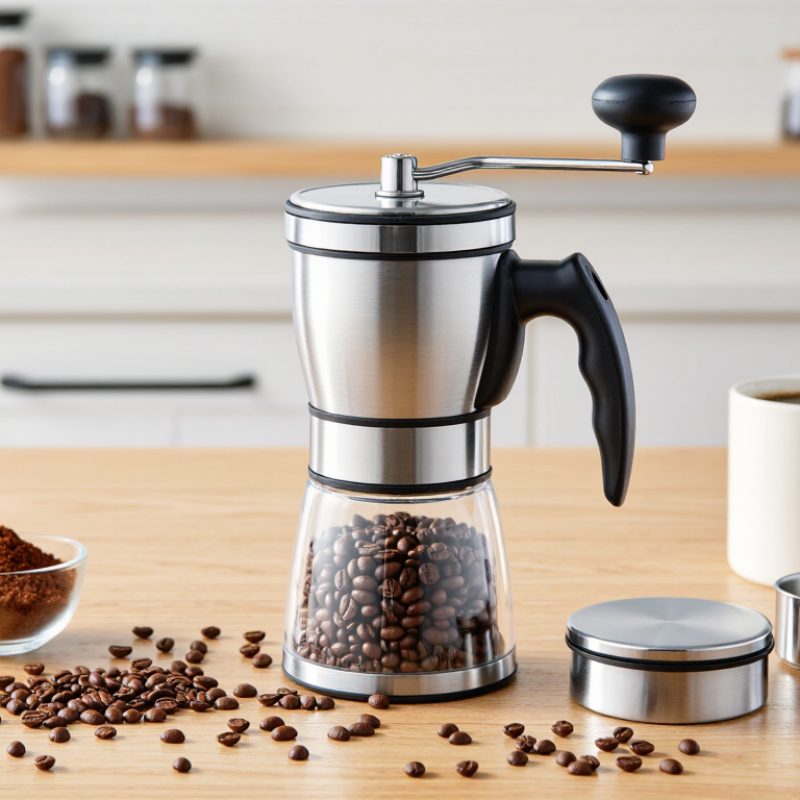
What Defines a Manual Ceramic Coffee Grinder?
What Defines a Manual Ceramic Coffee Grinder?
A manual ceramic coffee grinder uses hand power to turn burrs that crush beans into smaller particles. Unlike a blade grinder, it relies on two shaped surfaces rather than chopping blades. A crank, central shaft, adjustment mechanism, and grounds container complete the basic design. Ceramic describes the burr material, not the whole grinder. That distinction matters.
Burr shape and alignment influence how evenly beans are ground. A stable shaft helps keep the burrs centered as the handle turns. Adjustment steps let users choose coarser particles for immersion brewing or finer particles for espresso-style methods. Results still depend on bean freshness, brewing technique, and the grinder’s construction. Ceramic burrs are hard, but they are not unbreakable; a drop or trapped stone can cause damage.
The Specialty Coffee Association’s Brewing Control Chart places a commonly cited extraction-yield range at 18–22 percent, with total dissolved solids around 1.15–1.35 percent for brewed coffee. Those figures describe brew results, not a grinder’s guaranteed performance. A consistent grind can support more predictable extraction, but it cannot correct every brewing variable. Not magic. When assessing a grinder, check whether its adjustment feels repeatable and whether the handle turns smoothly under load. Even then, “ceramic” alone says little about grind consistency.
How Ceramic Burrs Grind Coffee Beans
In a manual ceramic-burr grinder, one burr stays fixed while the other turns with the handle. Beans travel between their ridged surfaces and are broken into smaller pieces. The gap between the burrs controls the grind: a narrow gap suits espresso-style brewing, while a wider setting works better for a French press. Turn the handle steadily. Go slowly. A smooth rhythm helps keep the grind more consistent than forcing the crank.
Ceramic burrs are hard and resist corrosion, but they can chip if dropped or struck by a hard object. Their material alone does not guarantee a cooler grind or better flavor; burr shape, alignment, bean condition, and grinding speed matter too. Check that the adjustment clicks or holds securely, and look for burrs that sit evenly. After grinding, brush away the fine particles rather than washing the assembly unless its instructions allow water. A little inconsistency is normal, especially with very light beans or a small travel grinder. Still, uneven particles can make a cup taste both sharp and dull, so adjust one step at a time and compare the result.
Which Features Matter Most When Comparing Grinders?
When comparing manual ceramic coffee grinders, look beyond the burr material. Burr shape and alignment influence how evenly beans are ground, while adjustment settings determine whether the grinder suits your brewing method. Check that settings are clear and repeatable. Tiny clicks are frustrating before breakfast.
For pour-over, a steady medium grind matters; espresso usually requires finer, more precise adjustment. A grinder that handles both can be convenient, but broad claims of versatility deserve a closer look. Test the adjustment range against your usual recipes, if possible. Ceramic burrs resist wear, but they can chip if the grinder is dropped. The housing and handle matter, too: a loose crank or slippery grip can make grinding awkward, especially with light-roast beans.
Capacity affects daily use. A small chamber may be fine for one cup, yet tedious when serving several people. Consider how easily the grinder opens for cleaning, and whether grounds collect around the burrs. Portability is useful, but a compact body can be harder to hold steady. No grinder wins every morning. Compare comfort, grind consistency, and adjustment control in the setting where you actually brew; a slightly uneven finish or awkward motion can matter more than a long feature list.
2026 Top Manual Ceramic Coffee Grinder Buying Guide
Which Features Matter Most When Comparing Grinders?
Prioritize consistent grind adjustment and comfortable operation for everyday use. Capacity and portability matter more when choosing a grinder for shared brewing or travel. Scores are a practical buying-guide rating on a 1–5 scale, not laboratory measurements or survey results.
How to Choose a Grinder for Your Brewing Style
Choose a grinder by the cup you make most often, not by its adjustment count. For pour-over, look for stable medium-to-fine settings and burrs that produce few dusty particles. Those fines can slow a paper filter and make a bright coffee taste harsh. For French press, use a coarser setting and check that the adjustment mechanism stays put during grinding. Coarse grounds should feel visibly gritty, not like sand.
Espresso demands very fine, repeatable adjustments, plus considerable effort from a hand grinder. Some manual ceramic models struggle here. Check the adjustment range before buying. The Specialty Coffee Association’s Brewing Control Chart places brewed coffee’s reference extraction yield at 18–22% and strength at 1.15–1.35% TDS. These are useful benchmarks, not rules for every recipe. A grinder affects consistency, but water, dose, and pouring also change the result.
Match capacity to your routine. A small hopper suits a single morning cup; larger doses mean more turning and more time. Ceramic burrs resist corrosion, but burr shape and alignment matter more than material alone. Read independent testing for particle consistency, and inspect whether replacement parts are available. One drawback is easy to miss: a lighter grinder may travel well, yet feel awkward when you need both hands to steady it. Try the handle motion if possible. Your preferred brew deserves a comfortable tool.
How to Use and Maintain a Manual Ceramic Grinder
Set the grinder on a stable, dry counter and add only enough beans for one brew. Turn the handle steadily, without forcing it; a smooth rhythm usually produces a more even grind. Adjust the coarseness in small steps, following the grinder’s instructions. Use a coarser setting for a longer brew and a finer one for a shorter extraction. If the handle suddenly feels tight, stop and check the setting rather than pushing harder. Ceramic burrs are durable, but a hard impact can chip them.
After grinding, empty the grounds and brush loose particles from the burrs and chamber with a clean, dry brush. Avoid rinsing the grinder unless its instructions say the parts are washable. Any moisture left inside can encourage residue to cling and affect the next batch. Let removable parts dry completely before reassembling them. A little patience helps.
Clean more often if you notice stale smells or a changing grind. Do not use sharp tools to scrape the burrs, and keep the grinder away from sinks and damp storage. It is easy to tighten an adjustment too far while chasing a finer setting. Make small changes, then test a few beans. If the grind remains uneven, check for trapped grounds or worn parts before changing your brewing method.