(770) 529-4731
esen

Top 304L Stainless Steel Sheet Suppliers in China?

Choosing a supplier for 304l Stainless Steel Sheet in China takes more than comparing quoted prices. Buyers should understand the intended application, production consistency, and evidence supporting the material specification. Grade 304L is a low-carbon austenitic stainless steel often selected for welded components and applications where resistance to intergranular corrosion matters. It is not immune to every environment. Chloride exposure, surface condition, fabrication, and maintenance can all affect performance.

This guide examines practical ways to compare Chinese suppliers, including product range, available thicknesses, surface finishes, production capacity, and export packaging. It also considers documentation, such as material test certificates, and whether a supplier can provide traceability between documents and delivered coils or sheets. Ask for current certificates and confirm that stated standards match your purchase requirements. A polished website is not proof of consistent quality. Neither is a low price.

Some companies operate their own mills; others are processors or trading firms. That difference may affect lead times, customization, and communication, but it does not automatically determine reliability. Request clear answers about tolerances, minimum order quantities, inspection procedures, and delivery schedules. If possible, compare samples against the agreed finish and dimensions before placing a larger order. Small details matter. Supplier claims still need checking, and this overview cannot replace independent verification or application-specific engineering advice. Even a careful checklist leaves room for judgment. That is worth remembering.
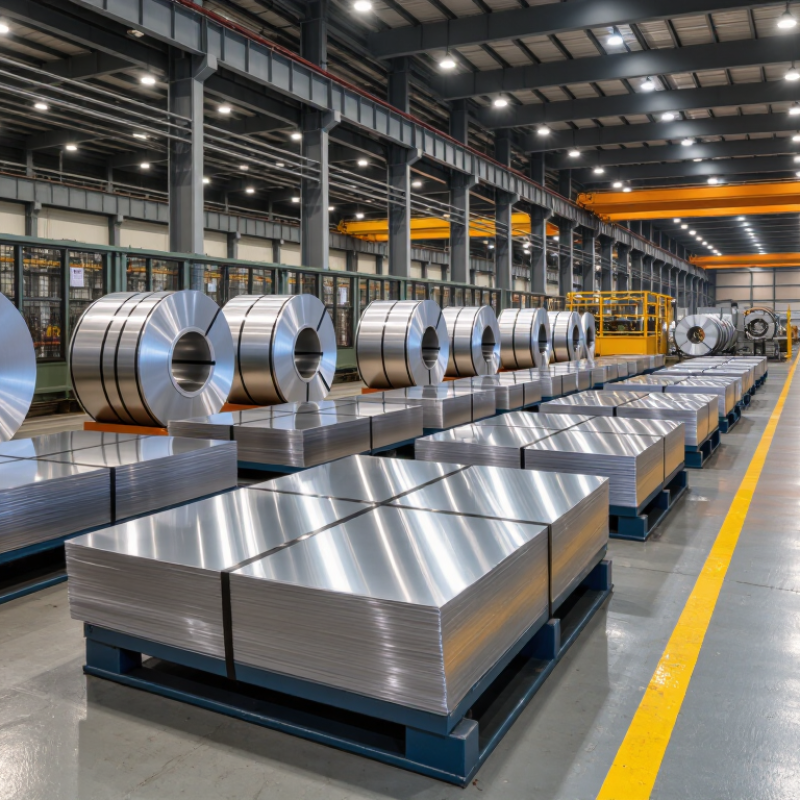
Top 304L Stainless Steel Sheet Suppliers in China?

Understanding 304L Stainless Steel Sheet and Its Common Uses

304L stainless steel sheet is a low-carbon austenitic grade, commonly specified when welding is part of the fabrication plan. Its carbon content is limited to 0.03%, which helps reduce carbide precipitation near welds. It also offers good formability and corrosion resistance in many everyday industrial settings. It welds well. Still, careful cleaning matters; heat tint and surface contamination can weaken performance.

Common uses include food-processing equipment, storage tanks, kitchen surfaces, architectural panels, and fabricated enclosures. A sheet may be cut, bent, or welded into parts that need a cleanable surface and moderate corrosion resistance. In chloride-rich or strongly acidic environments, however, 304L can pit or corrode. The grade alone does not guarantee suitability. Service conditions matter.

When comparing Chinese sheet suppliers, buyers can check the stated grade, thickness tolerance, surface finish, and inspection documents against the project specification. Ask how the material is identified and traceable after cutting. A detail is easy to miss: the finish can affect both appearance and cleaning. I would not assume every “304L” listing describes the same verified product; confirm the documentation before fabrication.


How China’s 304L Stainless Steel Sheet Supply Market Is Organized

China’s 304L stainless steel sheet market is organized around large producers, service centers, processing shops, and export traders. Producers make stainless steel coils and sheets in standard production runs. Service centers hold inventory and cut, slit, or level material to order. A buyer requesting 2-millimeter sheets in a brushed finish may therefore deal with a processor, not the original producer.

The roles can overlap. Some suppliers keep common thicknesses in stock, while others source material after receiving an order. Export traders may coordinate packing, documents, and shipment, but their technical support varies. The market map is useful, but incomplete. A supplier’s role alone does not prove the material’s quality.

Buyers should check the specification, dimensions, surface finish, and heat number against the order. Ask for a mill test certificate and confirm that its details match the delivered sheets. For critical applications, arrange appropriate material testing rather than relying only on a label. Packaging matters too: inspect whether sheets are separated and protected from scratches during transport. Small details can cause costly delays.

Types of Leading 304L Stainless Steel Sheet Suppliers in China

China’s 304L stainless steel sheet suppliers generally fall into three groups: integrated mills, service centers, and export-focused processors. Integrated mills control more production stages and may offer larger volume consistency. Service centers keep common thicknesses and finishes in stock, then cut sheets to order. Export processors often coordinate packaging, inspection, and shipping for overseas buyers. Each type solves a different purchasing problem.

Scale is substantial, but scale alone proves little. worldstainless reported China produced about 36.7 million tonnes of stainless steel in 2023, out of roughly 58.4 million tonnes worldwide, in its Stainless Steel in Figures 2024 report. Those figures cover stainless steel production, not certified 304L sheet capacity. That distinction matters. Buyers should request current test certificates and check that the stated chemistry meets the applicable specification, including 304L’s low-carbon limit. A broad product catalog is not evidence of available stock.

For thin sheets, compare thickness tolerance, surface condition, edge quality, and packaging—not just the quoted price. Ask whether inspection records match the actual heat and batch. A useful supplier can explain how it handles scratches, mixed lots, and replacement claims. Small details count. Still, paperwork can look complete while a delivery disappoints; a sample inspection and clear purchase requirements reduce, but do not remove, that risk.

Top 304L Stainless Steel Sheet Suppliers in China? — Types of Leading Suppliers

Use the ASTM A240/A240M 304L chemistry limits below as a common material benchmark when comparing mills, service centers, and stockists in China.

Values are weight-percent upper limits, except chromium and nickel, which are shown at their upper specification limits; ASTM A240/A240M also specifies minimums of 18% chromium and 8% nickel. Confirm the applicable standard edition and mill test certificate for each order.

How to Compare Suppliers by Quality, Capacity, and Service

When comparing 304L stainless steel sheet suppliers in China, assess documented quality, not polished catalog photos. The World Stainless 2023 production statistics reported about 58.4 million tonnes of global stainless crude steel output, including roughly 36.7 million tonnes in China. This scale shows a deep manufacturing base, but it does not prove any single supplier’s capacity or consistency. Ask for recent mill test certificates, heat numbers, and chemical analysis confirming the low-carbon 304L grade. Check thickness tolerance, surface finish, and flatness against your purchase specification. Small details matter.

Capacity should be verified with evidence: available sheet dimensions, monthly allocation, production lead times, and stock records. Request a sample from the same production route planned for your order, then compare its finish and measured thickness with the certificate. For large orders, clarify how the supplier handles batch traceability and inspection before shipment. Service matters, too. Test response times with specific questions about packaging, export documents, and replacement procedures. Clear answers are useful; vague promises are not. I would still verify quoted lead times against a trial order, because factory schedules can shift. One limitation: published production statistics describe the market, not a supplier’s actual reliability.

Top 304L Stainless Steel Sheet Suppliers in China? — How to Compare Suppliers by Quality, Capacity, and Service

Comparison Dimension What to Compare Reliable Evidence to Request Buyer’s Evaluation Check
Grade and chemical composition Confirm the material is 304L, not simply described as “304 series.” ASTM A240/A240M specifies 304L stainless plate, sheet, and strip; its maximum carbon content is 0.03%. Heat-specific mill test certificate (MTC) showing the grade, heat number, and chemical analysis. Check that the certificate identifies 304L and that the reported chemistry meets the standard and purchase-order requirements.
Mechanical properties Compare tensile strength, yield strength, and elongation against the applicable product standard and the agreed order specification. MTC with mechanical-test results traceable to the supplied heat or lot. Do not rely on a generic brochure: match the test results to the ordered standard, product form, and delivery condition.
Thickness and dimensional control Compare the supplier’s available thickness, width, and length options, plus its stated tolerances for the specific order. Written dimensional specification, inspection records, and a sample measurement report for the requested size. Confirm whether tolerances follow the specified standard or a separately agreed requirement; avoid comparing quoted dimensions without their tolerance basis.
Surface finish and condition Specify the required finish, such as 2B, BA, or No. 1, and compare surface consistency, protection, and suitability for the intended process. Finish description, representative samples or photographs, and agreed criteria for scratches, stains, and protective film. Ensure the quotation and order state the same finish and inspection criteria; appearance alone does not verify grade or chemistry.
Traceability and quality system Check whether sheet or coil identity can be traced through heat/lot numbers and whether inspection procedures are documented. Traceability procedure, sample MTC, inspection plan, and relevant quality-system certificate with validity details. Verify that documents correspond to the actual supplying facility and can be linked to the shipment, rather than accepting certificates without scope or traceability.
Production and supply capacity Compare the requested grade, thickness, width, finish, minimum order quantity, and repeat-order availability against the supplier’s actual capability. Written capability range, current production schedule, and a capacity commitment for the specific order quantity. Ask whether material is produced, processed, or sourced from another mill; clarify which party controls inspection and records at each stage.
Lead time and delivery reliability Compare production lead time, stock availability, shipment schedule, packaging, and delivery terms for the same specification and destination. Order-specific delivery schedule, packing details, and shipment documents from comparable past orders where available. Separate material production time from transit time, and confirm how schedule changes or partial shipments are handled.
Packaging and export handling Check protection against moisture, contamination, edge damage, and movement during handling and transport. Packing specification stating wrapping, edge protection, pallet or skid arrangement, and package identification. Agree on packaging before order placement, especially for long-distance sea freight or surfaces requiring extra protection.
Inspection and claims support Compare pre-shipment inspection options, nonconformance reporting, response time, and the process for claims or replacement. Written inspection and claims procedure, agreed acceptance criteria, and named contact responsibilities. Set the inspection method, evidence required, notification period, and remedy terms in the contract before shipment.
Quotation transparency Compare price on an equivalent basis: grade, dimensions, finish, quantity, tolerance, packaging, delivery term, and validity period. Itemized quotation with currency, unit basis, included services, exclusions, and payment terms. A lower price is not directly comparable if specification, inspection, packaging, or delivery terms differ.
Comparison tip: Use the same specification and evaluation checklist for every quotation. Confirm the current applicable standard and agreed tolerances in the purchase contract; supplier capability and delivery commitments should be verified directly for each order.

Steps for Verifying and Selecting a Chinese Supplier

Choosing a 304L stainless steel sheet supplier in China starts with checking the material, not the sales pitch. Request a mill test certificate showing the heat number, chemical composition, and mechanical results. For 304L, confirm the carbon content meets the applicable specification, typically no more than 0.03%. Then match that heat number to the markings on the sheet or its packaging. Ask for a recent sample, too. A polished website proves little.

Check thickness, width, surface finish, and flatness against your written purchase requirements. Ask how the supplier handles inspection and whether an independent inspector can verify the shipment before dispatch. This adds time and cost, but can catch mixed grades or inconsistent sheet dimensions. Review export records, packing photos, and answers to technical questions. Clear replies matter. Vague promises do not. A supplier may have strong documentation and still make a mistake; I would verify critical details twice, especially on a first order.

Compare quotations only after aligning the specifications, quantity, packaging, and delivery terms. Ask for a small trial order if the project allows it, and inspect the sheets on arrival for scratches, edge damage, and identification marks. Keep the checks in writing. It may feel overly cautious. That is not a flaw.