Top Air Compressor Pumps for Your Needs and Applications?
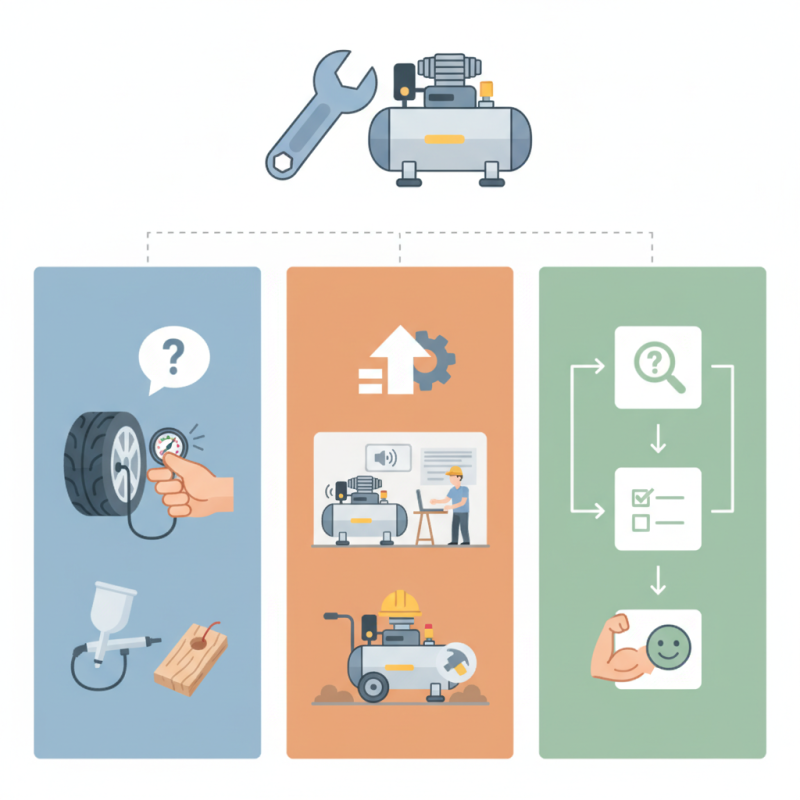
Choosing the right air compressor pumps can greatly impact your projects. These pumps serve various applications, from inflating tires to running power tools. They come in different types, each designed for specific tasks.
Understanding your needs is crucial. Do you require a pump for light-duty tasks, or something heavy-duty? Your choice will depend on the airflow requirements and pressure levels. Some pumps are quieter, making them suitable for indoor use. Others are robust, perfect for construction sites.
However, selecting the perfect air compressor pump isn’t easy. With numerous options available, it can be overwhelming. You might face confusion over specifications and features. Take your time to research and consider what works best for you. Ultimately, a good choice enhances productivity and satisfaction in your work.
Top Features to Consider When Choosing Air Compressor Pumps
When selecting air compressor pumps, several features carry significant weight. Size and power are crucial. A compact pump fits in tight spaces, but larger models often provide more power. Consider the CFM rating as it indicates airflow efficiency. A higher CFM is beneficial for demanding tasks. Additionally, the duty cycle matters. Longer continuous operation times are essential for commercial applications.
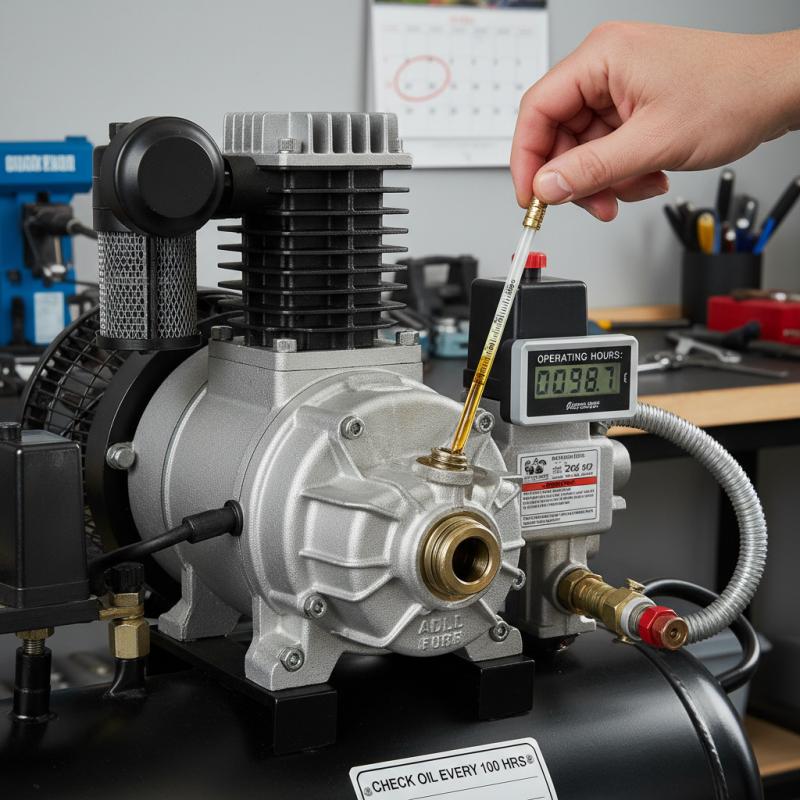
Noise levels should also be considered. Some compressors operate quietly, while others can be quite loud. This factor can impact your working environment. Another point is portability. If you need to move the compressor frequently, lightweight options are preferred. Check the ease of maintenance too. Regular upkeep prolongs the pump’s lifespan.
Budget constraints cannot be ignored either. High-end models bring advanced features, but they may exceed your needs. Carefully analyze what you truly require. Sometimes, simpler options work best and save money. Reflect on your specific tasks and re-evaluate your choices regularly. Balancing quality, efficiency, and cost can be tricky, yet vital.
Types of Air Compressor Pumps: Reciprocating, Rotary Screw, and Scroll
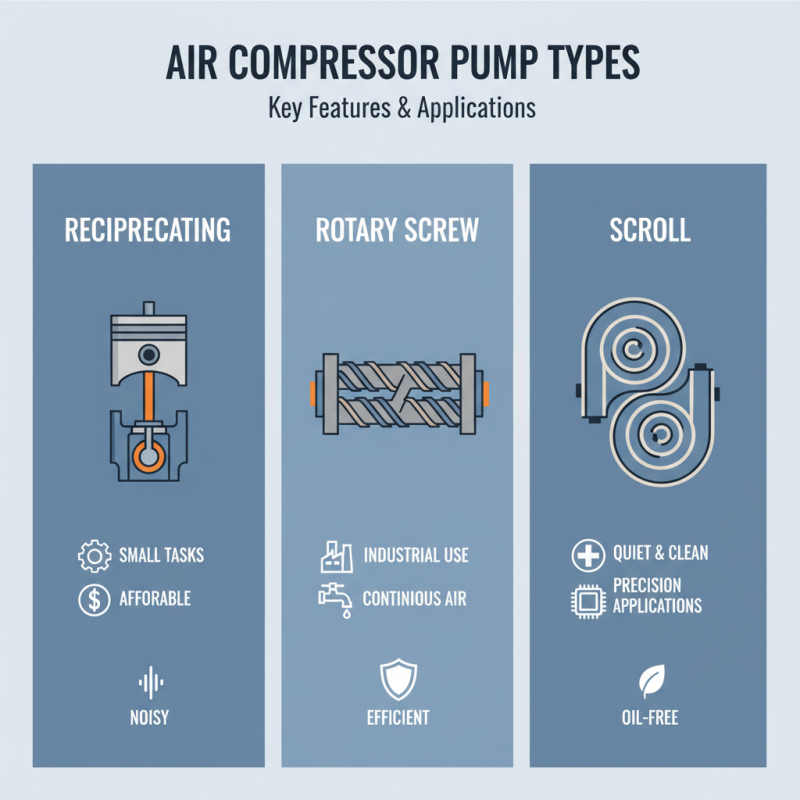
When it comes to air compressor pumps, there are three main types: reciprocating, rotary screw, and scroll. Each type has its unique features and serves different applications. Reciprocating pumps are often used for small tasks. They work in a simple way, compressing air in a chamber. Their advantage is affordability, but they can be noisy.
Rotary screw pumps provide continuous airflow and are suitable for industrial applications. They operate smoothly, delivering a steady pressure. However, they can require more maintenance than other types. Users should consider installation space as they tend to be bulkier.
Scroll pumps are compact and efficient. They work quietly and have fewer moving parts, reducing wear and tear. However, they may not meet the demands of heavy-duty jobs. It's essential to assess your specific needs before choosing. Balancing efficiency and cost is crucial for a successful purchase.
Efficiency Ratings: Understanding CFM and PSI Ratings for Different Applications
When selecting an air compressor, understanding CFM and PSI ratings is crucial. CFM, or cubic feet per minute, measures airflow. A higher CFM means your compressor can support more tools or run for longer periods without interruptions. Many tasks require specific CFM ratings. For example, sanders often need 10-15 CFM, while nail guns may only need 2-4 CFM.
PSI, or pounds per square inch, indicates the pressure the compressor delivers. Higher PSI ratings are necessary for demanding applications. A typical tire inflator needs around 30-40 PSI, while spray painting requires about 40-60 PSI. Combinations of CFM and PSI ratings determine the effectiveness of your compressor. Balancing these figures ensures efficiency and productivity for your specific tasks.
However, it's essential to match the compressor specifications with your actual needs. Sometimes, users overestimate their requirements. This can lead to purchasing a unit that is either too powerful or inefficient. Regularly reviewing and understanding these ratings helps in making informed decisions.
Top Air Compressor Pumps: Efficiency Ratings for Various Applications
This bar chart displays the efficiency ratings of different air compressor pumps based on their applications. The CFM (Cubic Feet per Minute) and PSI (Pounds per Square Inch) ratings are crucial for selecting the appropriate pump for home use, workshops, industrial applications, construction sites, and automotive purposes.
Comparative Analysis of Leading Air Compressor Pump Brands in 2023
In 2023, air compressor pumps are more crucial than ever. According to a recent industry report, the global air compressor market is projected to grow at a compound annual growth rate (CAGR) of 4.5% from 2022 to 2027. This growth highlights the increasing demand for efficient and reliable pumps across various applications. Building and construction, automotive, and manufacturing industries heavily rely on these compressors for continuous operation.
When comparing leading air compressor pump brands, performance metrics such as pressure levels, airflow rates, and energy efficiency are vital. A data analysis indicates that models delivering 2 to 6 CFM (cubic feet per minute) work best for light-duty tasks. Conversely, heavy-duty applications often necessitate pumps that can manage upwards of 20 CFM. Yet, there are challenges. Many users claim that not all high-capacity models offer durability. Some pumps require frequent maintenance, which can hinder productivity.
Understanding specifications is essential. Noise levels, for instance, often exceed recommended decibels. Continuous exposure to noise can affect health in work environments. Moreover, the balance between price and performance often leads to compromises. Often, lower-cost options may lack features, which could be detrimental in the long run. Choosing the right air compressor pump involves careful consideration of both application needs and potential drawbacks.