(770) 529-4731
esen

10 Best CNC Milling Services for Global Buyers

Choosing the right CNC Milling service can shape a product’s quality, cost, and delivery schedule. Global buyers often compare suppliers across distance, language, technical standards, and shipping conditions. A polished website is not enough. Real confidence comes from verified machining experience, clear inspection records, and consistent communication.

This guide examines ten CNC Milling services for their practical value to international customers. The review considers material capabilities, dimensional tolerances, surface finishing, prototype support, production capacity, and quality-control processes. It also looks at how suppliers manage drawings, revisions, packaging, lead times, and export documentation. Small details matter. A carefully protected aluminum part may arrive perfectly, while poor packaging can damage an excellent machining job.

Supplier credibility should be tested, not assumed. Buyers can request sample reports, review case studies, confirm certifications, and ask how engineers handle design changes. Direct technical answers usually reveal more than attractive marketing language. Pricing is included, but the lowest quote may hide tooling fees, inspection limits, or costly delays. That risk deserves attention.

No ranking is permanently correct. Capabilities change, factory workloads fluctuate, and customer priorities differ. Some services may excel at rapid prototypes but struggle with large production runs. Others may offer strong engineering support yet communicate slowly across time zones. This comparison has practical limits, and readers should verify current information before placing an order. Still, it offers a grounded starting point for buyers seeking dependable machining partners worldwide.
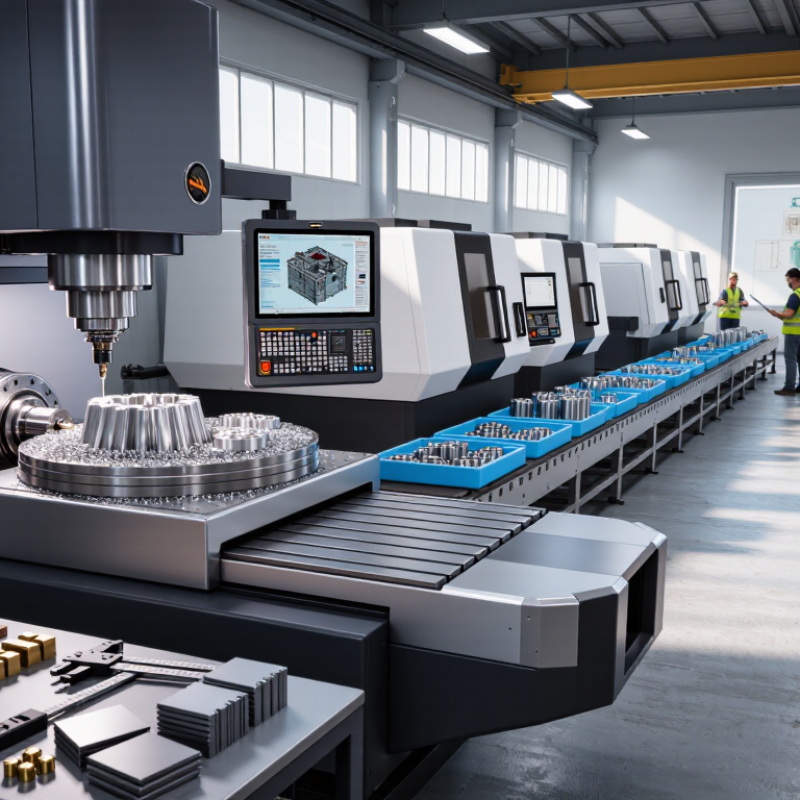
10 Best CNC Milling Services for Global Buyers

What Defines a Reliable CNC Milling Service for Global Buyers

Global buyers need more than a low quoted price when selecting a CNC milling service. Reliable suppliers explain how they control dimensions, materials, schedules, and communication. Their websites may look impressive, but inspection records matter more. An experienced provider shares machine capability, tolerance ranges, and clear drawing requirements. It should also ask practical questions about datum points, surface finish, and assembly fit. Small details reveal competence.

For example, a buyer sending an aluminum housing should receive feedback on wall thickness and tool access. The service should confirm the revision level before machining. A first-article report, calibrated measuring tools, and traceable material records create useful evidence.

Photos of packed parts can also reduce surprises during international transport. Yet documentation is not enough. I once saw a project delayed because the supplier accepted an unclear chamfer note. That mistake was preventable, and it changed how I review quotations.

Dependability also appears in honest scheduling. A capable team states capacity limits instead of promising every delivery date. It gives milestone updates during programming, machining, inspection, and packing. For global buyers, export paperwork, protective packaging, and time-zone communication are equally important. A written quality agreement protects both sides.

No provider is flawless. The better question is how quickly it identifies and corrects an error. Before placing a larger order, request sample parts, inspection data, and a realistic production plan. That modest test can expose weak communication early.


Key Factors for Comparing CNC Milling Providers

10 Best CNC Milling Services for Global Buyers

Comparing CNC milling providers requires more than checking hourly rates. Examine machine capability, tolerance control, material experience, and inspection methods. A reliable supplier should explain its process clearly, from CAD review to final measurement. Ask which machines handle your part size and whether operators have experience with aluminum, stainless steel, engineering plastics, or specialty alloys.

Request sample inspection reports. Look for dimensional data, surface-finish readings, and calibration dates. Confirm the provider’s quality system and production capacity before placing a large order. Delivery performance also matters. A low quote becomes expensive when parts arrive late or need rework. Communication deserves careful attention too. Can the team answer technical questions without vague promises? Can it provide realistic lead times and shipping documents for your destination?

Tips: Compare three written quotations. Check tolerance notes line by line. Ask about tool wear, packaging, and replacement procedures. A small trial order can reveal more than a polished presentation. I once focused too heavily on price and overlooked packaging quality. The parts were accurate, but several edges arrived scratched. That mistake changed how I evaluate suppliers. Cost is important, but process transparency is often more valuable. Be cautious with impressive claims that lack measurements or evidence. Even experienced teams can make errors, so define acceptance criteria before machining begins.

10 Best CNC Milling Services for Global Buyers - Key Factors for Comparing CNC Milling Providers

The following comparison uses anonymous service profiles and commonly published CNC milling specifications. Actual capabilities, pricing, certifications, lead times, and shipping terms should be confirmed with the selected supplier before ordering.

Rank Anonymous Service Profile Best For Typical Materials Typical Tolerance Typical Lead Time Maximum Part Size Finishing Options Quality Controls Global-Buyer Considerations Indicative Fit
1 Profile A Rapid prototypes and low-volume functional parts Aluminum, ABS, nylon, POM, stainless steel About ±0.05 mm; tighter tolerances subject to drawing review Approximately 5–10 business days Up to about 400 × 400 × 400 mm Bead blastingAnodizingPowder coating Dimensional inspection, material certificates on request, first-article checks Suitable for buyers needing fast quotation and consolidated small shipments ★★★★★
2 Profile B Precision engineering components Tool steel, stainless steel, aluminum, brass, titanium About ±0.01–0.03 mm for selected features Approximately 10–20 business days Up to about 600 × 500 × 500 mm PassivationElectropolishingBlack oxide CMM inspection, calibrated gauges, inspection reports Best when repeatability, traceability, and documented inspection are important ★★★★★
3 Profile C Large-format structural and machine parts Aluminum plate, carbon steel, stainless steel, engineering plastics About ±0.05–0.10 mm depending on size and geometry Approximately 15–30 business days Up to about 1,500 × 800 × 700 mm Milling marksPowder coatingPainting Process inspection, dimensional reports, visual inspection Confirm packaging, lifting requirements, freight class, and export documentation ★★★★☆
4 Profile D Complex five-axis components Aluminum, titanium, Inconel, stainless steel, composites About ±0.02–0.05 mm depending on feature size Approximately 15–35 business days Up to about 800 × 600 × 600 mm Heat treatmentAnodizingSurface grinding Five-axis verification, CMM inspection, geometric tolerancing review Useful for aerospace-style geometries; verify material and process certifications ★★★★☆
5 Profile E Cost-efficient production batches Aluminum, mild steel, brass, POM, nylon About ±0.05 mm for standard features Approximately 15–25 business days Up to about 700 × 500 × 500 mm AnodizingZinc platingTumbling Sampling inspection, outgoing quality checks, batch documentation Compare tooling, setup, packaging, and shipping costs rather than unit price alone ★★★★☆
6 Profile F Medical, laboratory, and clean-appearance components 316L stainless steel, titanium, aluminum, PEEK, acetal About ±0.02–0.05 mm depending on drawing requirements Approximately 20–35 business days Up to about 500 × 400 × 400 mm ElectropolishingPassivationFine polishing Material traceability, surface inspection, dimensional reports Clarify cleanliness, packaging, restricted substances, and regulatory responsibilities ★★★★☆
7 Profile G Aluminum enclosures and visible consumer parts 6061/6082 aluminum, ABS, PC, acrylic, POM About ±0.05–0.10 mm Approximately 7–18 business days Up to about 600 × 500 × 400 mm AnodizingBrushingLaser marking Cosmetic inspection, color checks, dimensional sampling Request approved color samples and define acceptable cosmetic limits before production ★★★★☆
8 Profile H Industrial repair parts and replacement components Carbon steel, stainless steel, cast aluminum, bronze, engineering plastics About ±0.05–0.15 mm depending on the application Approximately 10–25 business days Up to about 1,000 × 700 × 600 mm Black oxidePlatingPainting Drawing review, material verification, final dimensional checks Provide samples, worn-part measurements, or reverse-engineering data when drawings are unavailable ★★★☆☆
9 Profile I Prototype assemblies requiring multiple processes Aluminum, stainless steel, plastics, rubber inserts, brass About ±0.05 mm for milling; assembly fit subject to design review Approximately 10–25 business days Up to about 500 × 500 × 500 mm MillingPrintingAssembly Fit checks, visual inspection, assembly verification Confirm intellectual-property protection, nondisclosure terms, and ownership of design files ★★★☆☆
10 Profile J Repeat orders and supply-chain support Aluminum, stainless steel, steel, brass, POM, nylon About ±0.03–0.08 mm for repeat production Approximately 20–45 business days Up to about 800 × 600 × 600 mm AnodizingPlatingHeat treatment Inspection plans, batch records, corrective-action procedures Evaluate production capacity, reorder stability, safety stock, and delivery performance ★★★☆☆

Leading CNC Milling Services and Their Core Capabilities

The best CNC milling services for global buyers combine accurate machining with dependable communication.

Leading providers usually offer three-axis, four-axis, and five-axis milling for prototypes, fixtures, and production parts. Five-axis machining can reduce repositioning marks on curved components.

Three-axis machines remain practical for plates, brackets, and simple housings.

Core capabilities include aluminum, stainless steel, brass, engineering plastics, and selected hardened alloys. Experienced teams review wall thickness, internal corners, hole depth, and tool access before cutting.

They should provide dimensional reports, material certificates, surface-finish options, and clear tolerance notes. A good service also supports CAD file checks and design-for-manufacturing feedback.

Small details matter.

A 0.2-millimeter corner radius may change the tooling plan.

Tips:

Ask for a sample inspection report before placing a large order. Confirm whether quoted tolerances apply to every feature or only critical dimensions. Request realistic lead times, not optimistic promises.

I have seen projects delayed because finishing was treated as an afterthought. That mistake is easy to avoid.

Still, no supplier fits every application. Complex geometry, tight tolerances, and high-volume repeatability require different equipment and inspection routines. Global buyers should compare process control, communication speed, packaging quality, and documented experience with similar parts.

How to Evaluate Quality, Pricing, Lead Times, and Certifications

10 Best CNC Milling Services for Global Buyers

How to Evaluate Quality, Pricing, Lead Times, and Certifications

Selecting among ten CNC milling candidates requires more than comparing hourly rates. Ask for material traceability, calibrated inspection records, and a first-article report. Check whether tolerances match your drawing, not merely the advertised machine accuracy. The ISO Survey 2023 recorded over 1.2 million ISO 9001 certificates worldwide. This shows adoption, not machining competence. A certificate alone is not proof.

Request a sample inspection plan before ordering. It should identify datums, gauges, surface-finish methods, and acceptance limits. Compare quotes line by line: programming, tooling, finishing, packaging, freight, and revision charges. The lowest price may hide exclusions. It happens. Use identical drawing packages and compare each supplier’s assumptions. For lead times, ask about capacity, production days, inspection time, and contingency dates. Delivery reliability remains a major priority in manufacturing research, yet promised dates are difficult to verify.

Certifications should match the project risk. ISO 9001 supports process control, while ISO 13485 or AS9100 may suit regulated sectors. Verify certificate scope, issuing body, expiry date, and site address through the registrar. Deloitte’s 2024 Global Manufacturing Outlook highlights resilient supply chains and digital visibility as continuing priorities. Ask for milestone updates, not vague reassurance. I would score quality at 40%, delivery at 25%, total cost at 20%, and documentation at 15%. That weighting is imperfect, but transparent scoring exposes weak assumptions.

Selecting the Best CNC Milling Partner for Your Project

Selecting the right CNC milling partner requires more than comparing hourly rates.

Deloitte’s 2024 Smart Manufacturing and Digital Transformation Study found that 92% of manufacturers view smart manufacturing as important for future competitiveness. Your supplier should therefore show digital process control, not just modern machines.

Ask for evidence.

Capability matters. Review machine travel, spindle range, material experience, and inspection equipment. A reliable partner should explain how it controls a 0.02 mm tolerance on an aluminum housing.

Request first-article reports, CMM records, material certificates, and clear revision control. The ISO Survey 2023 reported more than one million ISO 9001 certificates worldwide, but certification alone cannot prove machining quality.

Communication deserves equal attention.

Can the engineer identify thin walls, deep pockets, or difficult datum choices before production? Does the quotation separate machining, finishing, tooling, inspection, and freight? These details prevent unpleasant surprises. A short video audit can reveal crowded workspaces, poor labeling, or weak measurement habits. Small clues matter.

Do not ignore capacity.

A supplier that produces ten prototypes may struggle with 5,000 repeat parts. Ask about backup equipment, maintenance routines, lead-time data, and corrective-action records. One practical mistake is choosing the lowest quote too quickly. It may exclude deburring, packaging, or dimensional inspection. I would compare three complete quotations against the same drawing package, then test one sample batch before approving larger production.