(770) 529-4731
esen

Best Electric Stacker Lift Manufacturer in China?

Choosing the best Electric Stacker Lift manufacturer in China takes more than comparing prices or catalog photos. A unit may look suitable online, yet struggle with a narrow aisle, uneven floor, or frequent pallet changes. Buyers should verify rated capacity, lift height, mast dimensions, battery options, and braking performance against actual warehouse conditions. Small details matter.

Industry investment trends make this evaluation more relevant. MHI’s 2024 Annual Industry Report found that 55% of surveyed supply-chain professionals planned to increase investment in supply-chain innovation. The report does not measure stacker purchases specifically, but it signals growing attention to operational technology. For a buyer, that means checking whether a manufacturer can explain equipment specifications clearly and support them with test records, documented quality processes, and responsive after-sales service.

This guide compares Chinese manufacturers through practical criteria: product range, customization, component traceability, production capability, warranty terms, and export support. Ask for a detailed quotation and confirm what it includes, such as the battery, charger, and spare parts. Request references or inspection evidence where possible. A low initial price can conceal service gaps or a poor fit for your site. No shortlist is perfect. Even published specifications need confirmation against real operating conditions. The strongest choice is the supplier that can match the machine to your workload and substantiate its claims—not simply promise the highest capacity.
Best Electric Stacker Lift Manufacturer in China?

What Is an Electric Stacker Lift?

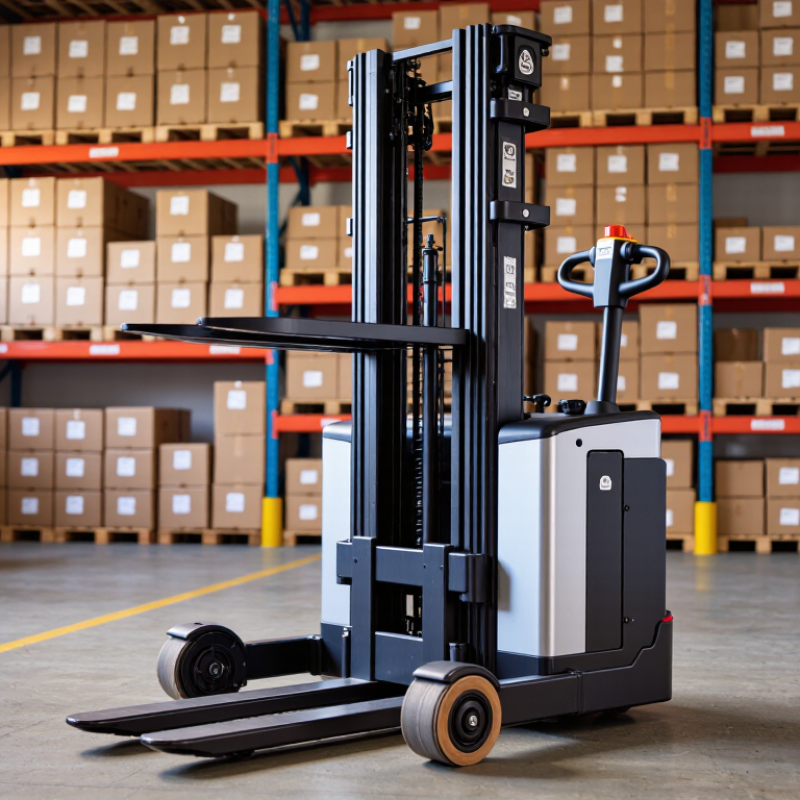
An electric stacker lift is a powered material-handling machine that raises and moves palletized loads over short distances. Its forks slide beneath a pallet, while an electric motor lifts the load along a vertical mast. Many models are walk-behind units; some include a platform for the operator. Simple in appearance. Useful in the right space.

In a warehouse, an operator might use one to lift a pallet from floor level and place it on a low or mid-height rack. The battery powers both travel and lifting, reducing the physical effort required for repeated handling. Actual performance depends on rated capacity, lift height, pallet dimensions, aisle width, and floor condition. Check the load rating carefully. A tall load can behave differently from a compact one, even at the same weight.

An electric stacker lift is not automatically a substitute for every forklift. It is generally suited to lighter, shorter-distance stacking tasks, but operating needs vary by site. Measure rack openings and turning areas before choosing equipment. Also consider charging access and how often the machine will be used. These details are easy to overlook; I would verify them on the actual work floor, not just from a product sheet.


How Do Electric Stackers Support Material Handling?

Electric stackers support material handling by lifting palletized goods and moving them across short warehouse routes. An operator can raise a load to a storage level, travel through an aisle, and lower it without using a full-sized forklift. This is useful in stockrooms, small distribution areas, and loading zones where space is limited. Their compact frames can turn in tighter spaces, while electric drive reduces the physical effort of moving heavy pallets.

Performance depends on matching the machine to the work. Check rated capacity, lift height, pallet dimensions, aisle width, floor condition, and expected battery runtime before choosing equipment. For example, a stacker that handles a 1,000-kilogram load at floor level may have a lower safe capacity when lifting high; operators should follow the capacity plate and operating guidance. Small details matter. Uneven floors, tight corners, or frequent charging gaps can slow a shift more than expected. A common planning mistake is to focus only on maximum lift height. The route, load frequency, and operator visibility matter too. Stackers can improve routine pallet movement, but they are not a shortcut around safe work practices.

Best Electric Stacker Lift Manufacturer in China? - How Do Electric Stackers Support Material Handling?
Material-Handling Dimension How an Electric Stacker Helps Typical Application Key Specification to Check Selection Consideration
Pallet lifting and stacking An electric motor raises the forks, reducing the need for manual pumping when placing or retrieving palletized loads. Stacking pallets in warehouse racking or at designated storage positions. Rated load capacity and lift height; both vary by model and may be affected by load center and lift height. Match the truck’s capacity to the heaviest intended load and the required rack or storage height.
Horizontal load movement Depending on the design, the stacker may provide powered travel or be a walk-behind unit that is manually moved. Moving pallets between receiving, storage, production, and dispatch areas. Travel mode, travel speed, turning radius, and operator-control layout. Choose powered travel for longer or more frequent moves; confirm that the turning radius suits the available aisle space.
Loading and unloading Forks lift pallets to help transfer loads between floor level and compatible platforms or work areas. Short-distance movement of palletized goods around loading areas and docks. Fork dimensions, maximum lift height, ground clearance, and compatibility with the pallet type. Check floor condition, thresholds, ramps, and platform height before selecting a unit.
Stock replenishment Controlled lifting and lowering supports replenishment of lower or mid-level storage locations. Moving pallet loads from reserve storage to picking or production zones. Residual capacity at the required lift height, mast configuration, and visibility around the load. Use the load chart for the specific configuration; nominal capacity alone may not describe capacity at height.
Operation in confined areas A compact walk-behind format can maneuver in spaces that may not suit larger lift trucks. Small warehouses, back rooms, workshops, and selected narrow-aisle tasks. Overall width, chassis length, turning radius, and aisle width required for the intended maneuver. Compare the manufacturer’s aisle requirement with the actual layout, pallet size, and turning method.
Repeated lifting tasks Powered lifting can reduce repetitive manual effort during regular pallet handling. Frequent pallet placement or retrieval during a work shift. Battery type and capacity, charging method, duty cycle, and expected operating time. Plan charging and battery maintenance around the work schedule; actual runtime depends on load, use, and conditions.
Workplace safety and control Operator controls, braking systems, and load-handling features help support controlled movement when used correctly. Routine warehouse transport and stacking by trained operators. Emergency stop, braking, safety switch, operator protection, and applicable local requirements. Provide operator training, inspect equipment regularly, and follow the operating and maintenance instructions.
Specifications and capabilities differ by model and configuration. Confirm the load chart, operating conditions, and applicable safety requirements with the equipment supplier before purchase or use.

What Features Matter When Comparing Chinese Manufacturers?

When comparing Chinese electric stacker lift manufacturers, begin with the actual job: load weight, pallet size, aisle width, and lifting height. Ask for the rated capacity at full lift, not only the headline capacity. A stacker rated for 1,000 kilograms may handle less safely at maximum height. Check turning radius and fork dimensions against your narrowest aisle. Small mismatches matter.

Inspect the mast, welds, forks, and load wheels in person or through clear inspection records. Ask how each unit is load-tested and whether test results are traceable to its serial number. Check emergency-stop access, braking, and controls with an operator wearing work gloves. Simple details count. Battery type, charging time, and replacement availability also affect daily use. A polished control panel cannot compensate for unclear maintenance instructions.

Compare service support as carefully as the machine. Request parts lists, operating manuals, warranty terms, and realistic response times for common repairs. Ask which wear parts are stocked and how quickly they can ship. If possible, arrange a factory audit or independent pre-shipment inspection. Photos help, but they cannot reveal every weld or wiring issue. Price comparisons are imperfect when specifications differ, and suppliers may describe capacity in different ways. Get each configuration and test condition in writing before comparing quotations.

Which Chinese Manufacturers Produce Electric Stacker Lifts?

China’s electric stacker lifts come from several kinds of manufacturers, not one uniform supplier group. Some factories specialize in warehouse handling equipment, producing walkie stackers, semi-electric models, and pedestrian-operated units. Others build broader forklift ranges and include stackers in a larger materials-handling portfolio. Contract manufacturers may also produce equipment to a buyer’s specifications, with configurations and components varying by order. Manufacturing capability differs widely. A polished product page alone tells little.

To assess a supplier, ask for rated capacity, lift height, turning radius, battery type, charger details, and duty-cycle guidance. Request a current specification sheet and clear photos of the mast, forks, controls, and data plate. If possible, review a sample unit or arrange a factory inspection. Check how spare parts are identified and whether service instructions are available in English. Ask how each unit is load-tested before dispatch, and request inspection records. That matters. Compare identical configurations across quotations; a lower price may reflect a smaller battery, different mast, or fewer accessories. I would not assume “manufacturer” means every key part is made in-house. Ask which components are sourced, and have the answers confirmed in writing.

Which Chinese Manufacturers Produce Electric Stacker Lifts?

Electric stacker manufacturers offer models across a range of rated load capacities. This chart shows common capacity classes, not a ranking or company-specific comparison.

Rated capacity is model-specific and can vary with lift height, load centre and configuration. Check the individual model’s nameplate and specifications before comparing products.

How Can Buyers Evaluate a Supplier Before Purchasing?

Evaluating a Chinese electric stacker supplier starts with the actual job: load weight, lift height, aisle width, and daily operating hours. Ask for the rated capacity at the required lift height, not just the headline capacity. Request a load chart, battery specifications, and a recorded demonstration with a comparable pallet. Check welds, fork alignment, mast movement, and braking on the factory floor. Small details matter. A polished brochure cannot prove stable lifting.

Inspect the supplier’s quality records, component traceability, spare-parts availability, and warranty response process. Ask how long common parts take to ship, and request sample inspection reports from recent production. MHI’s 2024 Annual Industry Report found that 55% of surveyed supply-chain professionals planned to increase technology investment. That figure is not specific to stackers, but it underlines the value of assessing equipment alongside service and support. Confirm that operating and maintenance manuals are clear, and that the supplier can explain battery care and routine checks. I would still ask for references from comparable users; paperwork alone can miss the rough edges of real warehouse use.