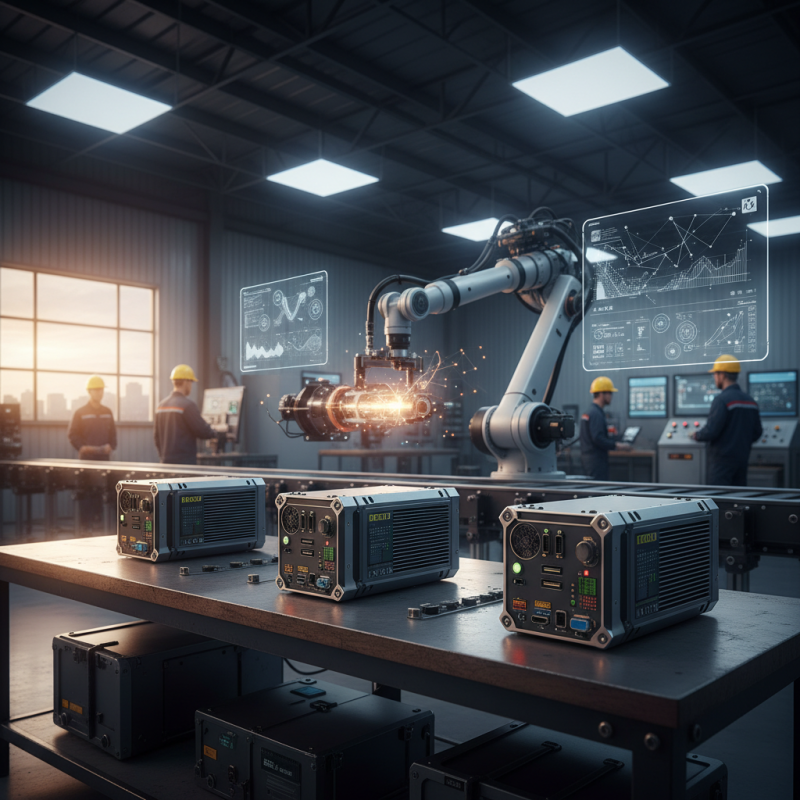
What Are the Best Industrial PC Options for Global Buyers
In the world of automation and manufacturing, Industrial PCs play a crucial role. These robust computers are designed to withstand harsh environments. They provide reliable performance for various applications, from factory control to data processing.
Global buyers often seek the best Industrial PC options to enhance efficiency and productivity. With evolving technology, choosing the right model can be challenging. Factors such as processing power, durability, and compatibility are vital.
However, not every option suits every industry. Buyers must reflect on their specific needs and budget. Sometimes, a popular model may not align with unique operational requirements. This complexity highlights the importance of thorough research and expert guidance.
Top Features to Consider When Choosing Industrial PCs for Global Markets
When selecting industrial PCs for global markets, several features demand attention. Durability stands out as a key factor. An industrial PC must withstand harsh environments, from heat to dust. Look for models with rugged cases and built-in cooling systems. These components are vital for minimizing downtime and ensuring reliable performance.
Another important consideration is compatibility. Global buyers need systems that support various operating environments. Ensure the chosen industrial PCs can connect easily to a range of peripherals and software. Flexibility in configurations can enhance usability across diverse industrial settings.
Additionally, consider the support and service offered by vendors. Access to reliable technical support can significantly impact operational success. Time zone differences can complicate service delivery. Buyers should ensure vendors have local presence or strong global support networks. Evaluate Service Level Agreements (SLAs) that define response times and support availability. Gaps in service can hinder project timelines. Think critically about these features to make informed choices.
Key Players in the Industrial PC Market and Their Competitive Edge
The industrial PC market is growing rapidly. Companies seek reliable, robust technologies. Investors focus on key players with a competitive edge. They differentiate themselves through innovation and customer support.
One major benefit of established players is their deep industry experience. They understand the unique requirements of various sectors. This insight leads to tailored solutions for manufacturing, automation, and energy management. Their products often exceed standard reliability metrics.
However, not every company is perfect. Some struggle to adapt to fast-paced market changes. Feedback from clients shows a need for quicker updates. Organizations want upgrades without long downtimes. This presents an opportunity for newer entrants to capture attention. Emerging firms can leap ahead by responding to these needs more agilely.
Global Industrial PC Market: Key Features Comparison
Major Industry Applications Driving Demand for Industrial PCs Worldwide
The global demand for industrial PCs is booming. This surge is driven by various industries that require reliable and robust computing solutions. Manufacturing, logistics, and healthcare are at the forefront of this trend. In these sectors, the need for automation and increased efficiency is vital. Industrial PCs provide the durability and processing power necessary for complex applications.
Manufacturing plants depend heavily on real-time data processing. Systems must withstand harsh environments while maintaining performance. Automation and predictive maintenance also require high-speed communication between machines. Meanwhile, in logistics, tracking shipments and managing inventory relies on accurate data analytics. Industrial PCs play a crucial role in optimizing these processes.
Healthcare is another sector where industrial PCs are increasingly vital. Medical devices need consistent performance and secure data handling. Patient monitoring systems require reliability under pressure. However, not all solutions meet these challenges effectively. Buyers must assess their needs carefully. Understanding specific industry requirements is critical for making informed decisions.
Regional Market Trends and Consumer Preferences in Industrial PC Selection
In recent years, industrial PCs have gained traction across various global markets. Preferences for these devices can differ remarkably by region. For instance, buyers in North America tend to prioritize performance and reliability. They seek powerful processing capabilities. In contrast, European buyers often emphasize energy efficiency and compact designs. They look for solutions that align with stringent regulations.
Consumer preferences can also reveal interesting trends. In Asia, the focus is shifting toward cost-effectiveness without sacrificing quality. Manufacturers that offer scalable solutions are in high demand. Additionally, local support services play a significant role in buying decisions. Companies resonate more with vendors who understand regional challenges.
However, addressing these preferences is not without obstacles. Many buyers report difficulty in finding tailored solutions. The rapid pace of technological advancement can leave consumers feeling overwhelmed. There are inconsistencies in marketing claims versus actual performance. Effective communication from suppliers is essential. Clear documentation and technical support can bridge gaps between expectations and reality. Acknowledging these challenges may lead to better alignment between consumer needs and available products.
Emerging Technologies Shaping the Future of Industrial PCs and Their Adoption
Emerging technologies are transforming the landscape of industrial PCs. As automation and artificial intelligence gain traction, manufacturers are investing in optimized computing solutions. These developments enhance operational efficiency and data processing capabilities. With the rise of IoT devices, industrial PCs can integrate seamlessly into smart factories. This connectivity fosters real-time monitoring and predictive maintenance.
However, it's essential to choose the right technology. Potential buyers should assess their specific needs and existing infrastructure. Not all advancements suit every application. Cost considerations also play a vital role in decision-making. Organizations must balance investing in high-end tech versus practicality.
**Tips:** Always analyze your workflows before selecting an industrial PC. Collaborate with IT experts to ensure compatibility with current systems. Conduct trials to identify any gaps or limitations in the technology. Embrace gradual upgrades rather than complete overhauls to minimize potential disruption.