Choosing a Portable Fire Monitor supplier in China is more than comparing prices. A suitable unit should deliver a steady stream, move smoothly under pressure, and withstand repeated outdoor use. Small details matter: body material, inlet size, rated flow, working pressure, nozzle pattern, and mounting method. Ask for current drawings and test records, then compare them with your site’s requirements. A polished catalog helps. Still, verify it.
This guide introduces practical ways to assess suppliers, from product range and manufacturing capability to quality checks and after-sales support. Request clear specifications, sample inspection options, spare-parts information, and details about production lead times. Where relevant, confirm that test documents match the exact model being quoted. A supplier’s website alone may not show whether it makes the equipment or sources it elsewhere. That distinction deserves a direct question.
Look for consistent answers, traceable product information, and communication that explains limitations as well as strengths. If a supplier cannot clarify operating pressure or maintenance needs, pause before placing an order. A specification can appear complete and still leave a gap. No checklist removes every risk, and supplier claims should not replace independent verification. Use the comparisons in this article as a starting point, then assess each candidate against your intended application, delivery needs, and support expectations.
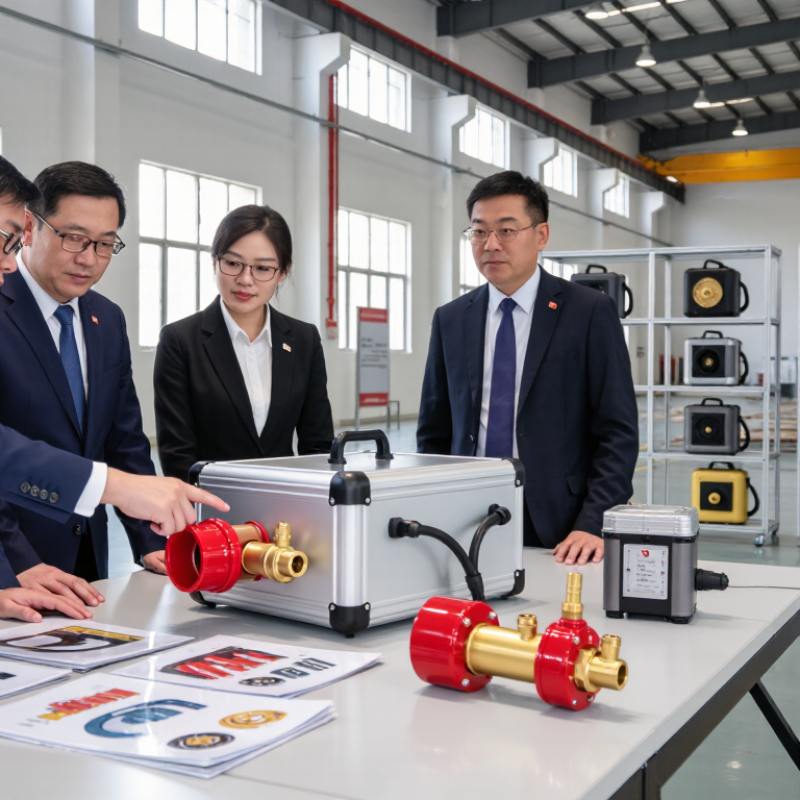
A portable fire monitor is a movable device that directs a high-volume stream of water or a compatible foam solution. Unlike a hand-held hose, it rests on a stable base, often with folding legs or a low frame. An operator can adjust its direction and elevation from a safer position. Not a toy. Its reach and flow depend on the water supply, hose size, nozzle, and rated operating pressure. Those details matter more than appearance when comparing equipment.
In use, trained responders position the monitor on firm, level ground and secure its legs before connecting the supply hose. They check couplings, clear the discharge path, and open the water supply gradually, following the equipment instructions. The stream can then be aimed toward a fire from a distance, helping limit direct exposure to heat. That matters. Operators should watch for movement, reaction force, and changing ground conditions, and wear appropriate protective equipment. A portable monitor is not a substitute for a response plan. Setups vary, and the practical details can be less tidy than a product diagram suggests. Verify the monitor’s flow and pressure limits against the intended water source before deployment.

When comparing Chinese portable fire monitor suppliers, evaluate actual operating needs rather than catalog claims. Confirm rated flow, inlet pressure, throw distance, and nozzle pattern under comparable test conditions. Ask whether performance figures come from witnessed tests or internal calculations. Small details matter. A compact monitor may still be awkward to carry when wet or connected to a charged hose.
Review materials and build quality against the intended environment. Request specifications for the body, seals, fasteners, and protective coatings. Check adjustment range, locking points, coupling compatibility, and whether operators can use the controls while wearing gloves. Ask for dated inspection records, serial-number traceability, and details of the quality-control process. Ask for evidence. When feasible, inspect a sample unit, including its joints, machining, labels, and supplied accessories.
Reliability also depends on communication and after-sales support. Ask who handles troubleshooting, replacement parts, and operator guidance, and clarify expected response times. Confirm packaging, lead times, acceptance criteria, and required documentation before ordering. Request relevant test reports and certificates, then check their scope, dates, and issuing bodies independently. A factory visit or third-party inspection can reveal gaps, though one visit never tells the whole story. Comparisons get messy. Test conditions vary, and buyers can overlook differences when comparing performance figures.
Reference Flow-Rate Checkpoints for Comparing Portable Fire Monitors
The chart converts reference flow rates of 250, 500, 750, and 1,000 US gallons per minute using 1 US gpm = 3.78541 L/min. These are comparison checkpoints, not a universal standard or supplier performance claims. When evaluating suppliers, verify flow and pressure data for the stated nozzle configuration, applicable certifications, materials, test reports, spare-parts availability, and after-sales support.
Leading portable fire monitor suppliers in China stand out through dependable engineering, consistent production, and clear technical support. Their equipment should be compact enough for rapid deployment, yet stable when directing water or foam across a work area. Buyers should compare rated flow, operating pressure, inlet size, elevation range, and whether the unit supports manual or remote control. Numbers matter. So does usability.
A practical supplier provides dimensional drawings, material specifications, inspection records, and guidance on compatible hoses and connections. Ask how each monitor is tested, and request a demonstration at the intended supply pressure. Watch for smooth adjustment, secure locking points, and a base that stays planted on wet concrete. Portability also depends on handle placement, total weight, and setup time, not just product dimensions. Catalog descriptions can make these details seem simpler than they are. That deserves a closer look. Before ordering, confirm spare-part availability, packaging protection, lead times, and response procedures for technical questions. A capable supplier will answer precisely and acknowledge limits instead of making unsupported performance promises.
Portable fire monitors from Chinese suppliers can look similar online, yet their working limits may differ. Compare rated flow, inlet size, pressure range, materials, and operating method. A stainless-steel body may suit corrosive sites, while weight and mounting needs affect field handling. Ask for a current data sheet and test conditions, not only a maximum-flow figure. Details matter.
Certification claims need careful reading. Request the certificate number, issuing body, validity dates, and exact model scope. Check whether the document covers the monitor itself or only the factory’s quality system. ISO 9001 can indicate controlled processes, but it does not prove a specific unit meets a fire-performance requirement. Ask for proof. Confirm which approvals or test standards apply in your destination market, then verify them with the issuer where possible.
Compare suppliers by how clearly they support traceability and inspection. Useful evidence includes material certificates, pressure-test records, dimensional drawings, and serial-number links to production batches. A sample unit can reveal handle travel, coupling fit, and whether labels remain readable when wet. Do not assume every supplier offers the same paperwork. Some documents may be incomplete or translated poorly; that deserves follow-up, not an instant rejection. Get the final configuration and documents listed in the purchase specification before ordering.
Best Portable Fire Monitor Suppliers in China?
How to Verify and Choose a Portable Fire Monitor Supplier
Choosing a portable fire monitor supplier takes more than comparing prices and catalog photos. Check the monitor’s rated flow, operating pressure, inlet size, range, and materials against your actual site needs. Ask for current test records and product specifications, then confirm that the documents match the exact model being quoted. Details matter.
A video call can reveal useful things. Ask the supplier to demonstrate the unit operating, including its movement, shutoff, and connections. Look closely for leaks, rough welds, or controls that feel stiff. Ask how inspection and performance tests are recorded, and whether you can review a sample report. If possible, arrange an independent inspection before shipment.
Check the supplier’s production capacity, quality-control steps, delivery schedule, and after-sales support. Request references from buyers with similar applications, but verify them through direct conversations where practical. Confirm which wear parts are available and how quickly they can be supplied. Ask to see it.
A low quote may omit testing, packaging, or spare parts, so compare itemized offers. Clarify warranty coverage in writing and agree on how defects will be documented. Some details may remain uncertain until installation; that is worth acknowledging. A careful supplier should answer technical questions clearly, share verifiable records, and explain limitations without promising performance beyond the published specifications.
| Evaluation dimension | What to verify | Evidence to request | Practical selection check |
|---|---|---|---|
| Supplier identity and manufacturing role | Confirm the legal entity, registered business scope, and whether it manufactures the monitor or trades products made by another factory. | Current business registration details, factory address, production-area photos or live video, and a written statement identifying the manufacturing and export entities. | Check that the entity on the quotation, contract, invoice, and payment instructions is consistent or that any differences are explained and documented. |
| Flow and operating pressure | Compare the stated flow rate and working-pressure range with the intended pump, hose, water supply, and use case. Flow and pressure are related; do not assess either figure alone. | Model-specific datasheet and test results showing the test setup, inlet pressure, measured flow, and test date. | Confirm the required performance at the intended operating point, and check that the supporting test data refer to the exact offered configuration. |
| Throw and stream performance | Review claimed reach for the specified nozzle pattern and operating conditions. Solid-stream and fog patterns may produce different results. | A witnessed or recorded test report that identifies pressure, flow, nozzle setting, measurement method, and environmental conditions. | Treat a reach figure without test conditions as unverified; compare offers only when the test conditions are comparable. |
| Materials and corrosion resistance | Identify the material and finish of the body, moving parts, seals, and fasteners. Confirm suitability for the water quality, storage environment, and exposure conditions. | Bill of materials or material declaration, relevant material certificates where applicable, surface-finish details, and maintenance instructions. | Check that materials are specified for each important component rather than described only with a general term such as “corrosion resistant.” |
| Stability and anchoring | Assess the base, legs, locking features, and required anchoring method for the intended surface and operating conditions. | Assembly drawing, operating instructions, stability or functional test records, and clear guidance on setup and anchoring. | Verify that the unit can be set up and secured as intended; request a demonstration before purchase when practical. |
| Applicable standards and conformity claims | Check which standards, regulations, or conformity requirements apply in the destination market and whether the product configuration falls within their scope. | Complete certificates or declarations, issuing-body details, scope, model references, validity information, and test reports where relevant. | Verify documents with the issuer when possible. A certificate for a different product or model does not establish compliance for the offered monitor. |
| Quality control and traceability | Ask how incoming materials, assembly, functional testing, and final inspection are controlled and recorded. | Inspection checklist, sample test records, lot or serial-number identification method, and the supplier’s process for handling nonconforming products. | Confirm that the supplier can link the delivered unit or production lot to inspection records and agreed specifications. |
| Samples and pre-shipment inspection | Establish whether a production-representative sample and independent inspection can be arranged before shipment. | Approved sample record, inspection plan, acceptance criteria, and written agreement on who pays for inspection and how failures are handled. | Define measurable checks in the purchase contract instead of relying only on a general promise that products will be inspected. |
| Spare parts and after-sales support | Confirm availability of wear parts, technical documentation, troubleshooting support, and the process for warranty claims. | Parts list, exploded drawing, maintenance schedule, written warranty terms, and stated response and replacement procedures. | Check warranty exclusions, coverage period, shipping responsibility, and spare-part availability in the destination market. |
| Export packaging and shipping readiness | Review packaging protection, shipping dimensions, gross weight, documentation, and any destination-specific import requirements. | Packing specification, carton or crate dimensions, packing-list sample, product labels, and agreed shipping documents. | Make packaging, marking, delivery terms, and required documents part of the written order confirmation. |
| Quotation and contract clarity | Compare the exact model, included accessories, technical parameters, order quantity, lead time, payment terms, and delivery terms. | Itemized quotation and sales contract with model-specific specifications, approved drawings where relevant, inspection terms, and a change-control process. | Resolve gaps or conflicting figures before paying a deposit; do not compare prices unless the scope and configuration match. |
Use this checklist to compare suppliers and verify documentation. Performance, certification, and warranty requirements depend on the product configuration, intended application, and destination market.