How to Choose the Best Air Breaker for Your Needs?
Choosing the right Air Breaker is crucial for efficiency and safety in various industries. An air breaker, or pneumatic breaker, is essential for heavy-duty tasks like demolition and construction. According to the Global Market Insights report, the air breaker market is expected to grow at a compound annual growth rate (CAGR) of 4.5% from 2021 to 2027. This growth reflects the rising demand for powerful tools in industrial and construction applications.
When selecting an air breaker, consider the power required for your specific tasks. Many professionals recommend power ratings between 30 and 60 joules for optimal performance. Factors like weight, vibration control, and maintenance needs can impact their effectiveness and user comfort. For instance, a lighter model may reduce operator fatigue, yet offer less power. Understanding these trade-offs is essential for making an informed decision.
It is important to research reputable brands and read customer reviews to gauge performance reliability. Industry experts often highlight the significance of warranty options and service availability. Balancing these factors will lead you to the most suitable air breaker for your needs. Quality tools can make a significant difference in productivity and safety on the job site.
Understanding the Different Types of Air Breakers Available in the Market
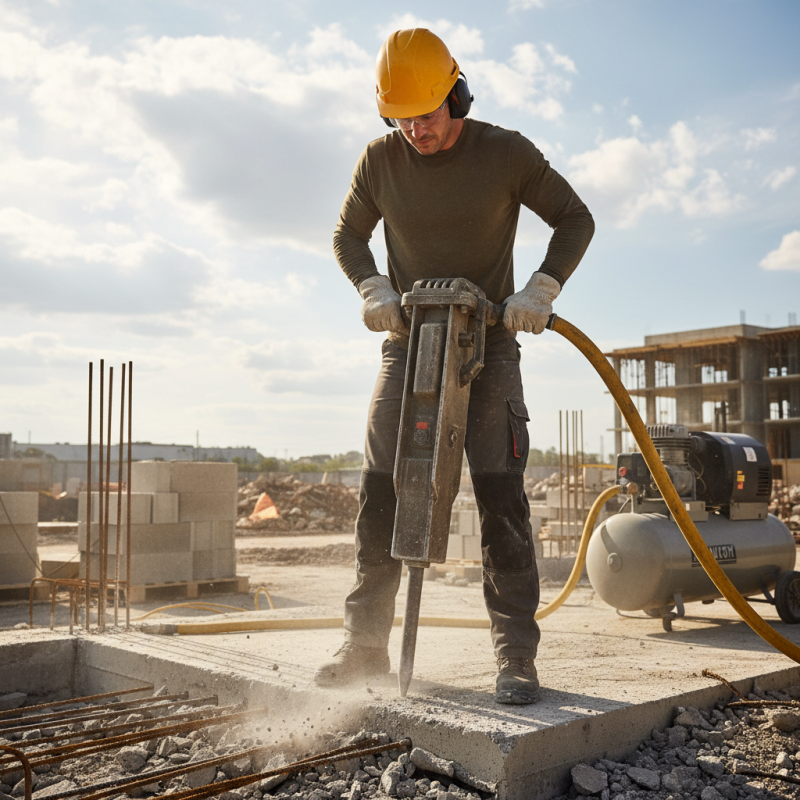
Choosing the best air breaker involves understanding the various types available. Each type serves a specific purpose, making it essential to match the tool to your project needs. Air breakers typically fall into categories like handheld, pneumatic, and electric models. Handheld versions are ideal for lighter tasks, while pneumatic tools are preferred for heavy-duty jobs. Electric air breakers provide convenience but may lack the power of their pneumatic counterparts.
When selecting an air breaker, consider the intended use. If working on concrete, a heavier model may be necessary. For softer materials, a lighter option suffices. Ensure you evaluate the weight and handling of the tool. A tool that's too heavy can cause fatigue, while one that is too light may not deliver the required impact.
**Tips:** Always test the grip and balance of the air breaker. It should feel comfortable and easy to handle. Check for noise levels too; some models can generate excessive noise. Finally, factor in the maintenance requirements. A tool that demands rigorous upkeep can become a hassle in the long run.
How to Choose the Best Air Breaker for Your Needs?
Evaluating Key Features to Consider When Choosing an Air Breaker
Choosing the right air breaker requires careful consideration of several key features. One significant aspect is the weight. A heavier model may offer more durability but can be challenging to handle. However, lighter options provide better maneuverability, especially for extended use. Evaluating your specific needs will determine which weight suits your situation.
Another critical feature is the power source. Air breakers can be pneumatic or electric, each with distinct advantages and challenges. Pneumatic models often deliver more force but require a compressor. Electric ones are more portable but might lack the same power level. Assessing the job site’s requirements will guide you to the right choice.
Noise levels also matter. Some air breakers are significantly louder than others. If working in noise-sensitive areas, look for quieter models. Keep in mind that all tools can be improved. Reading user experiences can offer insights into performance over time. Ultimately, selecting the best air breaker involves balancing these features with personal preferences to find the best fit.
Assessing Your Specific Needs and Job Requirements for Air Breakers
When selecting an air breaker, it’s vital to assess your specific needs. Different jobs require varying levels of power, weight, and durability. For instance, a construction site may need a heavy-duty breaker, while light maintenance tasks might only require a smaller tool. According to a report by the Construction Industry Institute, over 40% of equipment failures are due to mismatched tools for the job.
Consider the weight and design of the air breaker. Heavier models can offer more power but can lead to user fatigue. Ergonomically designed models can mitigate this, enhancing user comfort and efficiency. In fact, studies show that ergonomics can improve productivity by up to 25%. This is crucial when working on extended projects where fatigue could affect both safety and output.
Lastly, analyze your workflow. Will the air breaker be used continuously, or only for specific tasks? Make sure to evaluate the air pressure and flow rate requirements as well. Insufficient air supply can lead to decreased performance, leading to potential delays. Data indicates that over 30% of crews reported downtime due to inadequate air supply for their tools. Choosing the right air breaker, tailored to your needs, is essential to maximizing efficiency and minimizing challenges on the job site.
Comparing Brands: Quality, Price, and Warranty of Air Breakers
When selecting the best air breaker, comparing brands is crucial. Quality, price, and warranty define the options. A recent industry report highlights that over 30% of users prioritize durability. Products with a proven track record typically outperform others. Look for those with high-grade materials. Cheaper models may not last, costing more in the long run.
Price variations can be vast. A study indicates that premium air breakers can cost up to 50% more than budget options. However, their lifespan often justifies the investment. Many cheaper models lack essential features. These may result in frequent repairs and downtime.
Warranty is another vital factor. Products with extended warranties suggest confidence in their performance. Some brands offer 3-5 year warranties, while others are only 1 year. This disparity can affect your decision. A robust warranty can be a safety net amid unexpected issues. Ultimately, understanding the balance of quality, price, and warranty helps in selecting the right air breaker. Consider these aspects carefully to avoid potential pitfalls.
Tips for Proper Maintenance and Care of Your Air Breaker
Air breakers are essential tools for various construction tasks. However, proper maintenance is often overlooked. Regular upkeep can extend the life of these machines significantly. According to industry reports, well-maintained air breakers last up to 30% longer. Ignoring maintenance can lead to costly repairs and decreased productivity.
One crucial tip is to clean the air filter regularly. A clogged filter reduces efficiency. Check it at least once a month. Keep the air breaker lubricated according to manufacturer specifications. Proper lubrication is vital for reducing wear and tear. Neglecting this can lead to mechanical failures.
Additionally, inspect the hoses and connections frequently. Look for any signs of wear, such as cracks or leaks. Even small issues can affect performance. A simple visual check can prevent larger problems down the line. Neglect often surfaces as sudden breakdowns. Following these tips can enhance the reliability and longevity of your air breaker.