(770) 529-4731
esen

How to Choose a Flexible Shaft Brush Cutter?

Choosing the right Flexible Shaft Brush Cutter can make demanding vegetation work safer, faster, and less tiring. However, product descriptions often focus on engine power while overlooking balance, shaft movement, and operator comfort. A cutter that performs well in a showroom may feel awkward after several hours beside a fence line or beneath low branches.

This guide examines the practical details that experienced users notice first. We will consider engine size, shaft flexibility, harness support, cutting attachments, vibration control, fuel efficiency, and maintenance access. A reliable model should match the vegetation, terrain, and frequency of use. Thick weeds may require stronger torque, while garden edges usually benefit from lighter handling and precise control. Check local operating rules and always use approved protective equipment.

Small details matter.

A properly adjusted harness can reduce shoulder pressure. A comfortable handle can improve control on uneven ground. The shaft should bend smoothly without feeling weak or unstable. We will also compare manufacturer specifications with real working conditions, because advertised performance does not always reflect daily use. In my experience, users sometimes choose the most powerful machine and later regret its weight. I have also seen buyers underestimate replacement-head costs and cleaning time. That is worth reconsidering. By combining practical observations, technical guidance, and dependable evaluation standards, this article will help you select a brush cutter with greater confidence and fewer costly surprises.
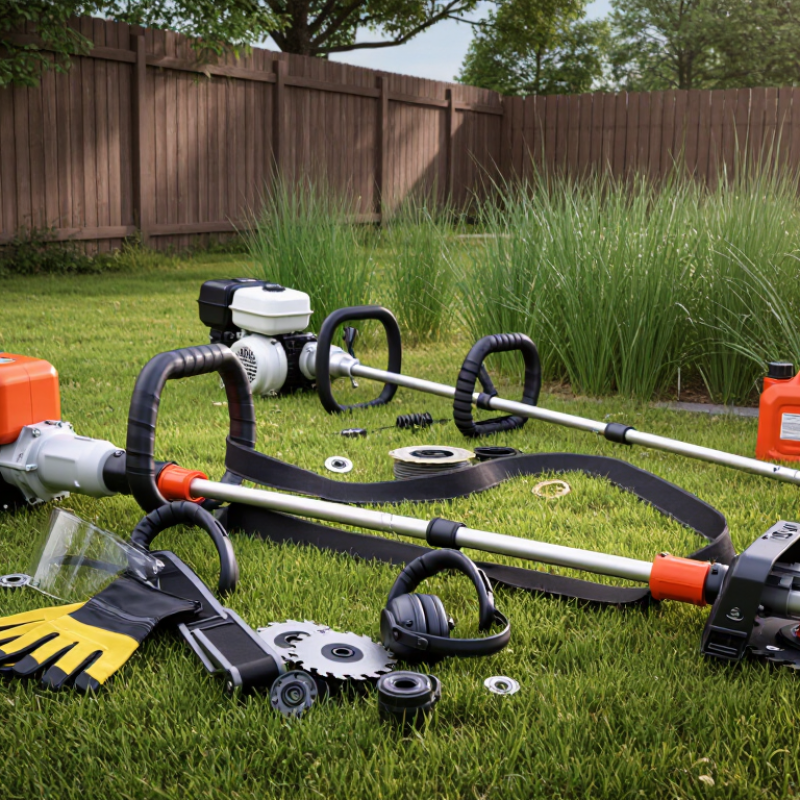
How to Choose a Flexible Shaft Brush Cutter?

Understanding How a Flexible Shaft Brush Cutter Works

How to Choose a Flexible Shaft Brush Cutter?

Understanding how a flexible shaft brush cutter works makes selection easier. The engine creates rotation near your back or waist. A flexible cable carries that rotation through a protective outer housing. At the lower end, a gearbox changes speed and direction. This gearbox turns the cutting head, blade, or line spool. The system feels different from a rigid shaft model. It bends more naturally around trees, fences, and uneven ground.

During field checks, I look for smooth cable movement first. A dry or sharply bent cable can increase heat and vibration. That matters after several hours of cutting. A comfortable harness also spreads engine weight across your shoulders and hips. Choose a lighter model for grass and thin weeds. For dense brush, select enough torque for the cutting attachment. More power is not always better. Extra weight can reduce control.

Inspect the housing, cable, clutch, and gearbox regularly. Keep the cable routed without tight loops. Follow the manufacturer’s lubrication schedule and attachment limits. I once focused too much on engine power and ignored balance. The cutter worked, but my wrists became tired quickly. That was a useful mistake. Your terrain, cutting height, and working time should guide the final choice. A flexible shaft can be excellent around obstacles, but it still needs careful handling.


Identifying the Right Cutting Tasks and Vegetation Types

Choosing a flexible shaft brush cutter starts with the cutting task, not the machine’s appearance. A flexible shaft offers useful control around trees, fences, garden edges, and uneven ground. It is usually comfortable for grass, soft weeds, and light undergrowth. It may struggle with dense woody stems.

The vegetation tells you which cutting head to use. Fine grass suits a nylon line head. Tough weeds and thin brambles need a stronger line or suitable metal blade. Measure the thickest stems before buying. If stems approach finger thickness, a light-duty cutter may become frustrating and unsafe. Start with the stems. Wet grass changes everything.

Vegetation management also has wider consequences. FAO’s Global Forest Resources Assessment 2020 reports that forests cover about 31% of global land, while roughly 420 million hectares were lost between 1990 and 2020. In Europe, the European Commission’s Joint Research Centre recorded more than 504,000 hectares burned in 2023. Clearing dry grass can reduce fuel around managed areas, but it should follow local professional guidance. Do not treat a brush cutter as a wildfire-control tool.

For sloped sites, prioritize low weight, a balanced harness, and a shaft that reaches without twisting your wrists. I sometimes overestimate cutting capacity. That mistake wastes time. Match power to the vegetation, then leave room for dust, hidden stones, and awkward angles.

How to Choose a Flexible Shaft Brush Cutter?

Match the cutter to the vegetation type, stem thickness, and cutting task. Flexible-shaft models are generally best suited to grass, weeds, and light brush where maneuverability and reduced weight are important.

The values show typical vegetation stem diameters encountered during routine grounds maintenance. Use nylon line for grass and soft weeds, and select a suitable metal blade only when the machine manufacturer permits it. Actual cutting capacity depends on engine power, cutting attachment, operator technique, and site conditions.

Comparing Engine Power, Shaft Design, and Cutting Attachments

Choosing a flexible shaft brush cutter starts with matching engine power to the workload. For light grass, a 30 cc engine usually offers manageable weight and adequate control. Dense weeds need closer to 35–45 cc, especially on slopes or wet ground. More power is not always better. It can increase fuel use, vibration, and operator fatigue.

Shaft design changes how the tool feels in real work. A curved shaft suits trimming around garden edges and reduces reach distance. A straight shaft often transfers torque better and reaches beneath shrubs. Check the inner cable, clutch, and service access carefully. A stiff, well-supported cable should transmit power without excessive handle vibration.

The NIOSH noise exposure report recommends an 85 dBA, eight-hour limit, using a 3 dB exchange rate. Measure sound near the operator’s ear, not beside the engine. Small differences matter.

Cutting attachments should match both vegetation and shaft capacity. Nylon line works well for grass and soft weeds. A three-tooth blade handles tougher stems, while a saw blade requires a compatible guard and approved torque rating. ISO 11806-1:2022 emphasizes guarding, harness adjustment, and attachment compatibility for handheld brush cutters. I would test the cutter with its lightest suitable head first. My first choice might be wrong. A heavier blade can clear brush faster, yet it may make precise edging awkward. Check the manual, balance the harness, and stop when vibration suddenly changes.

Evaluating Comfort, Safety Features, and Ease of Maintenance

When testing a flexible shaft brush cutter, comfort should be judged after twenty minutes, not two. A balanced machine keeps the cutting head level without constant wrist pressure. Look for an adjustable harness, padded contact points, and handles that fit your grip. The shaft should bend smoothly, without pulling sideways during a turn. I prefer controls that remain reachable when wearing gloves. Small details matter: a cool, non-slippery grip and manageable vibration can prevent fatigue. I once chose a light tool with a stiff harness, and my shoulder felt sore before the job ended. That experience changed my view of “lightweight.” Weight distribution matters more.

Safety must be practical, not decorative. Check that the debris guard is firmly attached and wide enough for the planned cutting head. A clear stop switch should be easy to find by touch. A shoulder strap release can help during a snag, but practice using it while the cutter is switched off. Inspect the shaft, guard, fasteners, and cutting line before every session. Maintenance is easier when access points are obvious. Ask whether the head can be cleaned without special tools. Also check the manual’s service intervals. I sometimes skip a wipe-down after short work. That habit needs correcting. Packed grass can hide cracks and increase vibration.

Tips: Before buying, wear work gloves and adjust the harness. Test the controls while standing naturally. After each use, remove grass, check loose parts, and store the cutter dry. A few minutes of care can reveal problems early.

How to Choose a Flexible Shaft Brush Cutter? - Evaluating Comfort, Safety Features, and Ease of Maintenance

Brand-Neutral Selection Guide for Flexible Shaft Brush Cutters
Evaluation Dimension Importance Practical Target or Reference Range Why It Matters How to Check Before Purchase
Dry Weight High Approximately 6–10 kg for a complete petrol-powered unit, excluding fuel and cutting debris. Lower weight generally reduces shoulder, back, and arm fatigue during prolonged trimming. A lighter tool is not automatically better if it lacks adequate power or balance. Confirm whether the stated weight includes the cutting head, guard, harness, and empty fuel tank.
Weight Distribution High The engine should remain stable on the harness, while the cutting head should feel controllable without excessive wrist force. A flexible shaft transfers power from the engine to the head, allowing the engine to be carried closer to the body and potentially improving maneuverability. Attach the supplied harness and hold the cutter at working height. The head should not constantly pull downward or twist sideways.
Harness and Handle Adjustment High Adjustable shoulder straps, a padded contact area, a quick-release mechanism, and a handle position that can be set for the operator. Correct adjustment distributes load across the hips and shoulders and helps maintain a neutral working posture. Test all adjustment points while wearing normal work clothing. The quick release should be reachable with one hand.
Vibration Control High Look for isolated engine mounts, padded handles, and a flexible shaft with intact protective covering. There is no single universal vibration limit for every model. Lower hand-arm vibration can improve comfort and reduce numbness during repeated or extended use. Review the instruction manual for declared vibration values and operating conditions. Do not rely only on a soft handle covering.
Noise Exposure High Petrol brush cutters commonly produce hazardous outdoor noise levels; hearing protection should be used regardless of the advertised sound figure. Noise from the engine, exhaust, and cutting head can contribute to hearing damage and communication difficulties. Check the manual's sound-pressure and sound-power data, then use suitable hearing protection and follow local regulations.
Cutting Guard High A correctly fitted debris guard that matches the approved blade or line head, with no cracks, missing fasteners, or excessive clearance. The guard helps deflect stones, line fragments, and other debris away from the operator and nearby people. Confirm that the guard is compatible with the intended cutting attachment and that the attachment does not exceed the approved diameter.
Operator-Control Features High Clearly marked throttle controls, a reachable stop switch, a throttle lockout, and a secure shaft or head connection. Controls that can be reached without changing grip make it easier to stop the engine and reduce unintended acceleration. Operate the controls with gloves. The stop switch should return the engine to a safe stopped condition without sticking.
Cutting Attachment Compatibility High Use only the line head, grass blade, brush blade, or other attachment types and sizes specified in the manual. Different attachments create different loads and debris patterns. An unsuitable attachment can overload the drive system or increase kickback risk. Read the approved attachment list and verify the correct mounting hardware, rotation direction, and maximum diameter.
Flexible Shaft Protection High A continuous outer sleeve with no splits, exposed cable, severe bends, or signs of overheating; lubrication should be accessible as specified. The shaft carries rotational power and is vulnerable to dirt, moisture, sharp bends, and inadequate lubrication. Bend the shaft only within the manual's permitted range and inspect the entire sleeve before each use.
Starting System Medium A smooth pull-start system or an equivalent starting aid, with clearly marked choke, primer, and stop controls where fitted. Easy starting reduces repeated pulling, awkward posture, and the temptation to use unsafe starting positions. Start the unit on level ground according to the manual. Never start it while the cutting head is suspended near people or objects.
Routine Air-Filter Access High A tool-free or simple-access cover, with a washable or replaceable filter specified by the manufacturer. A clogged air filter can reduce performance, increase fuel consumption, and make starting more difficult. Open the cover without removing unrelated components and confirm that replacement filters are readily available.
Fuel and Lubrication Maintenance High Clearly labeled fuel and lubrication points, an accessible spark plug, and stated fuel-mixing or fuel-type requirements. Incorrect fuel or insufficient lubrication can cause starting problems, overheating, or serious engine damage. Check the manual for fuel type, fuel storage limits, gearbox or shaft lubrication intervals, and approved lubricants.
Cleaning and Debris Removal Medium Smooth surfaces around the guard and cutting head, with no difficult-to-reach pockets that retain wet grass or soil. Removing debris helps prevent corrosion, imbalance, blocked cooling areas, and premature wear. Inspect the underside of the guard and the head area. Make sure the engine is stopped and cool before cleaning.
Parts and Service Information High A complete manual, illustrated parts information, clear maintenance intervals, and access to compatible replacement parts. Long-term usability depends on being able to replace wear items such as line, blades, filters, spark plugs, guards, and flexible-shaft components. Request the manual before purchase and verify the availability of consumables and safety-critical replacement parts.
Operating Environment High Choose the cutting attachment and power level according to grass density, woody stems, slope, moisture, and working duration. A flexible shaft is useful for maneuverability, but it should not be treated as a substitute for selecting the correct tool for heavy brush or continuous commercial use. Define the main task first: grass trimming, thick weeds, light brush, or heavier vegetation. Follow the manual's permitted applications.

Safety note: Always wear eye or face protection, hearing protection, gloves, long trousers, sturdy footwear, and any additional protective equipment required by the instruction manual and local regulations.

Selecting a Model Based on Budget, Durability, and Warranty

Choosing a flexible shaft brush cutter starts with your working conditions, not the lowest price. I have found that a cheap model can seem appealing until thick weeds create heat, vibration, and cable strain. For light trimming, a modest engine may be enough. Dense grass, uneven ground, and frequent use require stronger construction and better cooling. Check the shaft housing, clutch, handlebar, and harness. These parts face constant movement.

Durability depends on maintenance as much as materials. A sealed gearbox helps, but it cannot replace cleaning and correct lubrication. Ask whether replacement cables, filters, cutting heads, and protective guards are available. A longer warranty is useful, yet the details matter more than the number of months. Read the coverage carefully. Some warranties exclude normal wear, blocked cooling vents, or incorrect fuel mixtures. Confirm who handles repairs, how quickly parts usually arrive, and whether labor is included. My earlier choice focused too much on warranty length. Service access would have mattered more.

Tips: Compare total ownership cost, not only purchase price. Test the balance with the harness attached. Look for manageable vibration after ten minutes. Keep receipts and maintenance records. A reliable cutter should feel controlled, not exhausting.