How to Choose Insulated Metal Panels for Your Project
Choosing Insulated Metal Panels is not simply a matter of comparing quoted prices. It means balancing thermal performance, fire requirements, weather exposure, appearance, and installation realities. A panel that looks right on a sample board may behave differently across a long wall exposed to wind-driven rain. Details matter.
Building-science expert Dr. Joseph Lstiburek offers a useful reminder: “All buildings are predictions. All predictions are wrong.” That observation is not specific to Insulated Metal Panels, but it encourages careful planning. Consider the project’s climate, building use, support structure, and required insulation value. Then review panel thickness, core type, joint design, coatings, and tested performance with the manufacturer. Ask how corners, openings, and roof-to-wall transitions will be handled. These small details can shape the finished enclosure.
This guide will help you compare options and ask more informed questions before specifying a system. It will cover performance needs, panel construction, finishes, installation, and supplier support. Not every project has a perfect choice. Budget limits, lead times, and design preferences can pull in different directions. I would not treat a single specification sheet as the whole answer; project conditions deserve a closer look. A mock-up or technical review may reveal issues early. Start with the building’s actual demands, not just the neatest product brochure.
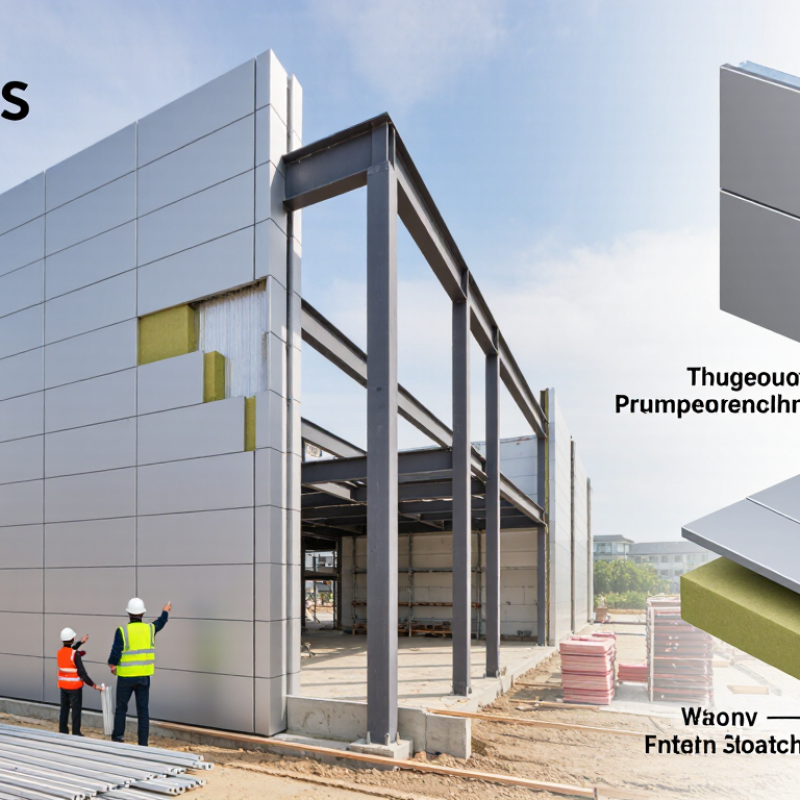
Define Project Requirements and Building Conditions
Before comparing insulated metal panels, write down what the building must do. A refrigerated warehouse has different needs from a workshop or office. Record indoor temperature targets, occupancy, equipment loads, and any areas exposed to moisture. These details affect panel thickness, core type, and joint design.
Look closely at the site. Wind exposure, snow loads, daily temperature swings, and coastal air can influence panel selection and fastening details. Check the supporting structure too: panel spans must match the framing, not just the drawings. A narrow loading-bay wall may need more frequent supports than a broad, uninterrupted elevation. Small differences matter.
Think through how the building will be used and maintained. Frequent washdowns call for careful attention to seals, penetrations, and drainage. Roof panels face different demands from wall panels, including ponding risks and foot traffic during service. Confirm fire, thermal, and structural requirements with qualified project professionals and applicable local standards. Do not assume one panel specification fits every elevation. That shortcut can be costly. I have to admit, early estimates often overlook doors and service openings. List them, then review how each interrupts the insulated envelope. A messy first draft is normal. It is better than guessing.
Compare Insulated Metal Panel Core Types and Performance
Insulated metal panel cores affect more than energy use. They influence fire behavior, sound control, panel weight, and installation details. Compare complete panel assemblies, not just insulation labels. Test results can vary with thickness, joints, facings, and installation.
Polyisocyanurate (PIR) and polyurethane (PUR) cores usually provide strong thermal resistance with relatively slim panels. That can help when wall depth is limited. Their fire performance depends on the specific product and tested assembly, so review the technical data carefully. Mineral wool cores are noncombustible and can offer useful sound absorption, but panels may be heavier and require more structural support. EPS cores can be economical and lightweight, though they may need greater thickness to reach a similar thermal target. There is no perfect core.
Match the choice to the building’s real conditions. A cold-storage wall needs careful attention to thermal bridges, joints, and vapor control. A noisy workshop may benefit more from acoustic performance than from the thinnest possible panel. Ask for documented thermal, fire, and acoustic ratings, and check that they reflect the intended installation. Small details matter. A rushed comparison can miss them. Even a well-rated core may underperform if seams are poorly sealed or the support spacing is wrong.
Check Building Codes, Installation Needs, and Compatibility
Before selecting insulated metal panels, check the codes that apply to your building’s location and use. Requirements may cover fire performance, wind loads, energy efficiency, and approved wall or roof assemblies. Ask the project designer or local building official which documents they need; a panel’s published rating alone may not answer every question. Keep the approved details on hand during purchasing.
Installation conditions matter just as much. Confirm the supporting structure, panel lengths, lifting access, and installation sequence before delivery. A narrow loading area or uneven framing can slow work and create avoidable adjustments. Check how joints, corners, openings, and penetrations will be sealed. Small gaps around a window can undermine an otherwise well-installed wall. This part is easy to underestimate.
Compatibility deserves a close look, especially when panels meet existing construction. Compare the panel system with the substrate, fasteners, flashing, sealants, and adjacent materials. Dissimilar metals can corrode when moisture is present, while incompatible sealants may affect adhesion or finish. Ask for written compatibility guidance, and verify that proposed details match the project drawings. On site, even a minor mismatch can become a leak path. I would recheck transitions before installation starts; plans can look clear until the materials meet.
How to Choose Insulated Metal Panels for Your Project
Typical thermal resistance ranges by insulation core (R-value per inch)
Polyisocyanurate often provides higher R-value per inch, while mineral wool may be considered where fire performance is a priority. Actual performance varies by product, thickness, and conditions. Check local building codes, tested assemblies, installation details, and compatibility with adjacent systems before selecting panels.
Verify Product Quality, Warranty, and Long-Term Costs
When choosing insulated metal panels, ask for test reports that match the exact panel thickness, core, and facing material being quoted. A general product sheet may not describe your assembly. Check published thermal performance, fire-test documentation, and water-management details. Compare the stated values carefully. Request a sample and inspect its edges, coating, and joint fit; small gaps can complicate installation. If possible, ask an experienced installer how the connection details perform in your climate.
Read the warranty before comparing prices. Confirm what it covers, how long coverage lasts, and whether labor, finish, or moisture damage is excluded. Keep the document with the project records. Long-term cost also includes energy use, cleaning, repairs, and replacement. Ask suppliers for maintenance guidance and realistic service-life assumptions. I would not treat the lowest estimate as the cheapest choice; a spreadsheet can miss awkward repairs or added installation time.
Tips: Compare written specifications, not sales claims. Check warranty exclusions. Estimate upkeep over the building’s expected service life. Keep a little room for uncertainty—actual performance depends on installation and site conditions.