Choosing the right screw air compressor can be challenging. In a market filled with options, understanding your needs is essential. Industry expert David Wright states, “Selecting the right screw air compressor can enhance efficiency and reduce costs.”
When evaluating your options, consider factors like airflow requirements and energy efficiency. A screw air compressor is known for its reliability and operational cost savings. However, not every model fits every application. The wrong choice can lead to wasted energy and increased maintenance costs.
Reflect on your unique requirements. Do you need continuous operation or occasional use? The size of your operation and the required pressure levels matter. It's crucial to weigh these aspects carefully. This decision is impactful, and a bit of indecision can lead to regret.

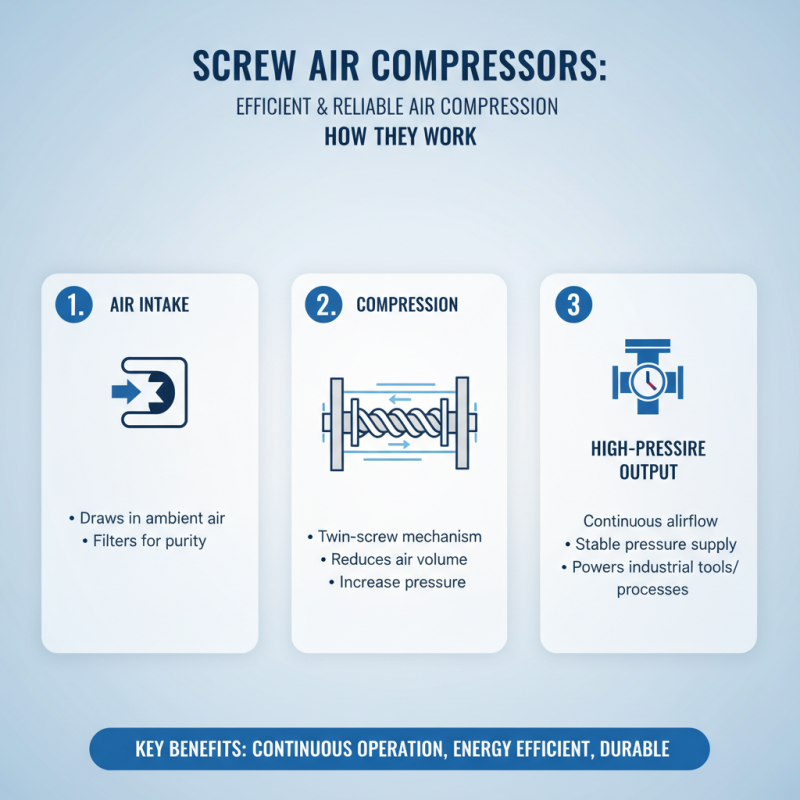
Screw air compressors are vital in various industries. They function by drawing air into a pair of screws. The screws then compress the air, creating a high-pressure output. This design makes them efficient and reliable for continuous operation.
When selecting a screw air compressor, consider the required air volume. Calculating your daily air needs helps ensure you choose the right model. Oversizing can waste energy, while undersizing may lead to performance issues. It’s essential to balance these factors based on your operational requirements.
Maintenance is also crucial. Regularly checking oil levels and filters can extend the compressor's lifespan. Neglect can lead to unexpected breakdowns. Understanding the basics means grasping these details. While you may have specific needs, the fundamentals remain the same across applications. Each choice echoes through your operational efficiency.
Identifying specific air requirements is crucial when selecting a screw air compressor. Start by calculating your air consumption. Different tools and applications require varying amounts of compressed air. For instance, pneumatic tools often need a consistent flow. This flow must match their demand to ensure efficiency. If the compressor is undersized, you’ll face performance issues. An oversized unit can lead to energy waste and increased operating costs.
Consider your peak air usage. Occasional surges in demand can strain an inadequate compressor. Understanding your operations helps you plan for these peaks. Measure the pressure required for your tasks. Low pressure might suffice for simple applications, while high pressure is necessary for more demanding tasks. Don't forget about the duty cycle of the compressor. Running it continuously may lead to overheating and breakdowns.
Think about future expansion as well. Your air needs may grow, requiring a more powerful solution. This can save you money in the long run. Be mindful of your environment. Dusty or wet locations can affect compressor performance. Regular maintenance is essential. Sometimes, it’s easy to overlook simple checks that can prevent costly downtimes.
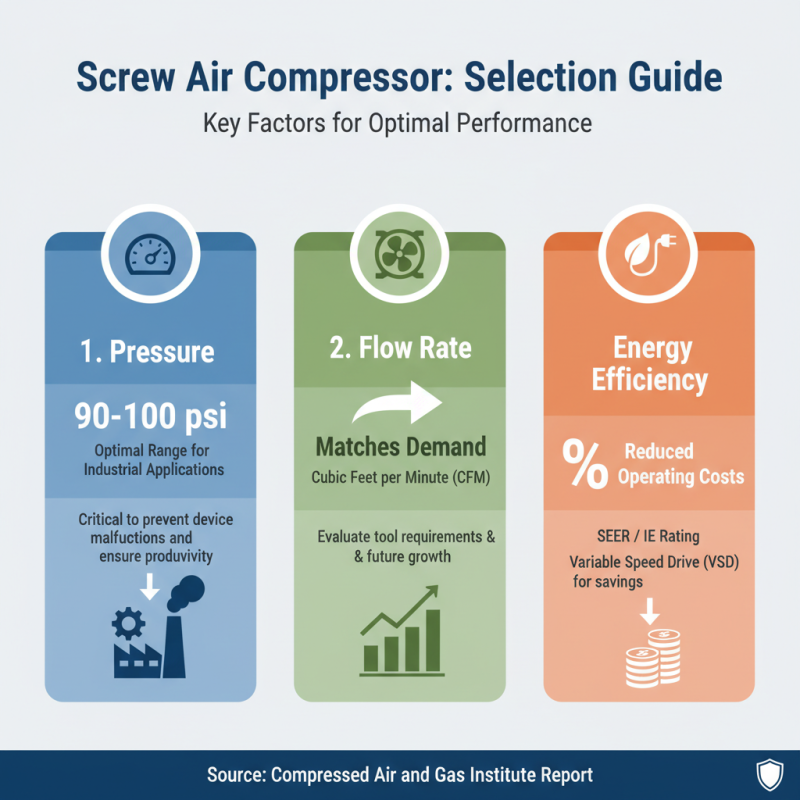
Choosing the right screw air compressor requires careful evaluation of performance specifications and features. Key factors include pressure, flow rate, and energy efficiency. A report by the Compressed Air and Gas Institute indicates that optimal pressure for most industrial applications ranges from 90 to 100 psi. This is critical because insufficient pressure can lead to device malfunctions and reduced productivity.
Another essential consideration is the specific volume flow rate, measured in cubic feet per minute (CFM). Many facilities require anywhere from 10 to 200 CFM, depending on the application. However, overestimating the required CFM can lead to higher energy costs and equipment strain. Older models might also have lower efficiency ratings, sometimes reaching only 65-70%. Modern compressors often exceed 90% efficiency, making them a wise investment in the long run.
While initial costs play a role, long-term savings on maintenance and energy bills are more crucial. A comprehensive analysis often reveals that energy savings can account for up to 70% of lifetime ownership costs. Companies should conduct an energy audit to assess their needs accurately. They may find gaps in their understanding of air demand and usage, leading to unexpected expenses. Balancing immediate budget constraints with future operational efficiency is a challenge that cannot be ignored.
When selecting a screw air compressor, energy efficiency plays a crucial role. A more efficient model lowers energy usage, leading to reduced operating costs. Over time, the savings can be significant. Consider the compressor's duty cycle. High demand requires efficient models that can handle continuous use without excessive energy consumption.
Operating costs extend beyond energy. Regular maintenance is essential for optimal performance. Neglect can lead to inefficient operation and costly repairs. Look for compressors that provide easy access for servicing. Unforeseen breakdowns can be frustrating. Balancing efficiency with maintenance needs often reveals the true cost of ownership.
User feedback can inform choices too. Some users report frustration with complex systems that waste energy. Simple designs often result in better reliability. Always weigh the cost against potential energy savings. Finding the right balance can be challenging but is necessary for informed decisions.
When choosing a screw air compressor, maintenance and support options are crucial. Regular upkeep is essential for performance. Make sure you understand the maintenance requirements of the compressor. Some models need frequent oil changes and filter replacements. Others might require less attention but could have more complex issues down the line.
Consider the availability of support services. A good support team can be a lifesaver. If issues arise, having quick access to help can minimize downtime. Check if local technicians are available. It’s frustrating to deal with equipment failure and slow repairs. Look for manuals or online resources that are easy to understand as well.
Think about your specific needs. Will you use the air compressor daily or only occasionally? This may impact your maintenance choice. Spare parts should be easy to find. If not, you might face long waits for repairs. Evaluate warranties too. A longer warranty often indicates reliability, but it should not be the only factor to consider. Make a well-rounded decision based on your unique situation.
| Feature | Description | Importance | Maintenance Frequency |
|---|---|---|---|
| Air Delivery Capacity | The amount of air the compressor can deliver, typically measured in CFM (Cubic Feet per Minute). | Critical for matching air supply to tools and applications. | Daily |
| Horsepower | Indicates the power of the compressor motor. | Essential for determining efficiency and performance. | Monthly |
| Energy Efficiency | Measurement of compressor's energy use vs output. | Crucial for cost savings and environmental impact. | Annually |
| Support Options | Available warranty and maintenance services. | Important for minimizing downtime. | As Needed |
| Noise Level | Measured in dB(A), affects workplace environment. | Significant for user comfort and regulatory compliance. | Monthly |