(770) 529-4731
esen

Why Is RCCB Used and What Does It Mean?

Rccb Meaning is the purpose and function of a Residual Current Circuit Breaker. This safety device monitors the electrical current flowing through a circuit’s live and neutral conductors. If some current escapes—perhaps through damaged insulation or a faulty appliance—the balance changes. The RCCB detects that difference and disconnects the supply, often within a fraction of a second. Click, and the circuit goes dead. Its rapid response can reduce the risk of serious electric shock and electrical fires caused by leakage current.

That protection has limits. A standard RCCB does not usually protect against overloads or short circuits, so it must work alongside correctly selected circuit breakers or fuses. An RCBO combines residual-current protection with overcurrent protection, but the two devices are not interchangeable in every installation. Details matter. A device’s rated sensitivity, pole arrangement, wiring, and suitability for the electrical system all affect performance. Selection and installation should follow the applicable standards and be handled by a qualified electrician.

In everyday use, an RCCB may trip when a damaged kettle leaks current to its metal casing. The trip is a warning, not a diagnosis. Resetting it repeatedly without finding the cause is unwise. Sometimes the fault is intermittent, which can make troubleshooting less straightforward than expected. Understanding what the device detects—and what it cannot detect—helps homeowners and professionals make safer decisions and choose appropriate protection.
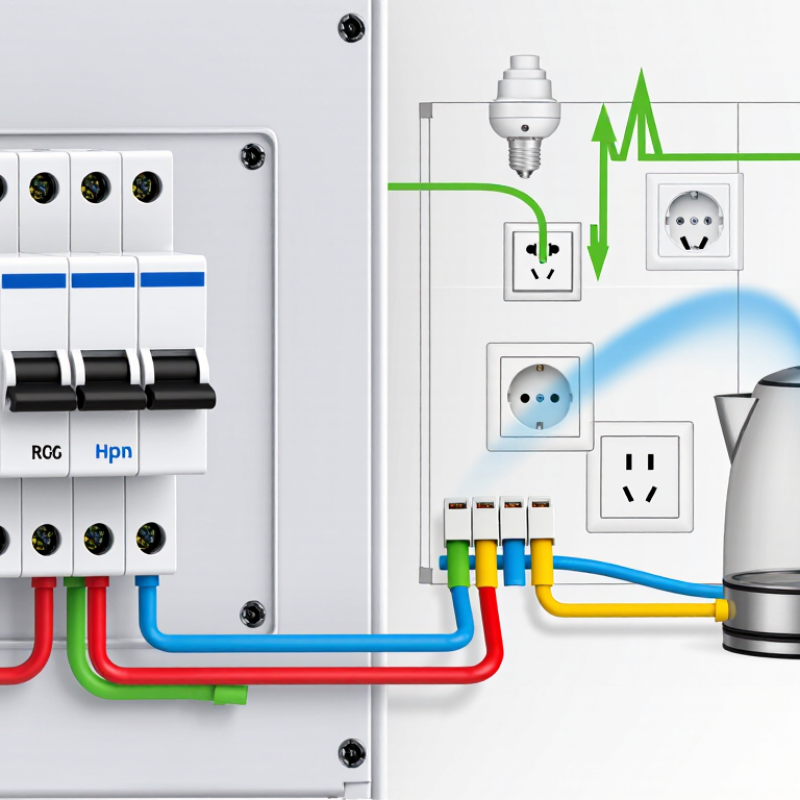
Why Is RCCB Used and What Does It Mean?

What Does RCCB Mean Under IEC 61008-1?

Under IEC 61008-1, RCCB means residual current operated circuit-breaker without integral overcurrent protection. The standard sets requirements for these devices in household and similar installations. An RCCB monitors the current flowing out through the line conductor and returning through neutral. If some current escapes elsewhere, the difference can cause the device to disconnect the circuit. That distinction matters. IEC 61008-1 specifies product requirements; it does not mean every RCCB has the same sensitivity or rating.

An RCCB can help reduce the risk of electric shock from certain earth-leakage faults. It does not provide overload or short-circuit protection by itself. Not by itself. Appropriate circuit protection, such as a fuse or circuit-breaker, is also needed. A trip may point to damaged insulation, moisture, or a faulty appliance, but it does not identify the cause. A qualified electrician can inspect the circuit and confirm that the selected device suits the installation.

Tips: Check the device marking for IEC 61008-1 and its rated residual operating current. Test it using its test button as instructed by the manufacturer.


How Does an RCCB Detect a Live-Neutral Current Imbalance?

An RCCB, or residual current circuit breaker, detects a difference between the current flowing through live and neutral wires. Both conductors pass through a small magnetic core inside the device. During normal operation, their magnetic effects cancel. Neat and simple. If current leaks to earth through damaged insulation or a person, the returning neutral current becomes smaller. The imbalance creates a signal in the core’s sensing winding, releasing the trip mechanism and opening the circuit.

IEC 61008-1 specifies operating-time limits for general, non-delayed RCCBs: up to 300 milliseconds at rated residual current, and up to 40 milliseconds at five times that current. These are controlled test limits, not a guarantee of identical response in every fault. That distinction matters. An RCCB may not trip if someone touches live and neutral together and current returns through both monitored wires in balance. It also does not normally protect against overloads or short circuits; a suitable circuit breaker or fuse is needed.

What Do 30 mA and 300 mA Residual-Current Ratings Indicate?

A 30 mA rating describes the residual current at which an RCCB is designed to trip under specified test conditions. It is commonly used for additional protection against electric shock in circuits serving sockets, bathrooms, or outdoor equipment. For example, damaged insulation on a garden tool may allow current to escape through a person or the ground. The RCCB can disconnect the supply quickly. It is not a guarantee against every shock, and correct installation still matters.

A 300 mA rating responds to a larger residual current. It is often used upstream to reduce fire risk from persistent earth leakage, especially in larger installations. It is not generally a substitute for 30 mA protection where additional shock protection is needed. The number is a threshold, not a measure of how much current a person can safely withstand. Important distinction.

Choosing between ratings depends on the circuit, wiring, and protection scheme. Multiple devices may need coordination so a fault disconnects the nearest circuit, rather than shutting down an entire building. Real installations also have small background leakage from equipment, which can cause unwanted trips if the design is poor. An RCCB does not protect against overloads or short circuits; suitable overcurrent protection is required. Always check the device markings and have selection and testing carried out by a qualified professional.

Where Does IEC 60364-4-41 Specify 30 mA Additional Protection?

An RCCB, or residual current circuit-breaker, disconnects a circuit when current leaks to earth. It can help reduce electric-shock risk, but it does not provide overload or short-circuit protection. A fuse or circuit-breaker must provide that protection.

IEC 60364-4-41 addresses 30 mA additional protection in clause 411.3.3. It applies to AC socket-outlets rated up to 32 A for ordinary persons’ general use, and to outlets supplying mobile equipment up to 32 A outdoors. Clause 411.3.4 also specifies this protection for final circuits supplying luminaires in household premises. In these cases, the device’s rated residual operating current must not exceed 30 mA.

The detail matters. A workshop socket, a garden outlet, and a household lighting circuit may fall under different requirements. National rules can amend or interpret the IEC text, so the locally adopted edition should be checked before selecting equipment. The boundary can feel less tidy than a simple “use 30 mA everywhere” rule. That shortcut may miss important circuit conditions. An RCCB also needs correct installation and regular testing; a test button is useful, but it does not replace inspection.

Why Is RCCB Used and What Does It Mean? - Where Does IEC 60364-4-41 Specify 30 mA Additional Protection?

Topic Meaning or IEC reference Practical significance
What RCCB means RCCB stands for residual current circuit-breaker without integral overcurrent protection. It is a type of RCD (residual current device). It detects residual current—an imbalance between the current flowing in the live conductors—and disconnects the circuit when its operating conditions are met.
Why an RCCB is used It provides residual-current protection, which can reduce the risk of electric shock and help limit the risk of fire caused by certain earth-leakage faults. An RCCB does not, by itself, provide protection against overloads or short circuits. It must be coordinated with a suitable overcurrent protective device.
30 mA rating 30 mA is the rated residual operating current, written as IΔn. It is the device’s specified sensitivity rating, not a guarantee that every fault will be disconnected in exactly the same time. Choose and install the device in accordance with the applicable wiring rules, product requirements, circuit conditions and manufacturer instructions.
Socket-outlets and outdoor mobile equipment IEC 60364-4-41, Clause 411.3.3 requires additional protection by an RCD in AC systems for specified socket-outlets rated up to 32 A that are likely to be used by ordinary persons and intended for general use, and for mobile equipment rated up to 32 A used outdoors. The clause includes limited exceptions for certain socket-outlets, subject to the conditions in the applicable edition and national adoption. Check local regulations before applying an exception.
Lighting circuits in household premises IEC 60364-4-41, Clause 411.3.4 requires additional protection by RCDs with a rated residual operating current not exceeding 30 mA for AC final circuits supplying luminaires in household premises. This requirement applies where Clause 411.3.4 is adopted in the governing edition or national rules. Confirm the edition and any local amendments.
Additional protection is not the only protection Clause 415.1 describes additional protection by RCDs with a rated residual operating current not exceeding 30 mA. An RCD is an additional protective measure; it does not replace basic protection, protective earthing, automatic disconnection requirements or other measures required for the installation.
RCCB versus RCBO An RCCB has no integral overcurrent protection. An RCBO combines residual-current protection with overcurrent protection. Use an RCCB with suitable overcurrent protection, or use an appropriately rated RCBO where the installation design calls for both functions in one device.

Standards note: Requirements can vary with the IEC 60364-4-41 edition, national adoption and local amendments. Verify the applicable rules and the complete installation design before selecting or installing protective devices.

Why Must an RCCB Be Paired with Overcurrent Protection?

Why Is RCCB Used and What Does It Mean?

An RCCB, or residual current circuit breaker, detects a difference between outgoing and returning current. That difference can signal electricity leaking through damaged insulation or a person’s body. The device can disconnect the circuit quickly. It does not detect every danger.

An RCCB does not normally protect wiring against overloads or short circuits. A sustained overload can heat a cable, while a short circuit can create a very high current. Those faults need overcurrent protection, such as a correctly rated fuse or circuit breaker. Without it, the RCCB may remain closed while wires overheat. An RCBO combines both functions in one device, when properly selected.

Tips: Check the circuit diagram and device ratings before installation. Protection must suit the cable and expected load. A qualified electrician can verify coordination and test the device. Small details matter here, and they are easy to overlook.