(770) 529-4731
esen

Top Stainless Steel Filter Element Manufacturers for Global Buyers

Stainless Steel Filter Element manufacturers serve industries where filtration performance affects product quality, equipment life, and operating costs. Buyers may need pleated cartridges, sintered components, or mesh elements for liquids, gases, and demanding process environments. The right choice depends on more than a catalog specification. Aperture size, material grade, pressure rating, cleaning method, and connection design all matter.

This guide introduces manufacturers that global buyers may consider and explains how to compare their capabilities. Look for clear technical data, documented quality controls, responsive engineering support, and a realistic approach to custom orders. Ask how suppliers verify filtration ratings and test welds or dimensions. A polished website is not proof. Request drawings, sample results, and references relevant to your application.

Details matter. A filter that fits the housing but clogs too quickly can create costly downtime. Likewise, an unusually low quote may exclude testing, finishing, or packaging requirements. Supplier strength can vary by product line, factory, and region, so confirm details directly before placing an order. No ranking can replace a review of your actual process conditions. Some specifications may need revision after trials; that is inconvenient, but common in real procurement. The manufacturers covered here offer a starting point for comparison, not a guarantee of suitability. Use this information to ask sharper questions and build a shortlist based on evidence, service needs, and long-term consistency.
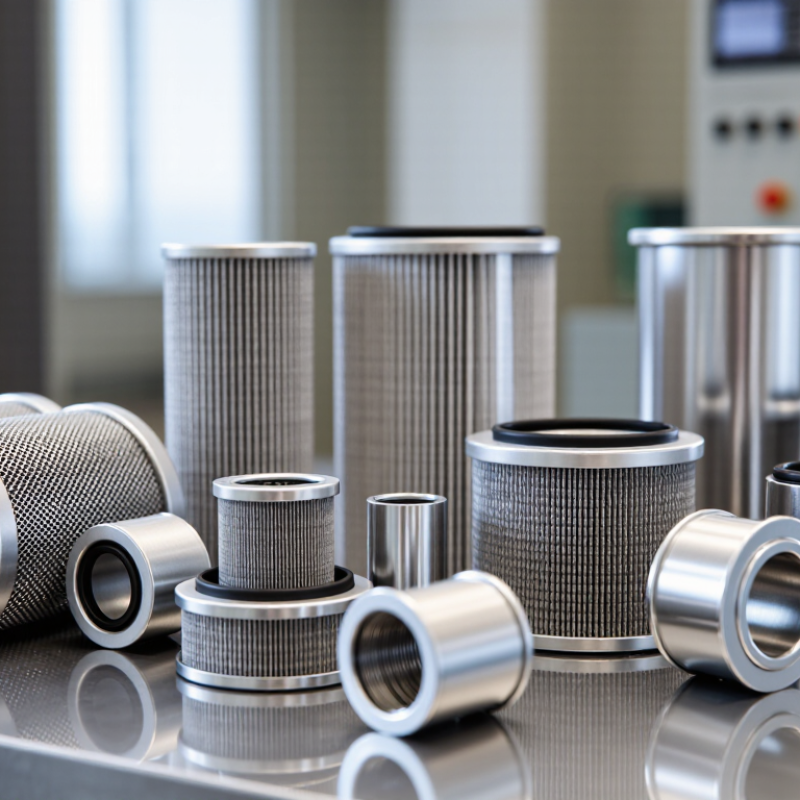
Top Stainless Steel Filter Element Manufacturers for Global Buyers

Understanding Stainless Steel Filter Elements and Their Applications

Stainless steel filter elements remove suspended particles from liquids or gases while allowing the process stream to pass through. Common designs include woven mesh, perforated sheets, and sintered porous structures. Mesh is useful for coarse screening; sintered media can capture finer particles. The right choice depends on particle size, flow rate, pressure, temperature, and cleaning method. Fit matters.

Applications range from process water and compressed air to food, beverage, and chemical production. Stainless steel can tolerate repeated cleaning and many corrosive environments, but it is not universally resistant. Chlorides, temperature, and cleaning chemicals can still cause damage. The World Stainless Association reported 58.4 million tonnes of global stainless crude steel production in 2023. That figure shows the scale of the material industry, not the performance of any filter element.

Tips: Check the element’s micron rating, operating limits, and seal compatibility against actual process conditions. Ask for test data covering pressure drop and particle retention. A finer rating may improve capture but restrict flow; that trade-off is easy to overlook. Inspect the element after cleaning, too. Small defects matter.


Understanding Stainless Steel Filter Elements

Standard ASTM E11 sieve openings provide a useful reference for comparing particle sizes. These values describe test sieve openings—not a universal filtration rating for stainless steel filter elements. Actual ratings depend on the element’s construction and the manufacturer’s specified nominal or absolute rating.

How Leading Manufacturers Design and Produce Filter Elements

Leading stainless steel filter element manufacturers start with the operating conditions: fluid, temperature, pressure, particle size, and cleaning method. These determine the alloy, mesh opening, support layers, and element shape. Engineers may choose woven wire mesh for a defined screen opening or sintered metal media for a rigid, porous structure. Production then involves cutting, forming, seam welding, and fitting end caps. A weld that looks neat can still create a bypass path, so visual checks alone are not enough.

For hydraulic applications, ISO 16889:2022 provides a multipass method for evaluating filter performance. Its beta ratio compares particle counts upstream and downstream at a specified particle size. A beta ratio of 200 corresponds to 99.5% capture at that size, using the standard’s calculation. This is a test result under defined conditions, not a guarantee for every fluid or operating cycle. Manufacturers also check dimensions, pressure resistance, and element integrity. Small details matter. Yet test results can still miss wear caused by repeated cleaning or installation errors.

Tips: Ask for the test method, particle-size rating, alloy grade, and weld inspection records. Compare results under matching conditions; a headline efficiency number alone can mislead.

Key Stainless Steel Filter Element Manufacturers for Global Buyers

Key stainless steel filter element manufacturers serve buyers across water treatment, food processing, chemical production, and industrial fluid systems. Their capabilities can differ sharply. Some specialize in standard pleated cartridges, while others build welded mesh, sintered powder, or custom elements for demanding operating conditions. Ask how each supplier controls pore size, weld quality, and dimensional tolerances. These details affect fit and filtration performance.

Material selection deserves close attention. Stainless steel grades such as 304 and 316L offer different levels of corrosion resistance, but neither is suitable for every fluid or cleaning routine. A reliable manufacturer should explain its material options and provide traceable inspection records where available. Request samples, drawings, and test data tied to the exact model. Small print matters.

Production scale is only one factor. Buyers should also check whether a manufacturer can maintain consistent specifications across repeat orders and communicate changes clearly. Discuss operating temperature, pressure, flow rate, and cleaning methods before requesting a quotation. A filter that looks robust on a bench may behave differently in a real process line. That gap is easy to underestimate. Compare lead times, packaging, and export documentation too, but verify each claim directly; polished catalogs do not replace practical evidence.

Top Stainless Steel Filter Element Manufacturers for Global Buyers - Key Stainless Steel Filter Element Manufacturers for Global Buyers

Anonymized comparison of common stainless steel filter element supplier capabilities. The specifications below describe typical market offerings, not verified product data for any individual manufacturer; confirm grades, ratings, and compliance directly with suppliers.

Supplier capability profile Common element construction Typical filtration range Common stainless steel grades Cleaning and reuse Buyer considerations
Sintered porous metal specialist Sintered stainless steel powder or fiber, often formed as candles or cartridges Often offered from submicron ratings to tens of microns; available ratings depend on material and design Commonly 316L; 304 may be available for less corrosive service Designed for reusable service; cleaning method depends on retained contaminants and element construction Request pore-size definition, permeability data, and differential-pressure limits for the exact element
Woven wire mesh element producer Single-layer or multilayer woven mesh, sometimes supported by perforated metal Broad range, from fine mesh openings to coarse particle screening; opening size is mesh- and weave-dependent Commonly 304 or 316/316L Usually washable; backwashing or ultrasonic cleaning may be suitable for some designs Check nominal versus absolute rating, mesh count, weave, and support-layer details
Pleated metal mesh cartridge supplier Pleated stainless steel mesh with end caps and a supporting core or cage Commonly available in ratings from a few microns to hundreds of microns, depending on media and construction Typically 304 or 316L wetted components Many designs are cleanable and reusable; service life depends on process conditions Compare dimensions, seal material, pleat support, flow direction, and replacement compatibility
Wedge-wire and screen element fabricator Profile wire welded to support rods; cylindrical screens, baskets, or other custom shapes Slot openings are specified by the application and are generally suited to coarse-to-fine screening rather than submicron filtration Often 304 or 316L; other alloys may be offered for specific environments Open slot design can support mechanical cleaning and backwashing where the process allows Provide slot size, flow direction, dimensions, and mechanical-load requirements when requesting a quotation
Custom industrial filter element manufacturer Application-specific combinations of mesh, perforated sheet, sintered media, and welded supports Specified to the process; achievable rating depends on media selection and element geometry 304 and 316L are common; confirm material traceability and suitability for the fluid Cleaning and reuse depend on the selected media, welds, seals, and contaminant type Share drawings, operating conditions, connection details, and required inspection records before ordering

Selection note: Filtration ratings are not directly comparable unless their test methods and rating definitions match. Verify operating temperature, pressure differential, corrosion compatibility, dimensional tolerances, and applicable documentation for the exact model.

Comparing Manufacturers by Quality, Customization, and Compliance

Top Stainless Steel Filter Element Manufacturers for Global Buyers
Comparing Manufacturers by Quality, Customization, and Compliance

Global buyers should look beyond catalog photos when evaluating stainless steel filter element manufacturers. Ask how alloy grades are verified, how welds are inspected, and how pore size is checked across production batches. A sample report should identify the material, dimensions, filtration rating, and test method. Small inconsistencies matter. A cartridge that fits poorly may let fluid bypass its seal.

Customization helps when operating conditions are specific. Share fluid chemistry, temperature, pressure, flow rate, and cleaning method before requesting a quote. Compare drawings, connection details, and change-control procedures. Suppliers may adjust length, end caps, or micron ratings, but each change should be documented and tested. A quick prototype is not proof of repeatable production. I would ask for evidence from multiple batches. It takes extra time, but reduces guesswork.

Tips: Request traceable material certificates and inspection records. Confirm that compliance documents match the exact element and production site. If an answer is vague, ask for a sample record. Better to verify than assume.

How to Select a Supplier for Your Filtration Requirements

A stainless steel filter element should be selected around the process, not just its advertised micron rating. MarketsandMarkets estimated the industrial filtration market at USD 29.3 billion in 2023, with a forecast of USD 36.6 billion by 2028. That growth points to rising demand, but it does not make every supplier suitable for every duty.

Start with the fluid, operating temperature, pressure, and required flow rate. Ask whether the stated micron rating is nominal or absolute, and request test conditions behind the retention figures. For demanding applications, review collapse-pressure data and cleaning guidance.

ISO 16889 describes a multi-pass test method for hydraulic filter elements; it is useful where relevant, but it is not a universal qualification for every process. Ask for material certificates, dimensional drawings, and batch traceability. Details matter.

Then check whether the supplier can explain how its element performs in your actual operating cycle, including backwashing or chemical cleaning. A sample trial can reveal pressure-drop changes that a datasheet may not show.

Even a polished specification can leave one awkward question: how will performance be verified after installation? Agree on acceptance criteria before ordering. Price still matters, of course, but a low quote is harder to defend when service life, documentation, or replacement consistency remains unclear.