(770) 529-4731
esen

7 Tips for Choosing a China Generator Factory

Choosing a generator supplier in China is not just a matter of comparing prices or reading a polished product page. A dependable China generator factory should be able to explain how its units are built, tested, and supported after shipment. For buyers, the details matter: engine and alternator brands, rated output, fuel use, control-panel layout, and access to spare parts. Ask how the factory verifies performance under load, rather than relying only on a no-load demonstration. A photo of a test bench helps, but a dated test record and clear, model-specific specifications offer stronger evidence. Small details count.

The seven tips in this guide focus on practical checks, from reviewing manufacturing experience to assessing quality controls and after-sales support. They also cover factory communication, sample orders, warranty terms, and references from buyers with similar requirements. Compare quotations carefully; a lower price may reflect different components, testing, or service, not simply better value. Request documentation for relevant certifications, and confirm that it matches the model and destination market. If possible, discuss your expected workload and operating conditions with the supplier before choosing a unit. No checklist removes all risk. A factory may give an unclear answer at first, and that deserves follow-up rather than an instant rejection. The aim is to make a well-supported decision, not to assume any supplier is perfect. A little skepticism can save time, money, and avoidable trouble later.
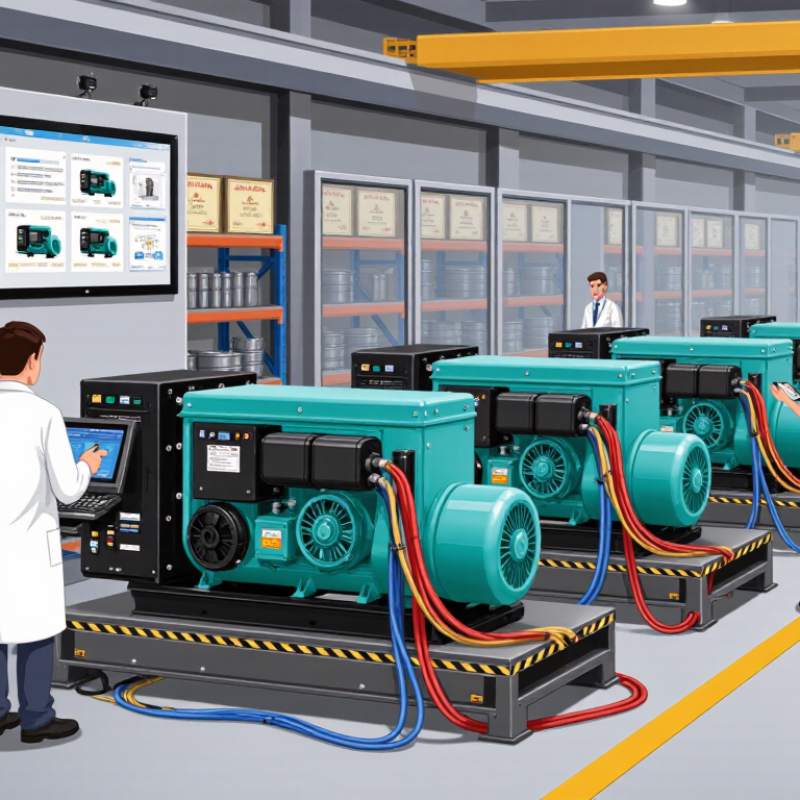
7 Tips for Choosing a China Generator Factory

Define Your Generator Requirements and Applicable Standards

01 Before contacting a China generator factory, define the job the generator must perform. Is it for standby power during outages or continuous operation? Specify the required output in kW and kVA, voltage, frequency, and single- or three-phase supply. Include the equipment starting loads, not just its normal running load. Motors can draw several times their rated current at startup.

02 Small details matter. Note the site’s altitude, expected temperature range, fuel type, daily runtime, and acceptable noise level. These conditions affect engine sizing, cooling, fuel consumption, and enclosure design. A simple load list with each machine’s rating and start-up method gives suppliers something concrete to review. It is easy to over-specify capacity “just in case”; that can raise costs and leave the set operating inefficiently.

03 Identify the standards required in the generator’s destination market and for its intended use. ISO 8528 covers generator sets, while IEC 60034 addresses rotating electrical machines; neither automatically replaces local electrical, emissions, or noise requirements. Ask the factory which editions it designs to and request relevant test records, such as load-test results. Check that documents match the proposed model, voltage, and configuration. If a requirement is unclear, confirm it with a qualified local engineer before production. Paperwork can look complete and still miss a site-specific detail.


Verify the Factory’s Credentials and Manufacturing Capabilities

A certificate on a website is only a starting point. Ask for the factory’s current quality-management certificate, its scope, issuing body, and expiry date. Verify the certificate directly with the issuer; a document may cover a trading office, not the production site. The ISO Survey 2022 reported more than 1.2 million valid ISO 9001 certificates worldwide. That scale makes verification important: the logo alone proves little. Request a live video tour or visit the plant. Look for load banks, calibrated test instruments, engine assembly areas, and clear records linking serial numbers to test results. Details matter.

Check whether the factory builds generators itself or mainly coordinates outside suppliers. Ask who makes the alternator, control panel, and enclosure, and how incoming parts are inspected. Request a sample routine-test report showing output voltage, frequency, temperature, and load-test duration. For context, the International Energy Agency’s Electricity 2024 report projected global electricity demand growth averaging 3.4% annually from 2024 to 2026. Demand growth is not proof of a supplier’s quality, but it makes production capacity worth checking. Compare stated monthly capacity with recent shipment records and staffing. A polished showroom can mislead. I would also ask to see one unit selected at random from the finished-goods area; it is a small check, and not a perfect one.

7 Tips for Choosing a China Generator Factory: Verify Credentials and Manufacturing Capabilities

Use this review-priority chart to organize factory checks. Higher values indicate items to review earlier; they are advisory priorities, not measured ratings of any factory.

Request current, verifiable records and confirm that certificates cover the relevant site and product scope. Review production equipment, quality controls, and test records against the generator specifications you need.

Assess Product Quality, Testing, and Customization Options

A generator factory should be judged by what its equipment can demonstrate, not by a polished showroom. Ask to inspect the production line and the checks performed before shipment. Look for clear records covering output, voltage stability, frequency, temperature, and fuel use. Request a witnessed load-bank test, ideally at several load levels. Listen for uneven engine noise and watch for vibration, leaks, or rising temperatures. Small details matter. A single successful test is not a guarantee; operating conditions at your site may differ.

Check whether test reports identify the unit and record measured results, rather than offering only a generic certificate. Ask how the factory handles failed tests and whether corrective work is documented. Then discuss customization in practical terms: required voltage, control-panel language, enclosure, starting method, and site conditions. Confirm which changes affect delivery time, price, maintenance, or spare parts. A custom configuration can solve a real installation problem, but too many options may complicate servicing. It is easy to focus on the specification sheet and overlook that trade-off. Have the factory confirm key requirements in writing, and review a sample drawing before production begins.

Compare Pricing, Warranty Coverage, and After-Sales Service

When comparing quotes from a China generator factory, check what each price actually includes. A low figure may exclude a control panel, export packing, or load testing. Ask for an itemized quotation and compare the same output, fuel type, and configuration. That matters. A generator listed at the same kilowatt rating may perform differently under continuous load. Small details can change the real cost.

Tip: Request the warranty terms in writing, including coverage length, parts, labor, and transport. Check when coverage begins: shipment, delivery, or commissioning. Ask how defects are reported and what evidence is required. A warranty sounds reassuring, but vague wording can leave buyers guessing. Read exclusions carefully, especially for routine maintenance and consumable parts.

Tip: Test the after-sales process before placing an order. Ask who handles technical questions, typical response times, and whether spare parts are available. Request a sample maintenance schedule for your expected operating hours. Keep the reply. A clear answer about a replacement sensor is more useful than a broad service promise. No checklist removes every risk; factory commitments may still need clarification. I would treat uncertain details as open questions, not assume they will resolve themselves.

Review Communication, Shipping, and Long-Term Reliability

When assessing a China generator factory, judge communication by the evidence it produces. Ask for a named technical contact, written response times, and clear answers about load-bank testing, fuel use, and spare parts. Request a sample test report before ordering. Does it show output readings, test duration, and serial numbers? Small gaps matter. A spreadsheet is not the whole story.

Tip: Agree on shipping milestones in writing, including factory completion, inspection, port handoff, and document deadlines. The World Bank’s Logistics Performance Index 2023 estimates that international shipments take an average of 44 days, with a 10.5-day standard deviation. Build a realistic buffer. Ask who will send packing photos, the bill of lading, and notice of delays. Confirm protective packaging for the control panel, terminals, and exhaust openings.

Tip: Check reliability beyond the sales promise. Request maintenance schedules, warranty response procedures, and availability of common service parts. Ask how the factory handles a failed test or a delayed component, and request a recent, anonymized service example. Listen for specific steps, not polished assurances. Keep it practical. If a detail is unclear, record it and revisit it before payment; a rushed decision can leave important questions unanswered.

7 Tips for Choosing a China Generator Factory - Review Communication, Shipping, and Long-Term Reliability

Tip What to Evaluate Evidence to Request Potential Warning Signs
1. Verify the factory’s role and capabilities Clarify whether the supplier manufactures, assembles, or trades generator sets. Check whether its production and testing capabilities match your required power range and configuration. Factory address, production-process overview, equipment list, and a live video walkthrough or in-person visit. Confirm which components are made in-house and which are sourced. Unclear answers about the production site, conflicting company details, or reluctance to show relevant production and inspection processes.
2. Check communication quality Assess whether the sales and technical contacts understand your application, respond consistently, and document specifications, changes, and responsibilities clearly. A written quotation and specification sheet, a named technical contact, and written confirmation of response and escalation arrangements. Important details are agreed only by phone or chat, answers repeatedly conflict, or technical questions are passed around without resolution.
3. Match the generator to the actual load Confirm the required continuous and standby ratings, voltage, frequency, phase, starting loads, operating environment, and intended duty. Ratings and operating conditions should be stated clearly. A load assessment and datasheet showing rated output, voltage, frequency, power factor, cooling method, and applicable operating conditions. Review the proposed design with a qualified electrical professional. A quote lists only a headline kVA figure, does not distinguish rating types, or omits essential electrical and environmental specifications.
4. Review quality control and testing Look for defined incoming inspection, assembly checks, and documented final testing. Test requirements should correspond to the ordered configuration. Inspection and test procedures, sample completed test reports, and confirmation of what is tested before shipment, such as operation, output, alarms, and protection functions. Testing is described only in general terms, reports cannot be linked to an order or unit, or the supplier will not clarify acceptance criteria.
5. Agree on shipping responsibilities in writing Confirm the named delivery location, packaging, loading, export documentation, insurance responsibilities, and who handles each transport stage. Specify the Incoterms® rule and named place or port in the contract. A written shipping plan, packing details, estimated production and transit schedules, document list, and a contract that identifies the applicable Incoterms® rule and named location. “Shipping included” is not defined, delivery estimates have no stated assumptions, or responsibility for freight, insurance, customs, and unloading is ambiguous.
6. Assess warranty and after-sales support Understand warranty duration, start date, covered parts and labor, exclusions, claim process, and available technical support. Confirm how replacement parts can be identified and ordered. Written warranty terms, service-contact details, recommended spare-parts list, parts ordering procedure, and any available service or troubleshooting documentation. Warranty terms are verbal or incomplete, exclusions are not provided, or there is no clear process for technical questions and parts requests.
7. Evaluate long-term reliability evidence Consider the suitability of the design, maintenance requirements, parts availability, and documented performance in comparable applications. Reliability depends on correct selection, installation, operation, and maintenance—not just factory claims. References for comparable installations, maintenance schedules, operating manuals, service-part identification, and relevant test or quality documents that can be independently checked. Reliability is supported only by broad claims, references cannot be verified, or maintenance and parts support are not addressed.