(770) 529-4731
esen

China Top 10 Float Glass Manufacturers

China’s Float Glass industry serves construction, automotive, furniture, and interior design markets. This guide introduces ten manufacturers for buyers comparing suppliers, products, and production capabilities. Float Glass is made by forming molten glass on a bath of molten tin. The process produces flat sheets with consistent thickness and smooth surfaces. Details matter.

A company’s suitability depends on more than its place in a ranking. Buyers may compare product range, available dimensions, processing options, quality documentation, delivery capacity, and communication. A clear sample, technical data sheet, and written specification can help reveal differences that a catalogue may not show. This is especially useful when projects require precise light transmission, surface quality, or compatibility with later processing.

The manufacturers covered here offer a starting point for research, not a universal verdict. Company capabilities and product lines can change, and public information may not answer every sourcing question. Verify current specifications directly with each supplier. Ask about inspection procedures, packaging, lead times, and support for your intended application. A polished website is not proof of consistent quality. Nor does one successful order guarantee the next will be identical.

This overview aims to make comparison more practical by focusing on relevant supplier characteristics rather than unsupported promises. Use it to narrow your options, then confirm details through samples and direct discussions. A little uncertainty remains. That is worth acknowledging.
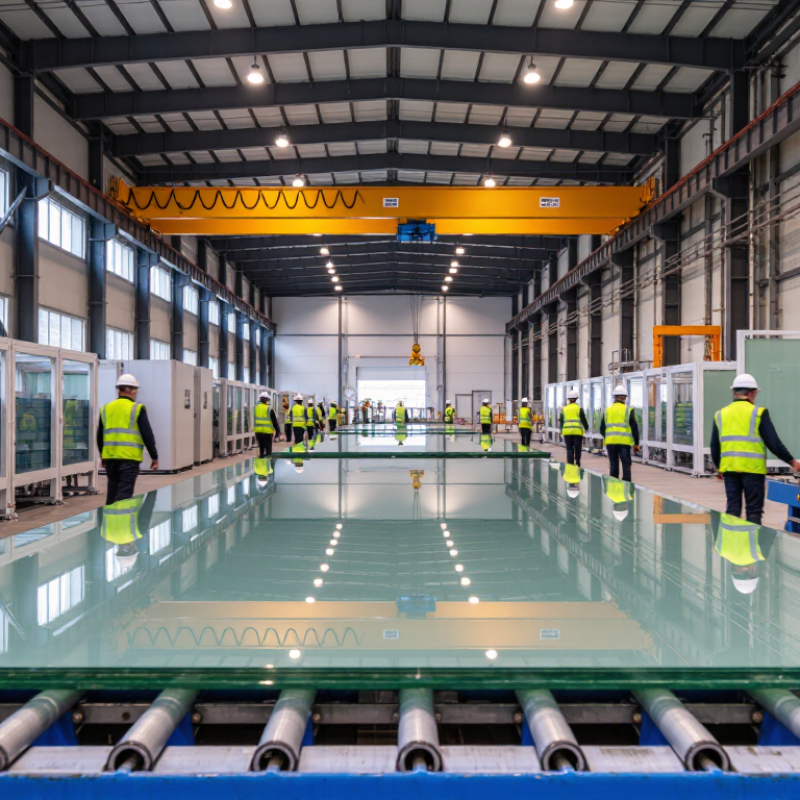
China Top 10 Float Glass Manufacturers

Float Glass and Its Role in China’s Glass Industry

Float glass is formed by spreading molten glass over a bath of liquid tin, creating flat sheets for buildings, vehicles, and solar panels. It is a core process in China’s flat-glass industry. The National Bureau of Statistics reported 969.01 million weight cases of flat-glass production in 2023. This figure covers flat glass, not float glass alone. That distinction matters when comparing factory capacity with national output.

Scale brings practical challenges. A steady tin bath and controlled cooling help limit surface flaws and internal stress. A sheet may look flawless at the cutting table, then show stress during later processing. The International Energy Agency’s Energy Technology Perspectives 2023 estimates that industry uses about 37% of global final energy. That wider industry figure is not specific to glass, but it highlights why furnace efficiency matters. China’s manufacturers must balance volume, energy use, and consistent quality. Output numbers show scale, not how efficiently each line operates.


How China’s Float Glass Manufacturing Sector Operates

China’s float-glass sector runs as a continuous process: silica sand, soda ash, and limestone are batched, melted, and formed into a flat ribbon on molten tin. The European Commission’s glass-manufacturing reference document describes furnace temperatures reaching roughly 1,600°C. Heat is constant. Furnaces operate around the clock, so stable raw-material quality and careful temperature control matter. A small variation can affect thickness, optical distortion, or surface quality.

Scale is substantial. China’s National Bureau of Statistics reported about 969 million weight cases of flat glass production in 2023. That figure covers flat glass, not float glass alone, so it should not be treated as a precise measure of float-line output. Still, it shows the size of the downstream supply base for construction and automotive uses. At plant level, operators monitor ribbon thickness, tin-bath conditions, and annealing temperatures, then inspect sheets for bubbles and scratches. Energy use and emissions remain difficult operational pressures; furnace upgrades can be costly and slow. Data also vary by reporting scope. That caveat deserves attention.

China Top 10 Float Glass Manufacturers — How China’s Float Glass Manufacturing Sector Operates

Typical temperature profile across the float glass production process

Float glass is melted and refined at high temperatures, formed on a molten tin bath, then gradually cooled in an annealing lehr. Values shown are representative process temperatures; actual operating conditions vary by plant, glass composition, and product thickness.

Criteria for Identifying Leading Chinese Float Glass Manufacturers

Evaluating leading Chinese float glass manufacturers requires more than comparing quoted prices. Buyers should examine production consistency, technical controls, and evidence behind quality claims. A clear specification should state glass thickness, dimensional tolerances, flatness, and acceptable optical distortion. Ask how these properties are checked, and whether inspection records can be linked to individual production batches.

Look closely at sample edges and surfaces. Small bubbles, scratches, or uneven thickness may matter greatly in insulated units, façades, and display applications. A useful supplier can explain its sampling process, defect limits, and corrective actions without relying on vague assurances. Ask about furnace stability, line maintenance, and capacity during peak demand. Details matter. Delivery performance also deserves attention: confirm packaging methods, loading plans, and realistic lead times for the required sizes.

Independent test reports, traceable documentation, and relevant quality certifications can support a supplier’s claims, but they are not a substitute for product evaluation. Compare recent samples with written specifications, and check whether technical support responds clearly to practical questions. One limitation remains: a strong factory audit cannot predict every shipment issue. No score is perfect. Buyers should record concerns, review performance over time, and avoid choosing a manufacturer on price alone.

China Top 10 Float Glass Manufacturers - Criteria for Identifying Leading Chinese Float Glass Manufacturers

A practical, evidence-based framework for comparing float glass manufacturers. The criteria below are assessment dimensions, not a company ranking.

No. Assessment Criterion What to Examine Evidence to Request or Verify Why It Matters
1 Verified float glass production Confirm that the company operates float glass production lines, rather than only processing or trading glass. Factory records, production-line details, site inspection, and applicable business or environmental documentation. Distinguishes primary glass manufacturers from downstream processors and resellers.
2 Production capacity and utilization Compare stated annual capacity with actual production and operating status. Check whether figures refer to one line, one site, or the whole group. Audited annual reports, official disclosures, production records, and clearly dated capacity statements. Capacity alone does not show how much glass is currently available or consistently produced.
3 Product range and thickness coverage Check the available clear, tinted, patterned, or other float glass products, along with documented thickness and size options. Current technical data sheets, product catalogues, and sample specifications. A well-documented range helps buyers match products to construction, automotive, or further-processing requirements.
4 Product quality control Review controls for thickness, dimensions, optical quality, surface defects, and consistency between batches. Inspection procedures, test reports, calibration records, and batch-level quality documentation. Consistent quality can reduce breakage, rework, and losses during cutting or processing.
5 Standards and certifications Verify which product and management-system standards apply to the specific products and production site. Valid certificates and test reports with the issuing body, scope, site, product, and validity period identified. Certificates are useful only when their scope matches the product and facility being evaluated.
6 Environmental and regulatory compliance Assess permits, emissions controls, energy management, and compliance with applicable local requirements. Environmental permits, monitoring results, inspection records, and publicly available regulatory notices. Float glass production is energy-intensive, making environmental management and regulatory compliance important operational considerations.
7 Delivery and export capability Evaluate order lead times, shipment planning, export documentation, and experience with the destination market. Redacted shipping records, export documents, delivery performance data, and written logistics procedures. Reliable delivery and documentation help reduce delays, customs issues, and supply interruptions.
8 Packaging and transport protection Review how glass is separated, secured, labelled, and protected against moisture and impact during storage and transit. Packaging specifications, loading procedures, photographs, and records of transport-related claims. Appropriate handling reduces the risk of damage to fragile glass products in transit.
9 Technical support and traceability Check access to technical staff, product documentation, complaint handling, and batch or production traceability. Technical support process, sample documentation, traceability examples, and written corrective-action procedures. Traceability and responsive support make quality issues easier to investigate and resolve.
10 Commercial reliability and financial stability Review contract clarity, payment terms, warranty provisions, business continuity, and financial condition. Company filings where available, credit checks, references, contract terms, and verified business details. Commercial checks help buyers assess continuity of supply and the enforceability of agreed terms.

Evaluation note: Use the same evidence requirements for every candidate and verify claims against current documents. This framework does not assign scores or identify specific manufacturers.

Profiles of 10 Major Float Glass Manufacturers in China

China’s float-glass industry includes producers with different scales, product mixes, and processing capabilities. A useful profile compares more than output: it looks at glass thickness, optical quality, delivery consistency, and technical support. The ten manufacturer profiles can be viewed through these practical differences, rather than as a fixed ranking.

Some large integrated producers supply clear glass in high volumes. Regional plants may offer shorter delivery routes. Other producers focus on low-iron glass for display or solar applications, tinted glass for façades, or products suited to later coating. Several serve construction demand with varied thicknesses; others emphasize automotive specifications or larger sheet sizes. A few combine float production with downstream processing, while export-oriented suppliers may provide broader packaging and documentation support. Capabilities vary by facility, and a polished product sheet does not prove steady quality. That detail is easy to overlook.

Tips: Request current specifications, sample results, minimum order quantities, and lead times. Check glass dimensions and tolerances against your project drawings. Ask which plant will produce the order; capabilities can differ across sites.

Comparing Product Range, Production Capacity, and Market Reach

China Top 10 Float Glass Manufacturers

Comparing Chinese float-glass manufacturers means looking beyond headline output. Product range matters: check available thicknesses, clear and tinted glass, coated options, and whether specifications remain consistent across production runs. A broad catalogue can help buyers match glass to different building designs. But catalogue size alone proves little.

Capacity figures need careful reading. Annual capacity may describe a furnace’s designed output, not the volume currently available for orders. Ask about furnace lines, planned maintenance, quality checks, and lead times. Request recent production data where possible. Small details matter. A stable supply of standard 6-millimeter sheets may be more useful than impressive capacity figures that are difficult to verify.

Market reach is another useful comparison. Review export destinations, port access, packaging standards, and the company’s ability to coordinate delivery across long distances. These factors can affect breakage, transit time, and landed cost. Public information is not always comparable, so treat rankings as a starting point rather than a final verdict. The comparison is imperfect. Buyers should confirm technical certificates, sample quality, and order terms directly before selecting suppliers.

Article Source: