Top 10 Hazardous Area Lighting Manufacturers in 2026?
Hazardous Area Lighting is not ordinary illumination with a tougher housing. In a refinery, grain terminal, or paint-mixing room, the wrong fixture can create risks where flammable gases, vapors, or dust are present. Buyers must weigh area classification, temperature limits, ingress protection, optical performance, and maintenance access—not just lumen output or price.
The U.S. Department of Energy reports that LED lighting uses at least 75% less energy and can last up to 25 times longer than incandescent lighting. Those figures describe LEDs broadly, not hazardous-area fixtures specifically, so real savings depend on operating hours, installation conditions, and product performance. IEC 60079-0 sets general requirements for equipment used in explosive atmospheres; IECEx certification can help buyers verify that products were assessed within the applicable scheme. Check the exact certificate and intended zone before comparing manufacturers.
Electrical-safety specialist Mary Capelli-Schellpfeffer’s work points to a practical principle: control exposure to hazards before relying on protective equipment. That principle applies to lighting selection, too. A bright fixture alone does not make a hazardous location safe. This 2026 guide compares ten manufacturers by certification evidence, product range, optical choices, durability, and support. Some details can be difficult to compare across brands; that is a limitation worth acknowledging. The aim is a clearer shortlist, not a claim that one supplier fits every site.
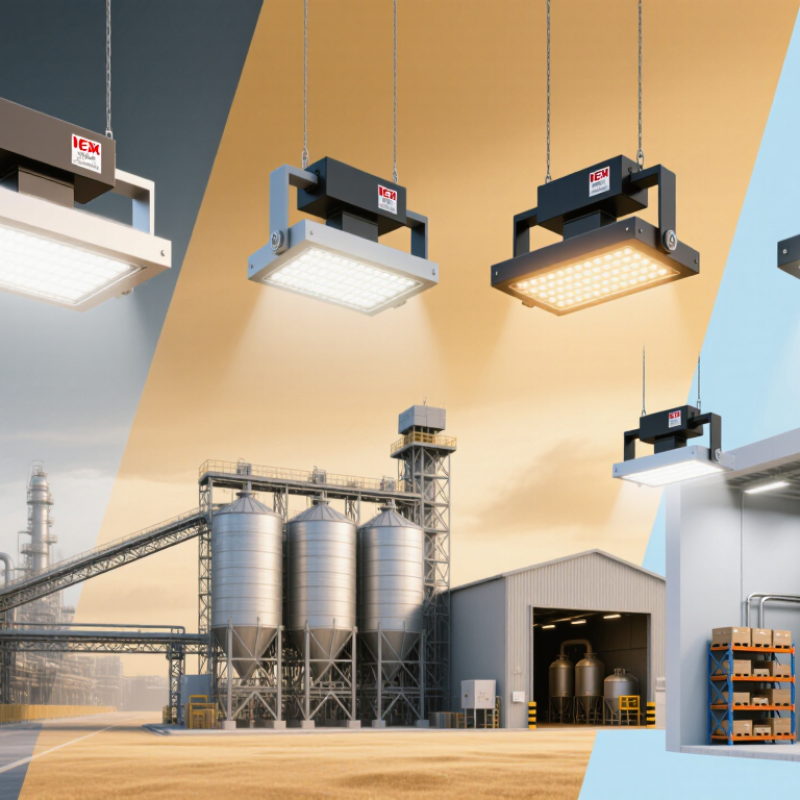
Understanding Hazardous Area Lighting and Its Industrial Applications
Hazardous-area lighting serves workplaces where flammable gases, vapors, dust, or fibers may create an ignition risk. Examples include refineries, grain handling sites, paint rooms, and wastewater facilities. The hazard differs by process. So does the required fixture. Designers assess the substance, its likelihood of being present, and operating conditions before selecting equipment. A light must limit potential ignition sources while providing enough illumination to inspect equipment, read gauges, and move safely.
In practice, selection involves more than a rugged housing. Engineers check area classification, temperature limits, enclosure ratings, mounting position, ambient heat, vibration, and chemical exposure. Dust can settle on lenses. Corrosion can weaken fittings. These details affect service life and visibility. Equipment documentation and site-specific requirements matter; they vary by location and process. A certification marking is useful, but it cannot replace a competent review of the actual installation.
Industrial sites often need several lighting layers. Fixed high-bay fixtures illuminate production floors, while task lights help workers inspect valves or read small instrument displays. Emergency units support egress during power loss. Portable lights may suit temporary maintenance areas when approved for the zone. Maintenance teams should inspect seals, lenses, cable entries, and mounting hardware on a planned schedule. Small cracks matter. Check the labels. Even careful choices can miss something: dust buildup, a changed process, or a poorly aimed beam can reduce visibility.
Safety Standards and Certifications for Hazardous Area Lighting
Hazardous-area lighting must match the atmosphere where it will operate, not just the fixture’s appearance or brightness. Standards such as the IEC 60079 series address equipment used in explosive gas and dust environments. IECEx and ATEX certification schemes help verify equipment for defined conditions, while North American projects may follow different approval routes. These systems are not interchangeable. Check the certificate and product marking against the site’s zone or division, gas or dust group, and temperature class. Details matter.
A certificate only covers its stated scope. Confirm the permitted ambient temperature, protection concept, and installation requirements, including cable entries and glands. An IP rating can indicate resistance to water or dust ingress, but it does not prove explosion protection. On site, a fitting gland or incorrect mounting can undermine an otherwise suitable installation. I’ve seen selection discussions focus on lumens and overlook the temperature marking; that is an easy gap to miss. Review the latest certificate, instructions, and local project requirements with a qualified safety professional. Paperwork helps, but it cannot replace checking the actual environment. There is room for judgment, especially when site conditions are poorly documented.
How to Evaluate Hazardous Area Lighting Manufacturers
Top 10 Hazardous Area Lighting Manufacturers in 2026?
How to Evaluate Hazardous Area Lighting Manufacturers
Choosing a manufacturer starts with the site, not a product ranking. Define the hazardous-area classification, gas or dust risks, ambient temperature, and mounting conditions. Then check whether each light’s markings and technical documents match those requirements. A fixture that looks suitable on paper may still be wrong for a hot, vibrating process area. Ask for current test reports, material details, and clear guidance on installation and maintenance. Specific answers matter.
Look beyond the initial purchase price. Compare light output, power use, expected service life, spare-part availability, and warranty terms. Ask how the manufacturer controls production quality and tracks product revisions. Request references from facilities with similar conditions, and ask what failed in service—not only what performed well. Datasheets rarely tell the whole story. I would also examine how quickly the technical team responds to questions. That detail is easy to overlook, and field support can be uneven.
Tips: Compare the same performance points across suppliers. Check labels and documents against your site specification, and keep written records of answers. If a rating or test result is unclear, pause and ask for clarification. A polished catalogue is not proof of a good fit.
Hazardous-Area Lighting: Equipment Temperature Classes
A luminaire’s temperature class indicates its maximum permitted surface temperature. Lower limits are more restrictive and help evaluators check suitability for the substances present.
Maximum surface temperatures: T1 450°C, T2 300°C, T3 200°C, T4 135°C, T5 100°C, and T6 85°C. Temperature class is only one selection criterion; also verify the applicable zone, gas or dust group, ambient conditions, and certification. Reference: IEC 60079-0.
Top 10 Hazardous Area Lighting Manufacturers in 2026
Top 10 Hazardous Area Lighting Manufacturers in 2026
A useful 2026 top-ten comparison should examine engineering evidence, not just catalogue size. Check whether each manufacturer publishes clear information on gas or dust suitability, temperature limits, ingress protection, and operating conditions. Those details matter on a real site: a hot pump room, a dusty transfer point, and a washdown area place different demands on a fixture. Ask for photometric files, thermal test data, and a stated lumen-maintenance method. Confirm that product certifications match the intended installation and that replacement parts remain available. A polished datasheet alone is not enough.
Energy use deserves a place in the comparison, too. The U.S. Department of Energy’s 2020 U.S. Lighting Market Characterization documents lighting’s substantial electricity demand across the country. Its Energy Saver guidance also reports that LEDs use at least 75% less energy than incandescent lighting and can last up to 25 times longer. These figures describe general lighting, not hazardous-area fixtures specifically, so they should not replace product-level test results. Look for verified system efficacy and realistic service-life assumptions. Numbers do not tell everything. A ranking can still miss the realities of maintenance access, vibration, or salt-laden air. Compare those factors alongside certification, output, and lifetime cost, and treat unsupported claims cautiously.
Emerging Trends in Hazardous Area Lighting Technology
Hazardous-area lighting is changing through better optics, connected controls, and more careful thermal design. In workshops, tank farms, and processing facilities, LED fixtures can reduce energy use and maintenance visits when they suit the operating conditions. Light output alone is not enough. Engineers also consider heat, vibration, dust, moisture, and the risk of glare on reflective surfaces.
Connected systems are gaining attention. Sensors can adjust brightness when work areas are empty, while networked monitoring can flag unusual power use or a failing fixture. Useful, when configured well. These features may help maintenance teams plan inspections instead of waiting for a lamp to fail. Still, added electronics create new questions about compatibility, cybersecurity, and long-term support. A smart fixture is not automatically a safer one.
Another trend is modular design. Replaceable drivers, accessible wiring compartments, and clear installation guidance can make servicing less disruptive. Buyers should check that equipment carries the required hazardous-location approvals for its intended site and operating conditions. That review needs qualified professionals; a product description cannot replace a site assessment. There is room for improvement, too: performance data is not always easy to compare across suppliers. Better reporting would help teams judge real service life, not just impressive laboratory figures.