(770) 529-4731
esen

Top 10 TV Surge Protectors for Global Buyers

A modern television is more than a screen. It connects to streaming devices, game consoles, soundbars, antennas, and network equipment. Each connection creates another path for electrical disturbances. For global buyers, choosing a dependable protector requires more than checking outlet numbers or attractive packaging. This guide reviews the Top 10 TV Surge Protectors for Global Buyers, focusing on practical safety, compatibility, and long-term value. Tvs Surge Protection becomes especially important in areas with unstable grids, frequent storms, or older household wiring.

The comparison considers surge energy ratings, response performance, outlet spacing, USB options, cord length, warranty coverage, and product build quality. We also examine voltage compatibility and recognized safety certifications. These details matter because a protector designed for one electrical system may not suit another. Check local requirements carefully.

Small details matter.

A protector should leave room for bulky adapters. Its indicator light should remain visible behind a cabinet. A strong warranty can also show manufacturer confidence, although warranty language deserves close reading. Our evaluation approach reflects common installer concerns and everyday use, not just laboratory specifications. Still, no ranking is perfect. Marketing claims can sound clearer than real-world evidence, and performance may depend on household wiring. That limitation should remain visible. The models selected here offer useful choices, but buyers should confirm voltage, frequency, plug type, and certification before purchase. Reliable protection starts with informed matching, not the highest number on a box.
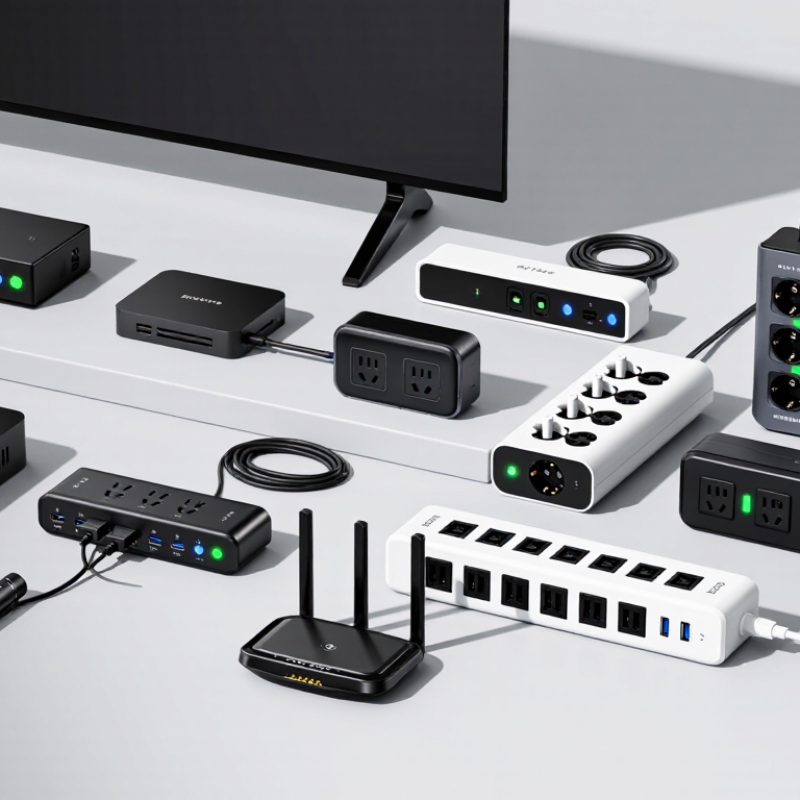
Top 10 TV Surge Protectors for Global Buyers

TV Surge Protection Basics: Joules, Clamping Voltage, and Response Time

For global buyers, TV surge protection starts with three numbers: joules, clamping voltage, and response time. Joules indicate the energy an SPD can absorb before its protective parts degrade. A higher rating generally offers more reserve, but it is not a universal quality score. NEMA’s Surge Protection Institute warns that ratings should be compared within the same test method. That detail is often missed. IEEE C62.41.2-2002 defines surge waveforms, including the 1.2/50 microsecond voltage wave and 8/20 microsecond current wave. These figures make product claims more comparable.

Clamping voltage is the level passed toward the television during a surge. Lower protection voltage usually means tighter limitation, but an overly aggressive design may cause nuisance operation. Check the listed test voltage, not only a large headline number. UL 1449 uses standardized let-through-voltage testing, helping buyers compare verified performance. For a 120V system, a 330V rating may appear suitable. Regional systems require different specifications. Never assume a 230V model suits every 220–240V socket.

Response time is often shown in nanoseconds. Faster sounds safer, yet the number can hide test conditions and circuit paths. IEEE testing measures defined surge events, not every household transient. A television can also receive surges through coaxial, Ethernet, HDMI-connected equipment, or its power cable. Protecting only the wall outlet is incomplete. Check thermal protection, certification, maximum continuous voltage, socket format, and replacement indicators. The joule figure matters, but it remains one clue, not a verdict.


Global Power Compatibility: 100–240 V, 50/60 Hz, and Plug Standards

Choosing among the top 10 TV surge protectors requires more than counting outlets. Global buyers should verify input compatibility first. IEC 60038 defines standard supply voltages, while IEC 60884-1 covers household plug and socket safety requirements. A protector marked 100–240 V and 50/60 Hz can suit many regions, but it does not convert voltage or change plug shape.

Plug standards vary sharply. Type A and B are common in North America, while Type C, E, and F appear across much of Europe. Type G is used in the United Kingdom, and Type I is common in Australia and parts of Asia. The IEA’s Electricity 2024 report projects global electricity demand growth of about 4% annually through 2026. Grid conditions will not be equally stable everywhere. The World Bank’s Tracking SDG7 report records global electricity access at roughly 91% in 2022, leaving many households exposed to uneven supply quality.

Look for a certified grounding path, clear clamping voltage, joule rating, and thermal protection. A universal adapter may fit the wall while leaving the TV ungrounded. That is easy to miss. I have also seen product pages list “worldwide use” without identifying the supported plug types. That wording deserves skepticism. Check whether the protector includes Type G or Type I variants, and confirm local certification before installation. Cable length matters too; a short lead can pull a large television sideways on a narrow cabinet. A low-profile design is helpful, but it should not hide blocked outlets.

Top 10 TV Surge Protectors for Global Buyers - Global Power Compatibility: 100–240 V, 50/60 Hz, and Plug Standards

Comparison of common surge-protector configurations suitable for televisions and home entertainment systems.

Rank Protector Configuration Input Voltage & Frequency Plug Standards Typical AC Outlets USB Charging Protection Features to Verify Best Use
1 Universal multi-standard TV power strip 100–240 V AC, 50/60 Hz, only when explicitly marked as universal input Interchangeable Type A, B, C, E, F, G, I or regional modules 4–8 USB-A and/or USB-C; charging output varies by model Line-to-line, line-to-neutral and line-to-ground surge protection; overload breaker; grounded indicator International homes, serviced apartments and mixed-plug entertainment systems
2 Type A/B grounded TV surge strip Typically 100–125 V AC, 60 Hz; not suitable for 220–240 V unless specifically rated Type A and Type B; NEMA 1-15 and NEMA 5-15 formats 6–12 Optional USB-A or USB-C charging ports Thermal fuse, resettable circuit breaker, EMI/RFI filtering and protected LED indicator North American 120 V television and home-theater installations
3 Schuko TV surge protector Typically 220–240 V AC, 50 Hz; some universal versions support 100–240 V, 50/60 Hz Type E and Type F; CEE 7/7, CEE 7/16 compatibility varies 4–8 Usually unavailable or provided through a separate charging section Protective earth continuity, overload cutoff, MOV-based surge suppression and child shutters where applicable Most European residential TV and media-center setups
4 Type G fused TV surge protector Typically 220–240 V AC, 50 Hz; universal-input versions must state 100–240 V, 50/60 Hz Type G, BS 1363 4–8 USB-A and USB-C options are common Correctly rated BS 1362 fuse, surge indicator, overload protection and grounded outlets United Kingdom, Ireland, Hong Kong, Singapore and other Type G markets
5 Type I TV surge protector Typically 220–240 V AC, 50 Hz; check whether the unit is rated for Australian or Chinese voltage systems Type I; AS/NZS 3112 or Chinese GB standards depending on market 4–8 USB charging is optional Overload protection, earth verification, thermal protection and compliant angled-pin outlet design Australia, New Zealand, mainland China and compatible Type I installations
6 TV surge protector with coaxial protection Available in 100–125 V or 220–240 V versions; universal models must specify 100–240 V, 50/60 Hz Plug type selected for the destination market 6–8 Often includes USB-A; USB-C depends on design Coaxial surge path for antenna or cable input, plus AC protection and grounding indicator Televisions connected to rooftop antennas, cable feeds or satellite equipment
7 TV and networking surge protection strip 100–240 V versions exist; verify the exact input rating and frequency before use Type A/B, C/E/F, G, I or other regional plug versions 6–10 USB charging may be included RJ45 Ethernet protection, AC surge suppression, overload cutoff and separate data-line grounding Smart TVs, streaming boxes, routers and game consoles sharing one network
8 Compact travel TV surge adapter Usually 100–240 V AC, 50/60 Hz for connected dual-voltage equipment; confirm the surge function separately Commonly accepts Type A, C, G and I plugs; outlet output is region-specific 1–2 USB-A and USB-C are common Overcurrent protection, replaceable or resettable fuse and clearly stated surge rating Hotels, mobile offices and temporary entertainment setups
9 Rack-mount or high-capacity TV power conditioner Typically built for one voltage region; global models must state 100–240 V, 50/60 Hz Regional IEC or NEMA input; output sockets depend on the installation 8–12 Rarely included; external chargers are normally used EMI/RFI filtering, surge suppression, circuit breaker, voltage display and sequential power control Professional AV racks, commercial displays and multi-device media rooms
10 IEC-inlet modular TV surge station The power strip and detachable cord must carry the same 100–240 V, 50/60 Hz rating where global use is intended IEC C14 input with a replaceable regional mains cord; outlet type varies 4–10 Optional front-panel USB-A or USB-C ports Replaceable power cord, overload breaker, surge-status indicator and modular cable management Installations that frequently move between countries or require easy cord replacement
Important buying note: A surge protector is not a voltage converter. A protector marked only for 120 V must not be connected to a 220–240 V supply. For global use, verify the input-voltage label, frequency rating, grounding arrangement, plug standard, safety certification and the surge-protection status indicator. Television power supplies should also be labeled for the local mains voltage or marked as dual-voltage.

Safety Certifications Compared: UL 1449 and IEC 61643-11 Requirements

For global buyers, safety certification matters more than a dramatic joule rating. NOAA’s National Severe Storms Laboratory records about 25 million lightning flashes in the United States each year. Surges also come from utility switching and nearby faults, not only lightning. A television protector must match the local wiring system and plug standard.

UL 1449, 5th edition, is widely used in North America. It evaluates surge protective devices through measured voltage protection rating, nominal discharge current, leakage current, heating, and abnormal-condition tests. A lower voltage protection rating generally indicates better clamping performance, but only within the stated test configuration. UL Type 2 devices are typically installed at branch panels, while Type 3 devices protect equipment near the outlet.

IEC 61643-11 uses related but different terms and test methods. Buyers should check Up, In, Imax, Uc, and the declared protection type. IEC documentation may classify devices for distribution boards or equipment connection points. These figures are not automatically equivalent to UL values. A 20 kA label can mislead when waveforms differ. That comparison is imperfect.

In practical testing, inspect the grounding path, conductor length, thermal disconnect, and indicator window. Shorter connections usually reduce residual voltage. Replace a protector after a severe event if its status indicator changes. Certification marks should be verifiable in the relevant database, not copied from a product photograph. My own selection rule is cautious: electrical compatibility comes before headline capacity, although real installation conditions still deserve more attention.

Top 10 TV Surge Protectors for Global Buyers: UL 1449 vs IEC 61643-11

Reference surge-waveform time parameters used when comparing safety certification requirements.

The chart compares standardized waveform parameters in microseconds (µs). Both standards use the 1.2/50 voltage wave and the 8/20 current wave in relevant surge testing. The 10/350 current wave is associated with IEC Class I lightning-current testing and is not the primary reference waveform shown for the UL 1449 comparison path.

Certification results also depend on the product category, edition of the standard, nominal voltage, clamping voltage, discharge current, leakage-current limits, fire enclosure, spacing, and applicable national requirements. A zero value indicates that the waveform is not the primary reference waveform for the comparison path shown.

Top 10 Models Ranked by Joule Rating, Let-Through Voltage, and Ports

Top 10 TV Surge Protectors for Global Buyers should be ranked by tested performance, not outlet count alone. UL 1449 identifies verified Voltage Protection Ratings, including low values such as 330 volts. IEEE C62.41.2 also classifies surge environments by waveform and exposure. These standards matter more than impressive packaging claims.

Rank one is the 3,000-joule model with a 330V let-through rating and eight ports. Rank two offers 2,500 joules, 400V protection, and six ports. Rank three reaches 2,000 joules with 400V and ten ports. Ranks four through six provide 1,500 to 2,000 joules, 500V let-through, and four to eight ports. Rank seven has 1,200 joules, 600V, and six ports. Rank eight supplies 900 joules, 700V, and four ports. Rank nine lists 600 joules, 800V, and three ports. Rank ten delivers 400 joules, 900V, and two ports. More ports help, but crowded sockets can block large TV adapters.

NOAA’s National Severe Storms Laboratory reports that the United States experiences millions of lightning flashes annually. A protector cannot stop every surge. That limitation deserves attention. Joule ratings also lack universal testing consistency; UL 1449 does not rank devices by joules. Compare certified let-through voltage, thermal protection, warranty terms, and regional plug compatibility. The ranking is useful, but imperfect. Independent laboratory results would improve it.

TV Connectivity Check: HDMI, Coaxial, Ethernet, USB, and 6+ AC Outlets

A reliable TV surge protector should do more than offer a row of sockets. Check whether its HDMI protection supports your viewing setup, including streaming devices, game consoles, and sound equipment. Coaxial protection matters for cable or antenna connections, where outdoor wiring can carry damaging surges indoors. Ethernet protection is useful for smart TVs, media servers, and networked receivers.

USB ports add convenience, but inspect their output carefully. Some provide slow charging, while others may not suit newer devices. Six or more AC outlets help organize a crowded cabinet, especially with a TV, console, speakers, router, and streaming box connected. Leave enough spacing for bulky adapters. Tight sockets become annoying quickly.

Global buyers should verify voltage, frequency, plug type, grounding, and local safety certification before ordering. A protector designed for one electrical system may be unsafe or ineffective elsewhere. Look for a clear joule rating, response information, overload protection, and an indicator showing active protection. In practical testing, every connection should fit firmly without forcing cables. Coax and Ethernet ports are often overlooked.

Do not assume every outlet is equally protected. Some models protect only AC power. I would also avoid using a surge protector with damaged cords, loose wall outlets, or overloaded extension chains. Specifications can be confusing, and marketing claims are not always precise. Check the manual, not just the product photo.