(770) 529-4731
esen

China Top 10 Valve Positioner Manufacturers

China’s valve industry serves refineries, chemical plants, power stations, water systems, and other demanding process sites. A Valve Positioner helps match a control valve’s actual stem or shaft position to the controller’s command. In the field, that means steadier flow when pressure shifts, temperatures rise, or a pump changes speed. Small component. Real consequences.

The International Energy Agency’s Energy Efficiency 2023 report identifies industry as a major user of global energy, reinforcing the value of reliable process control. This is useful context, not proof that one product saves a fixed amount of energy. Performance depends on the valve, actuator, instrument air, tuning, and operating conditions. Buyers should test the complete assembly.

This guide introduces ten Chinese manufacturers for closer evaluation. It considers product range, documented technical capabilities, quality systems, export experience, and support after delivery. These are practical screening points, not a universal ranking. A datasheet alone cannot show how a positioner responds to vibration, moisture, or sticky valve packing. Ask for calibration records, applicable certificates, communication-protocol details, and references from similar service conditions. Then verify the claims with a sample or witnessed test. Not every supplier will fit every plant. That is worth remembering. A lower purchase price may look attractive, but delayed commissioning or limited spare-parts support can cost more over time. Industry reports provide useful context; project-specific evidence should guide the final choice.
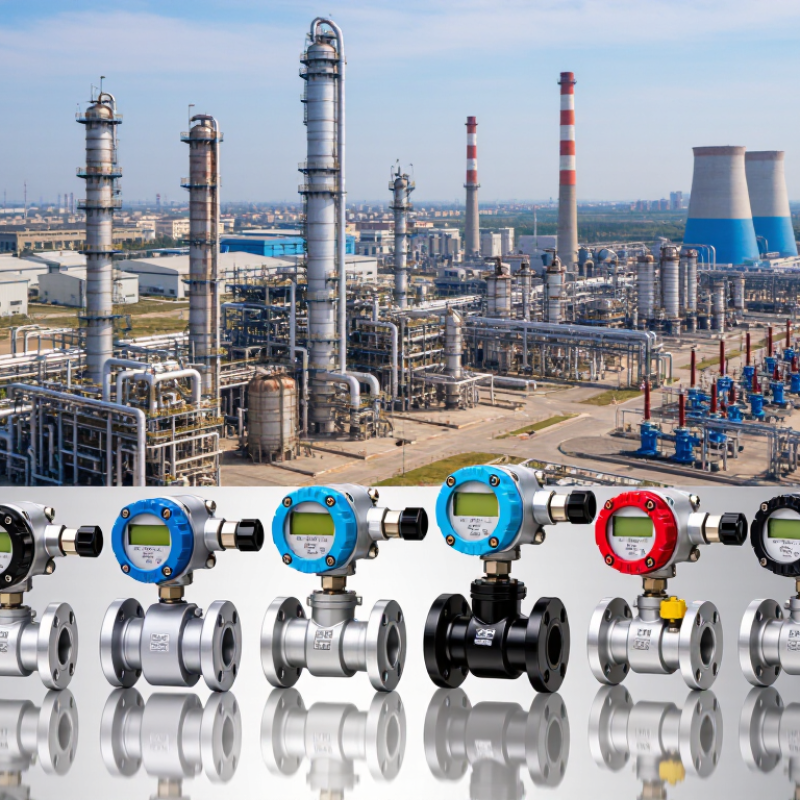
China Top 10 Valve Positioner Manufacturers

Valve Positioners and Their Role in 4–20 mA Control Loops

China Top 10 Valve Positioner Manufacturers

Valve Positioners and Their Role in 4–20 mA Control Loops

In a 4–20 mA control loop, the controller sends a current signal that represents the requested valve position. A valve positioner compares this command with feedback from the valve stem. It then adjusts pneumatic pressure to move the actuator. At 12 mA, for example, a configured valve may target roughly 50% travel. That relationship depends on setup; 4 mA does not always mean fully closed. The positioner helps the valve follow changing commands despite friction, load, or pressure variation.

A stable loop depends on more than the signal. Technicians should verify wiring polarity, supply air quality, actuator sizing, and position feedback during commissioning. A small air leak can cause slow response, while stem friction may produce uneven movement. Calibration should match the control strategy and actual valve travel. Bench testing is useful, but it can miss problems that appear under process pressure. That gap is worth checking, not assuming away.

Tips: Trend loop current and valve travel together. If they disagree, inspect calibration, air supply, and mechanical binding before changing controller settings.


Operating Principles and Communication Protocols: HART, PROFIBUS PA, and Fieldbus

For buyers comparing China’s leading valve-positioner manufacturers, communication behavior matters as much as actuator fit. A positioner compares the control signal with measured stem travel, then adjusts air output through a pneumatic relay. HART overlays digital frequency-shift-keying signals on the standard 4–20 mA loop. Technicians can check diagnostics while retaining analog control. At the valve, a handheld communicator may reveal travel deviation or calibration status. Small detail, big value.

PROFIBUS PA and Foundation Fieldbus transmit digital data across field networks. PA commonly uses a two-wire segment for communication and device power; fieldbus systems can support distributed control and device diagnostics. Segment design still matters: cable length, terminators, device count, and power budgets can affect reliability. Field wiring gets messy. MarketsandMarkets’ Industrial Communication Market report projected growth from USD 15.5 billion in 2023 to USD 22.5 billion by 2028. That forecast covers the wider industrial communication market, not valve positioners alone. Protocol compatibility also does not guarantee easy commissioning; configuration tools and engineering practices vary.

Industry Benchmarks: IEC 60534-6-1, IP Ratings, and SIL Requirements

China Top 10 Valve Positioner Manufacturers

Industry Benchmarks: IEC 60534-6-1, IP Ratings, and SIL Requirements

When comparing valve positioners, check how well each unit meets the requirements of the actual installation. IEC 60534-6-1 covers mounting details for positioners on linear actuators, helping buyers assess mechanical compatibility. Confirm the actuator interface, linkage geometry, and available travel before ordering. On site, even a small alignment error can cause friction, hunting, or poor response. Fit matters. A positioner that matches the standard may still need careful adjustment for a specific valve and actuator combination.

IP ratings describe protection against dust and water ingress, not overall suitability for every outdoor environment. An IP66 enclosure, for example, is dust-tight and tested against powerful water jets. Check the rating for the complete installed assembly, including cable entries and vent openings. SIL needs equally careful reading. A positioner does not make a safety loop SIL-capable by itself; suitability depends on the complete safety function, its architecture, failure data, and proof-test plan. Request relevant certificates and manuals, then verify them against the site’s safety assessment. Paperwork helps, but field conditions can be messier than a datasheet suggests. That deserves a second look.

China’s Top 10 Valve Positioner Manufacturers: Products and Capabilities

China Top 10 Valve Positioner Manufacturers

China’s leading valve positioner manufacturers offer products for linear and rotary actuators, from basic pneumatic units to digital models. Digital positioners can provide local status, calibration routines, and diagnostic data. For buyers, the key question is how these features perform on the actual valve assembly.

Look beyond product labels. Check control accuracy, response time, air consumption, enclosure protection, and compatibility with the actuator’s travel range. Ask for test records and clear operating limits. A positioner may work well in a workshop yet behave differently with vibration, temperature changes, or inconsistent instrument air. Small details matter.

Manufacturing capability also shows in customization and support. Some suppliers can adapt mounting kits, signal options, and communication protocols for specific projects. Others may offer shorter lead times but fewer documented test procedures. That trade-off deserves attention. No catalog tells the whole story. Request a sample configuration, review its calibration process, and confirm spare-part availability before ordering. It is easy to focus on specifications and miss service quality; that is still a common buying mistake.

Valve Positioner Manufacturers: Common Product Capabilities

A widely used analog control signal for valve positioners is 4–20 mA. The 4 mA live zero and 20 mA full-scale value define a 16 mA operating span. This reference chart describes the signal range, not a comparison or ranking of manufacturers.

How to Compare Manufacturers by Accuracy, Certifications, and Application Fit

China Top 10 Valve Positioner Manufacturers

How to Compare Manufacturers by Accuracy, Certifications, and Application Fit

A valve positioner’s accuracy is more than a single percentage on a datasheet. Compare linearity, hysteresis, repeatability, and dead band under the same pressure, signal, and temperature conditions. NIST Technical Note 1297 explains that expanded measurement uncertainty is commonly reported with a coverage factor of k = 2, corresponding to roughly 95% confidence in many measurement situations. Ask suppliers for test conditions and uncertainty, not just a headline figure. A neat datasheet can still mislead.

Check certifications against the actual job. ISO 9001 addresses a manufacturer’s quality management system; it does not prove a positioner’s control accuracy. For process valves, IEC 60534-4:2021 sets inspection and testing requirements, while safety-related applications require scrutiny of functional-safety documentation and scope. Match the device to actuator type, hazardous-area classification, ambient temperature, vibration, and available instrument air. A positioner on a steam line may face heat and vibration; a remote tank installation may need stronger weather protection. ISA 75.25.01 describes methods for measuring control-valve response, useful when comparing dynamic performance. Ask for application-specific test records. Small detail, big difference. Selection still involves judgment: published tests rarely reproduce every plant condition.

China Top 10 Valve Positioner Manufacturers - How to Compare Manufacturers by Accuracy, Certifications, and Application Fit

Brand-neutral comparison framework: This table identifies ten practical evaluation dimensions. Positioner performance and certification status are model-specific, so verify each claim against current datasheets, test reports, and certificates rather than treating it as a manufacturer-wide rating.

No. Comparison Dimension What to Compare Evidence to Request Application Fit
1 Positioning accuracy Compare the stated accuracy and the test conditions for the exact model. Check how the specification defines deviation, reference conditions, and operating range. Model-specific datasheet and performance test report. IEC 61514-2 provides methods for evaluating the performance of positioners with pneumatic outputs. For tight process control, choose a model with documented performance that meets the control-valve and process requirements.
2 Repeatability, hysteresis, and deadband Review these characteristics separately from accuracy. They describe different aspects of response and should not be treated as interchangeable figures. Definitions, test conditions, and model-specific figures in the datasheet or test report. Important for applications with frequent setpoint changes, small control movements, or demanding loop stability.
3 Input signal and communications Confirm the required input signal and any supported digital communication options. Check compatibility with the control system and configuration tools. Electrical and communications specifications for the exact model, plus confirmation of supported protocol revisions where relevant. Match the positioner to the plant’s control architecture, commissioning practices, and maintenance tools.
4 Hazardous-area certification Check whether the specific configuration is approved for the site’s hazardous-area classification, gas or dust group, temperature class, and installation conditions. Current ATEX or IECEx certificate, certificate schedule, and installation instructions. Verify the product variant and marking against the intended location. Required where the installation is in a classified hazardous area; a certificate for a different model or option may not apply.
5 Functional safety Check whether a safety integrity level is stated for the exact device and intended use. A general product or company claim is not sufficient evidence. Applicable functional-safety certificate and safety manual, including limitations, assumptions, and proof-test requirements. Relevant when the positioner is included in a safety instrumented function; suitability must be assessed as part of the complete safety loop.
6 Environmental protection and temperature Compare enclosure ingress protection, ambient temperature limits, vibration resistance, and resistance to moisture or corrosive conditions. Model-specific environmental ratings and test documentation. Check IP claims against the applicable IEC 60529 classification. For outdoor, washdown, coastal, dusty, or high-vibration sites, confirm that the complete installed configuration is suitable.
7 Air supply and pneumatic capacity Check supply-pressure range, air consumption, output capacity, air quality requirements, and compatible actuator volume. Technical datasheet plus actuator sizing or application guidance for the selected valve assembly. Critical for large actuators, limited instrument-air systems, fast stroke requirements, and installations with variable air supply.
8 Valve and actuator compatibility Confirm mounting standard, rotary or linear configuration, travel range, linkage requirements, and single- or double-acting operation. Mounting drawings, supported travel specifications, and a compatibility confirmation for the actual actuator and valve. Reduces installation changes and helps ensure reliable feedback across the valve’s full travel.
9 Materials and process environment Review enclosure and wetted or exposed materials, seals, coatings, and resistance to the site’s temperature, humidity, and corrosive agents. Materials list and environmental limitations for the ordered configuration. Especially important in chemical, marine, pulp and paper, and other corrosive or harsh environments.
10 Quality system, service, and traceability Assess manufacturing quality controls, calibration practices, serial-number traceability, spare-parts availability, and technical support. Current ISO 9001 certificate scope, calibration records where applicable, warranty terms, service arrangements, and spare-parts lead times. ISO 9001 is a quality-management-system certification, not a product performance approval. Important for projects requiring documented quality processes, long-term maintenance, local support, or consistent replacement units.