China Top Joint Flange Suppliers for Global Buyers?
China’s Joint Flange suppliers serve buyers supporting pipelines, refineries, power plants, and other demanding systems. The market is global, but procurement decisions are local in detail: dimensions, materials, pressure ratings, and inspection records must match the project. Small details matter. A flange that looks correct on a warehouse shelf may still fail a drawing review or require rework during installation.
World Steel Association’s World Steel in Figures 2024 reports that global crude steel production reached about 1.89 billion tonnes in 2023. This is useful supply-chain context, not a direct measure of flange output or demand. For technical checks, buyers commonly refer to standards such as ASME B16.5 and B16.47, while confirming the required edition and project specifications. Ask suppliers for material test certificates, dimensional inspection results, traceability details, and clear delivery commitments. Verify them. A polished catalogue is not proof of production capability.
A source limitation deserves attention: no authenticated quotation from a named Joint Flange specialist was supplied or independently verified for this introduction. Rather than invent an expert’s words, this guide focuses on verifiable standards and procurement evidence. Compare suppliers on documented quality, manufacturing experience, communication, and fit for the intended service. Price still matters. But a low quotation can become costly when records are incomplete, tolerances are unclear, or lead times shift. The comparison should be practical, and occasionally uncomfortable: ask what evidence would change your decision.
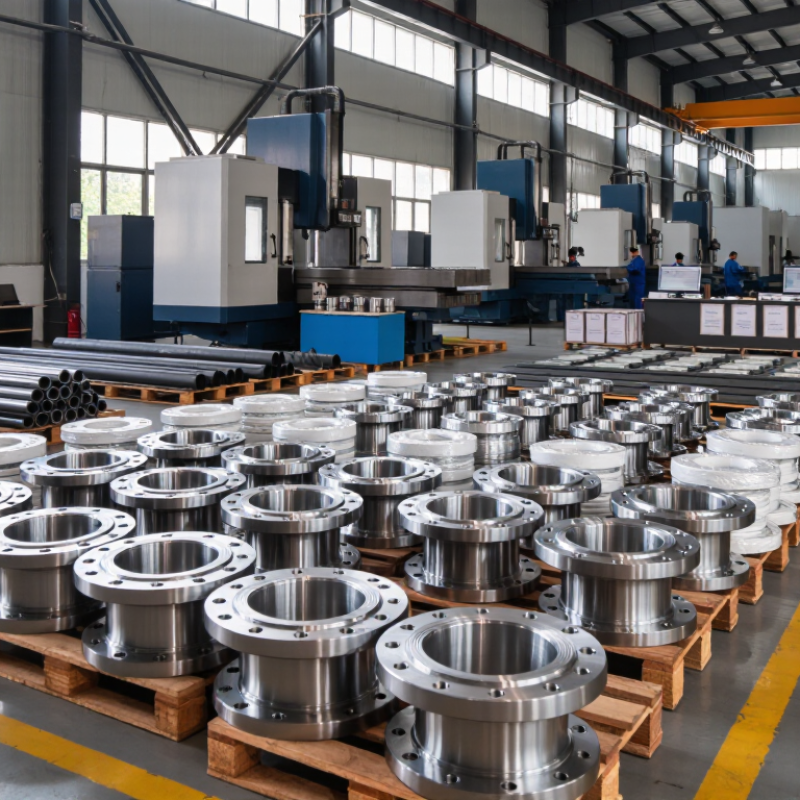
What Joint Flanges Are and Where They Are Used
A joint flange connects two sections of pipe, or joins a pipe to equipment such as a pump, valve, or tank. The connection typically uses paired flanges, bolts, and a gasket. When tightened evenly, the gasket helps seal the space between the flange faces. The joint can also be taken apart for inspection, cleaning, or equipment replacement. That access matters in busy plant rooms, where a valve may need servicing without cutting the pipe.
Joint flanges are common in water systems, process piping, and industrial facilities. Their suitability depends on pressure, temperature, fluid, flange dimensions, and gasket material. A mismatch can cause leaks, even when the parts look nearly identical. Small details matter. Before installation, technicians check that faces are clean, the gasket is centered, and bolts are tightened in a controlled sequence. A neat-looking joint is not proof of a sound one. In practice, alignment can be harder than expected, especially where pipe supports are poorly positioned. Inspection and maintenance plans should reflect actual operating conditions, not just the original design documents.
Key Joint Flange Types, Materials, and Standards
Joint flange selection begins with connection type and service conditions. Weld-neck flanges suit higher-stress piping, while slip-on designs are common where installation access matters. Blind flanges close a line for isolation or testing; lap-joint flanges help when frequent alignment is needed.
Small details matter. A raised face, bolt-hole pattern, and gasket seating surface must match the mating flange. Otherwise, even a sound-looking joint can leak.
Material choice follows pressure, temperature, corrosion exposure, and impact risk. Carbon-steel forgings such as ASTM A105 are common for general service; stainless-steel ASTM A182 F304 or F316 may be considered for corrosive environments. Low-temperature service may call for ASTM A350 LF2, subject to design review.
ASME B16.5 covers many NPS ½–24 flanges, while B16.47 addresses larger sizes; EN 1092-1 is another widely used dimensional standard. Specify the standard, pressure class, facing, material grade, and inspection documents together.
One gap is easy to overlook: matching a standard does not prove material traceability. The World Steel Association’s 2024 report records 1,882.6 million tonnes of crude-steel production worldwide, but volume says little about an individual flange’s quality. Ask for heat-number traceability and dimensional inspection records.
Recheck the drawing, too; I have seen “compatible” parts fail at the bolt circle.
How China’s Joint Flange Supplier Market Is Organized
China’s joint flange supplier market is organized less like a single directory and more like a layered production network. At one level, manufacturers forge, machine, drill, and finish flanges against drawings or agreed specifications. Some concentrate on standard dimensions, while others handle custom bores, facing, or drilling patterns. That distinction matters. A catalogue image cannot verify tolerances, material condition, or consistency between batches.
Export-oriented trading companies and sourcing offices form another layer. They may coordinate quotations, production schedules, inspection records, packing, and shipping documents, while production takes place at partner factories. This can simplify communication, but buyers should confirm who controls manufacturing and who can answer technical questions. Ask which facility will make the order.
Stockists and regional distributors often serve buyers needing smaller quantities or quicker dispatch. Their value depends on what is actually held in inventory, not merely listed online. Request dimensioned drawings, material records where applicable, and photos of marked products before approving an order. Keep specifications consistent across the quotation, sample, and purchase order. Small mismatch, big delay. Supplier categories overlap, and a capable factory may also export directly. The market is not perfectly tidy; verification still takes time.
How Global Buyers Can Evaluate Chinese Suppliers
When comparing Chinese joint flange suppliers, start with the drawing, not the sales brochure. Confirm flange dimensions, pressure class, facing, material grade, and compatibility with the specified stub end. Small mismatches can complicate assembly. Details matter.
Request material test reports and sample inspection records for the exact product range under review. Check heat numbers, dimensions, and markings against purchase documents. Ask how the supplier controls machining, surface finish, and final inspection. A video call can show measuring tools and packing practices, but it cannot replace independent verification. Ask for evidence. If the application is critical, consider a qualified third-party inspection before shipment.
Evaluate communication as carefully as price. Send one drawing revision and a short list of technical questions; note whether answers are specific and consistent. Confirm production lead time, packaging, and how design changes are recorded. A polished catalog is not proof of repeatable quality, and a single good sample is not enough. I would also check whether certificates match the actual material and batch, rather than assuming they do. Requirements vary by project, so have a qualified engineer confirm the applicable specifications before ordering.
Sourcing, Quality Checks, and Export Considerations
China Top Joint Flange Suppliers for Global Buyers?
Joint flange sourcing depends on more than a competitive quotation. Buyers should confirm material grade, pressure rating, dimensions, and applicable manufacturing standard before comparing offers. Request a sample inspection report and material test certificate, then check that heat numbers match the supplied flanges. A certificate alone is not enough. Small details matter.
Tips: Specify tolerances, facing type, and marking requirements in writing. Ask for clear photos of the flange face, bolt holes, and packaging before dispatch. If a requirement is unclear, resolve it before production starts.
Quality checks should cover dimensions, surface condition, and traceability. Use calibrated measuring tools, or appoint an independent inspector for critical orders. Confirm that the inspection plan reflects the intended service conditions; a flange that looks correct may still have the wrong rating.
Export planning deserves equal care. Agree on protective caps, moisture-resistant wrapping, and sturdy crates to limit damage during handling. Check that invoices, packing lists, origin details, and shipping marks are consistent. Import rules and documentation can differ by destination, so verify current requirements with a qualified customs adviser.
One point is easy to overlook: packaging measurements affect freight costs. Recheck them before booking.