China’s electric commercial-vehicle sector is expanding quickly, and dump trucks are becoming a visible part of that shift. The International Energy Agency’s Global EV Outlook 2024 reports that worldwide electric truck sales grew by about 35% in 2023, reaching nearly 54,000 vehicles. China accounted for more than 80% of those sales. The figure covers electric trucks broadly, not dump trucks alone. That distinction matters.
For buyers, an Electric Dump Truck is judged on more than battery capacity or quoted range. A truck hauling rock from a quarry faces steep grades, heavy payloads, dust, and repeated charging demands. These conditions can expose weaknesses that a brochure cannot. The manufacturers discussed in this article should therefore be compared through published specifications, documented field deployments, service coverage, battery warranties, and charging compatibility. Public data does not always make these details easy to verify. That is a real limitation.
Chinese manufacturers are developing vehicles for construction sites, mines, and urban projects, but no single brand suits every operation. A model with strong range may still be poorly matched to a short, demanding haul cycle. Readers should treat manufacturer claims as starting points, then check them against operating records and local support. The following overview identifies leading Chinese makers and explains what their products offer, while noting where evidence remains incomplete.
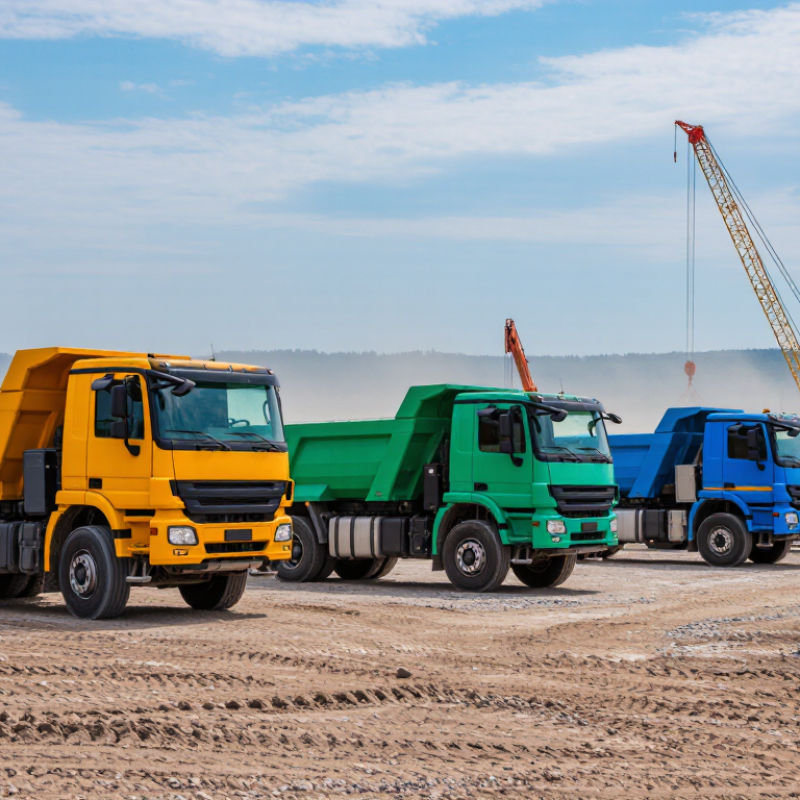
A Chinese electric dump truck manufacturer is defined by more than its ability to fit a battery into a familiar chassis. It must match the powertrain to real work: steep haul roads, repeated loading, dusty sites, and long shifts. Battery capacity, motor output, braking recovery, cooling, and payload need to work as one system. A truck that performs well on a test route may struggle under a full load. Field validation matters.
The International Energy Agency’s Global EV Outlook 2024 reported nearly 54,000 electric truck sales worldwide in 2023, with China accounting for more than 70%.
That growth raises the bar for manufacturers. They need reliable battery monitoring, practical charging plans, parts support, and technicians who can diagnose faults on site. Not just a vehicle. Buyers should also ask for duty-cycle data, loaded-range results, and battery performance in heat and cold.
Still, a larger battery is not always better; it adds weight and can reduce payload. Some specifications look impressive on paper. The real test is steady output across a full working shift, and that is where published data can still leave questions unanswered.

China’s electric dump-truck market is organized around work conditions, not just vehicle size. Open-pit mines, quarries, and construction sites need different payloads, grades, and daily operating ranges. A truck hauling short loops on private roads can use charging differently from one working near a public-road corridor. The boundary between these uses is not always neat.
First Commercial Vehicle Network’s 2023 market tracking put new-energy heavy-truck sales at roughly 34,000 units, or about 10% of heavy-truck sales. That figure covers several vehicle types, not dump trucks alone. It is useful context, but should not be presented as a dump-truck count. Buyers and analysts should check model-level registrations and operating data before comparing suppliers.
The supply chain also has distinct roles. Vehicle makers integrate the chassis and electric drive; battery providers and charging or swapping operators shape uptime; fleet owners judge the cost per tonne moved. In a mine, a steep ramp, dusty haul road, and short turnaround window can matter more than brochure range. The Ministry of Industry and Information Technology’s product announcements help verify approved vehicle configurations, but approval does not prove performance at a specific site. Real duty-cycle trials still matter.
Illustrative payload bands by application, based on ranges seen in vehicle specifications. These are not market-share figures; actual ratings vary by model and configuration.
China’s electric dump truck manufacturing is led by several types of companies, rather than one clear winner. Established heavy-truck makers bring chassis engineering, production capacity, and service networks. Mining equipment specialists focus on vehicles built for steep haul roads, heavy loads, and dusty work sites. Electric-drive integrators contribute motors, battery systems, and control software. The strongest suppliers often combine these capabilities or work closely with specialist partners.
Buyers can compare manufacturers by checking payload, loaded range, charging time, and performance on the actual route. A truck that works well on a short, predictable mine circuit may not suit a long public-road haul. Ask for operating data from similar conditions, not just laboratory figures. Look closely at battery protection, thermal management, parts availability, and technician training. These details affect whether a truck can return to work after a demanding shift. There is no perfectly settled ranking: product specifications change, and local support can vary. On-site trials provide useful evidence, though even a short trial may miss seasonal challenges. The leading manufacturer is often the one that can keep the vehicle working reliably at the buyer’s site.
Technology differences become clear under a loaded haul cycle, not in a brochure. Compare battery capacity with the route’s gradients, shift length, and charging windows. Strong thermal management helps keep power delivery steady during hot climbs and cold starts. Useful controls also matter: smooth torque, regenerative braking, and clear alerts can reduce strain on the driver. Small details matter. A readable energy display is more useful than a crowded screen when dust shakes the cab.
Production capability is more than factory size. Look for consistent frame welding, battery-pack inspection, and end-of-line testing with realistic loads. Ask how makers handle parts supply and vehicle customization, since a truck may need to fit a specific mine road or dump area. Production figures deserve context. A high output target does not prove that each unit receives careful quality checks or arrives on schedule. Comparing manufacturers is difficult when test conditions differ. Buyers should request comparable data on payload, range, charging time, and maintenance intervals. Numbers can mislead. Even experienced teams may overlook how road conditions change energy use, so field trials remain valuable.
This comparison covers manufacturer capabilities by electric dump-truck technology and vehicle class rather than naming or ranking individual companies. Publicly available production figures are not consistently disclosed on a like-for-like basis, so no company-level output estimates are presented.
| Comparison dimension | Battery-electric wide-body dump trucks | Battery-electric rigid mining trucks | Trolley-assisted mining trucks |
|---|---|---|---|
| Typical application | Quarries, mines, and construction or industrial haul routes, particularly where vehicle size and route access suit wide-body trucks. | Large open-pit mines and other heavy-duty haul operations using rigid-frame trucks. | Mine haul roads with sustained uphill sections where a fixed overhead power line can be installed. |
| Propulsion approach | A traction battery supplies electric drive; charging and vehicle configuration depend on the model and operating plan. | A traction battery powers electric traction motors; charging infrastructure must be matched to the mine’s duty cycle. | Electric power is supplied from an overhead line on equipped road sections; the truck can use onboard power away from the line, depending on its configuration. |
| Key technology comparison | Battery capacity, charging time, thermal management, regenerative braking, and compatibility with site charging are important comparison points. | In addition to battery and drive-system performance, frame, axle, braking, and thermal systems must be designed for heavy mine duty. | Performance depends on the truck’s electric-drive system and the availability and layout of the mine’s trolley infrastructure. |
| Production and deployment considerations | Series production and operating support should be assessed through documented deliveries, service coverage, and battery and parts availability; comparable manufacturer-level totals are not consistently public. | Assess mine-specific deployments, commissioning support, component supply, and service capability. Public production totals are not consistently reported in comparable formats. | Deployment requires both suitable trucks and investment in overhead lines and related site infrastructure; truck output alone does not indicate project readiness. |
| Main operational advantage | Can reduce or eliminate tailpipe emissions during operation; operating benefits depend on the electricity supply and charging schedule. | Electric traction supports a mine’s emissions and energy-efficiency goals when vehicle capability and charging infrastructure fit the haul cycle. | Can draw power directly from the grid on equipped uphill sections, reducing reliance on onboard energy during those sections. |
| Main limitation to evaluate | Range and payload performance depend on route, load, weather, battery configuration, and charging access; specifications should be checked for the exact model. | Large vehicle and battery requirements make site layout, charging capacity, and duty-cycle validation especially important. | Benefits are tied to fixed infrastructure and suitable routes; installation planning and coordination with mine operations are essential. |
| Best-fit buyer priority | Flexible electric haulage for routes where a wide-body configuration and charging plan are practical. | Electric haulage in large mines that require rigid-frame equipment and can support high-power charging. | High-utilization mine routes with sustained grades and a long-term plan for trolley-line infrastructure. |
For a manufacturer-level shortlist, compare published model specifications, independently verifiable deliveries, production capacity disclosures, warranty terms, local service coverage, and total cost of ownership. Specifications vary by model and should not be inferred from vehicle class alone.
A Chinese electric dump truck supplier should be assessed against your actual route, not a headline payload figure. Record loaded distance, gradient, surface condition, daily cycles, and ambient temperatures. A truck moving crushed rock up a damp 8% ramp faces a different duty cycle from one working on level ground. Ask for usable battery capacity, expected energy use per tonne-kilometre, charging time, and the test conditions behind each figure. Brochure numbers alone are not enough.
Check the engineering evidence. Request battery and motor specifications, thermal-management details, braking performance, axle ratings, and documents for the exact configuration offered. Ask to inspect a production unit and review a full-load demonstration on comparable terrain. Watch for repeatable results, not one impressive run. Check whether the charger interface, site power, and charging schedule fit your operation. This can be tedious, and it is.
Supplier reliability shows up after delivery. Confirm warranty scope, parts availability, technician response times, remote diagnostics, and training for operators and maintenance staff. Ask for references from customers with similar payloads and shift patterns, then speak with them directly. Be specific. Compare the written quotation with the truck’s bill of materials, delivery milestones, acceptance tests, and service commitments. If an answer is vague, request it in writing. A small gap in a specification may become a costly delay. No checklist catches everything; even a careful review can miss a mismatch between rated range and a cold, busy worksite.