Top 5 Welding Robot Solutions for Efficient Manufacturing?
In today's competitive manufacturing landscape, adopting advanced technologies is essential. One such technology is the Welding Robot. These machines revolutionize the welding process by enhancing precision, efficiency, and safety. Manufacturers across various sectors are increasingly relying on welding robots to meet rising production demands.
However, integrating welding robots isn't without challenges. Companies often face a steep learning curve and initial setup costs. Yet, the long-term benefits, such as reduced labor costs and improved weld quality, often outweigh these initial hurdles. As industries continue to evolve, the role of welding robots becomes more critical, pushing the boundaries of what’s possible in manufacturing.
Choosing the right welding robot solution can be daunting. It requires an understanding of operational needs and technology capabilities. This article reviews the top five welding robot solutions available today, highlighting their unique features and benefits. By exploring these options, manufacturers can make informed decisions and optimize their production processes effectively.
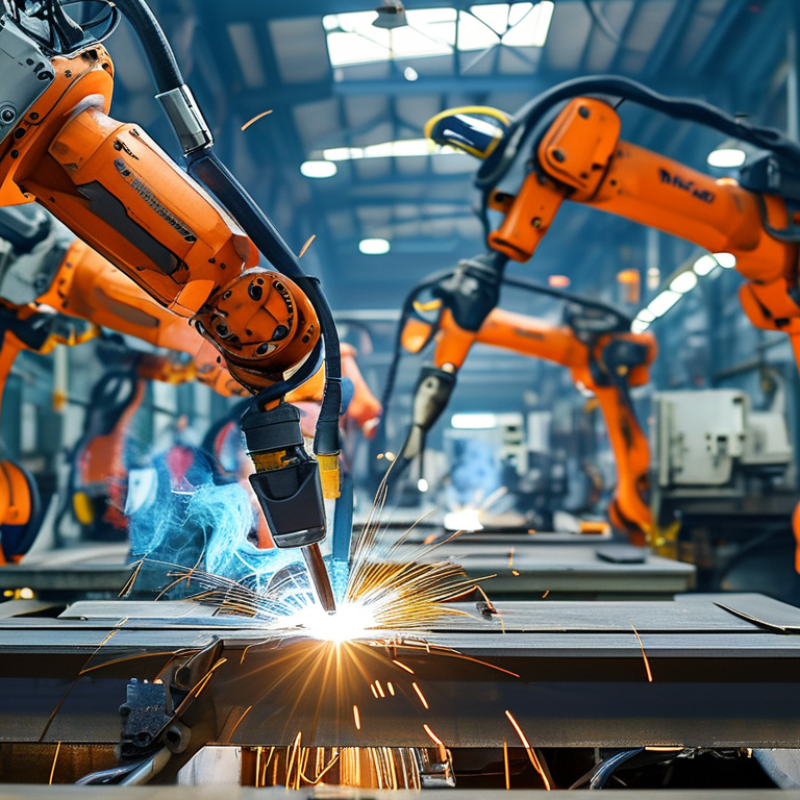
Top 5 Welding Robot Solutions for Efficient Manufacturing
Welding robots are revolutionizing manufacturing processes across various industries. Their applications can significantly enhance productivity and maintain high-quality standards. According to a report by MarketsandMarkets, the global welding robotics market is expected to reach $7.5 billion by 2026. This growth underscores their importance in efficient manufacturing.
These robots can perform consistent, repeatable tasks, minimizing errors that often occur with manual welding. In sectors like automotive and aerospace, using welding robots can reduce production time by up to 30%. However, implementing these solutions requires a careful approach to training and integration with existing processes.
**Tip:** Invest in comprehensive training programs for employees. This ensures smooth collaboration between human workers and robotic systems. Continuous monitoring is also crucial. Data shows that productivity can drop if maintenance is neglected.
Despite their advantages, welding robots aren't without challenges. Initial costs and technical complexities can hinder small manufacturers from adopting these technologies. A study from the International Federation of Robotics indicates that smaller businesses often struggle with the return on investment. Hence, it's vital to analyze long-term benefits versus short-term costs realistically. Addressing these concerns can lead to better decision-making in robot integration.
Overview of Welding Robotics in Modern Manufacturing Industries
In modern manufacturing, welding robots have transformed production processes. These machines enhance precision, consistency, and efficiency. Industries rely on welding robotics to reduce human error and boost output. Automated welding solutions streamline operations, saving time and costs. As technology advances, these robots become more adaptable to various applications.
Tips: Choose the right robot for your specific welding tasks. This ensures you maximize productivity and minimize mistakes. Regular maintenance is crucial to avoid downtime. Neglecting this can lead to unexpected delays and repairs.
Not all welding tasks are suitable for automation. Some intricate designs may require skilled human intervention. Balancing automation with the human touch is essential. Assess each project’s unique needs carefully. Expertise in welding applications helps optimize the use of robots.
With advancements in AI and machine learning, welding robots are becoming smarter. They learn from past tasks and can improve over time. This evolution presents opportunities and challenges for manufacturers. Keeping pace with these changes is vital for sustained success in an increasingly competitive landscape.
Key Features of High-Performance Welding Robots for Production
When examining high-performance welding robots, several key features emerge that enhance production efficiency. A vital aspect is precision. Accurate welding reduces defects, ensuring consistent quality across manufactured products. Robots with advanced sensors adapt to variations in materials, minimizing the margin for error. Speed is another crucial element. Faster welding processes lead to increased output, while maintaining quality standards can be challenging. Finding the right balance is essential for production success.
Flexibility is another significant feature to consider. A welding robot that can handle various tasks allows manufacturers to adapt to different production needs. This flexibility can reduce downtime when changing between tasks. Moreover, user-friendly programming interfaces enhance accessibility for operators. However, not all robots deliver on this promise. Sometimes, complex systems make it difficult for staff to quickly learn and adapt.
Lastly, safety is paramount in any manufacturing environment. High-performance welding robots incorporate safety features that protect both operators and equipment. These may include protective shields or emergency stop functions. Despite advancements, some robots still pose safety risks. Continuous evaluation and training are necessary to address these concerns. Balancing efficiency and safety requires ongoing reflection and improvement in manufacturing processes.
Statistics on Productivity Improvements with Robotic Welding Solutions
The integration of robotic welding solutions has transformed manufacturing processes. Statistics show that companies adopting these technologies experience significant productivity boosts. Research indicates that productivity can increase by as much as 40% with automated welding systems. This surge often results in shorter lead times and improved output consistency.
Moreover, precision is a major advantage of robotic welding. These machines can achieve welds with minimal variance, thereby reducing waste and rework. While initial investments may be high, companies save in the long run. Yet, not all implementations yield perfect results. Sometimes, improper programming or maintenance issues can lead to downtime.
Training staff on these advanced systems is crucial. Skilled operators can troubleshoot problems and optimize welding parameters. Some companies still face challenges with the transition. Understanding the limitations of robotics is essential for maximizing their potential. Embracing these technologies requires continual assessment and adjustment for sustained success.
Comparative Analysis of Leading Welding Robot Manufacturers in 2023
As manufacturing evolves, welding robots become essential. In 2023, various manufacturers offer unique solutions. Each brand showcases distinct features. However, not every option suits every manufacturer. Companies need to assess specific requirements.
Performance and precision often vary. Some models excel in speed while others focus on quality. Reliability is key in choosing a robot. Technical support is also crucial. Manufacturers should be aware of potential downtime. Some welding bots may need frequent maintenance. This could disrupt production schedules.
Cost-effectiveness is another factor to consider. Cheaper solutions might not deliver expected results. Investing in a reliable system pays off in the long run. Choosing the right welding robot can be challenging. It requires deep understanding and research. Balancing performance and budget is essential for success.
Top 5 Welding Robot Solutions for Efficient Manufacturing
Conclusion
The article "Top 5 Welding Robot Solutions for Efficient Manufacturing" explores the significance of welding robots in modern manufacturing. It begins with an overview of the role of welding robotics in enhancing efficiency across various industries. The key features that define high-performance welding robots, such as precision, speed, and adaptability, are highlighted, demonstrating their crucial impact on production processes.
Moreover, the article presents compelling statistics indicating productivity improvements that companies experience when integrating robotic welding solutions. A comparative analysis of leading welding robot manufacturers in 2023 provides insights into the competitive landscape, followed by case studies showcasing successful implementations of welding robots in real-world scenarios. This summary illustrates how welding robots can transform manufacturing operations by fostering efficiency and productivity.