(770) 529-4731
esen

Why Choose an Anchor Drill Rig for Your Project?

Choosing an Anchor Drill Rig can influence drilling accuracy, site access, and installation time. The right machine should match the ground, anchor design, and working space. A steep hillside may demand a compact rig with stable positioning, while a broad construction site may allow a larger machine. Details matter. The rig’s reach, feed force, mast angle, and compatible drilling tools all affect how efficiently crews can work. These are not minor specifications when a platform is narrow or the rock changes within a few metres.

A careful choice starts with site information, not a brochure. Review geological reports, access routes, planned hole dimensions, and the anchor system before comparing models. Ask suppliers for operating limits and service requirements, then confirm that trained operators can use the equipment safely. It depends. A machine that performs well in fractured rock may not suit every soil condition or restricted site. Even experienced teams can meet unexpected layers, so flexibility and reliable technical support matter. Still, specifications alone cannot predict every drilling challenge. That deserves honest consideration. This guide explains what an Anchor Drill Rig does, which project factors should guide selection, and how to assess practical benefits against limitations. The aim is a better-informed decision, not a claim that one rig fits every project.
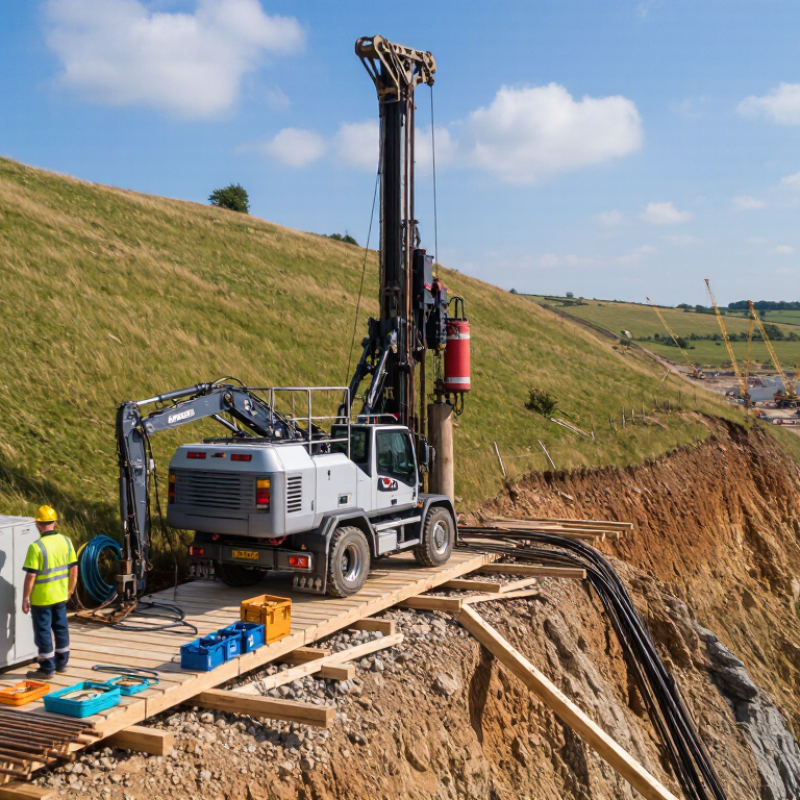
Why Choose an Anchor Drill Rig for Your Project?

What an Anchor Drill Rig Is and How It Works

An anchor drill rig is a machine designed to bore holes for ground anchors, which help support retaining walls, excavations, and unstable slopes. Its mast guides a rotating drill head, while connected rods carry a cutting bit into the ground. Depending on the soil or rock, the operator may use rotary drilling, percussion, or a combination of both. Air or water can clear cuttings from the hole. The choice matters: loose gravel and fractured rock do not respond the same way.

The rig is positioned and leveled before drilling begins. The crew checks the hole’s angle and depth against the project design, then advances the bit while monitoring resistance and drilling conditions. Once the borehole is ready, an anchor tendon is placed inside and grout is pumped around it. After the grout gains strength, the anchor can be tensioned and tested as specified by the engineer. Small details count. A change in drilling sound, unexpected water, or collapsing soil can affect the hole and may require a different method. The sequence sounds tidy on paper; real ground is less predictable, so site observations should guide the work.


Why Choose an Anchor Drill Rig for Your Project?

What an Anchor Drill Rig Is and How It Works

Anchor drill rigs create boreholes for grouted ground anchors that help stabilize slopes, retaining walls, and excavations. The rig advances a drill string through the ground; an anchor is then installed and grout is placed in the borehole. The ranges shown are indicative planning values in millimeters, not design specifications. Actual diameters depend on the ground conditions, anchor system, and project requirements.

Which Ground Conditions Suit Anchor Drilling

Anchor drilling works best where the grouted bond zone can transfer load into stable ground. Dense sand and gravel, stiff clay, and sound or moderately weathered rock are often suitable. The drill can advance through variable layers, but loose fill, very soft clay, cobbles, or open fractures may complicate drilling and reduce reliable grout contact. Groundwater is not an automatic barrier; it may require casing or adjusted drilling methods.

The Federal Highway Administration’s Geotechnical Engineering Circular No. 4 gives preliminary minimum bond lengths of 15 feet for rock anchors and 20 feet for soil anchors. These are design guidance, not guaranteed capacities.

Actual resistance depends on the ground, grout placement, and construction quality, so site investigation and load testing matter. That matters. A borehole log can miss a loose pocket, while fractured rock may look stronger than it behaves.

FHWA guidance emphasizes evaluating ground conditions and testing anchor performance rather than relying on soil descriptions alone.

For a project with layered ground or seepage, confirm the bond-zone depth and drilling approach before choosing equipment. One detail is easy to underestimate: spoil and drilling returns can reveal changing strata, but they do not replace proper testing.

How Anchor Drill Rigs Support Project Stability

Why Choose an Anchor Drill Rig for Your Project?

How Anchor Drill Rigs Support Project Stability

An anchor drill rig helps install ground anchors that resist movement in slopes, retaining walls, and excavations. Its controlled drilling can keep each borehole aligned with the design angle and depth. That matters. A misplaced hole may reduce how effectively an anchor transfers force into stable ground.

Once drilling is complete, the anchor is installed and bonded, often with grout, to surrounding soil or rock. The anchor’s capacity depends on ground conditions, installation quality, and the engineer’s design. Crews can watch drilling response, such as changes in penetration rate or material returning from the hole. These clues do not replace testing, but they can flag conditions that differ from expectations.

A rig also helps crews work consistently where access is tight or the ground varies across a site. For example, a steep cut may require anchors at several angles to support different sections. Small shifts count. Still, no machine can make uncertain geology disappear. A careful site investigation, suitable anchor testing, and routine checks during installation remain essential to reliable project stability.

Why Choose an Anchor Drill Rig for Your Project? — How Anchor Drill Rigs Support Project Stability

Project Requirement How an Anchor Drill Rig Helps Contribution to Stability Important Field Checks
Retaining walls and deep excavations Drills inclined or horizontal holes through the retaining structure and into the ground for ground-anchor installation. Anchors transfer part of the wall load into stable ground beyond the potential failure zone, helping limit wall movement. Confirm anchor layout, inclination, bond-zone location, ground conditions, and the design loads before drilling.
Slopes and cut faces Provides controlled drilling for soil nails or anchors, including work on steep faces when the rig and access system are suitable. Reinforcement can improve resistance to sliding and help control movement when installed as part of an engineered slope-support system. Check the geotechnical design, drainage conditions, drilling sequence, and face protection requirements.
Variable ground conditions Can be configured for different drilling methods, such as rotary or percussion drilling, depending on the rig, tooling, and ground. Matching the method to soil or rock can help maintain hole quality and reduce the risk of unstable or obstructed boreholes. Review soil and rock records, groundwater, expected obstructions, and the need for casing or flushing methods.
Restricted or congested work areas Some rigs are available with compact dimensions, adjustable masts, or positioning systems suited to limited access. Suitable access and accurate positioning help crews install anchors at the designed locations and orientations. Measure access routes and working clearances; assess overhead hazards, ground bearing capacity, and equipment setup space.
Consistent anchor installation Supports repeatable control of drilling position, angle, depth, and drilling parameters when properly operated. More consistent boreholes help the installation team place anchor components and grout according to the design. Record hole depth and inclination, inspect drilling returns, and follow the approved installation and grouting procedures.
Anchor load verification Creates the boreholes needed for anchors that can later be tested with suitable stressing and load-testing equipment. Testing helps verify that installed anchors meet specified performance requirements; drilling alone does not confirm capacity. Follow the project testing plan, specified proof or performance loads, acceptance criteria, and applicable standards.
Worker and site safety Mechanized drilling can reduce some manual drilling tasks, provided the rig is operated by trained personnel. Proper setup and operation support controlled installation and reduce exposure to avoidable equipment and ground hazards. Use site-specific risk assessments, equipment inspections, exclusion zones, and appropriate personal protective equipment.

Project note: An anchor drill rig is an installation tool, not a standalone stability solution. Ground anchors, soil nails, and related systems must be selected and designed by qualified professionals for the site’s ground conditions, loads, groundwater, and applicable requirements.

Key Advantages Over Other Drilling Methods

An anchor drill rig offers controlled drilling for ground anchors, soil nails, and similar support work. Its mast helps maintain a planned angle, while the feed system keeps pressure steadier than many handheld setups. On a sloped work area, this control can reduce unwanted hole deviation. The rig can also handle demanding drilling cycles with less direct manual effort.

Compared with general-purpose drilling methods, anchor rigs are built to manage torque, depth, and alignment as one operation. Some models fit tight sites where larger equipment cannot easily turn. That can make setup more practical near retaining walls or existing structures. Still, a specialized rig is not automatically the best choice. Access, ground conditions, anchor design, and available utilities all matter. A rig cannot compensate for poor planning, and productivity may fall if the crew needs frequent repositioning. That trade-off deserves attention.

Tips: Check the drill angle and hole depth regularly, not just at setup. Match the tooling to the ground, and review utility locations before drilling. Keep a simple record of changes; it may reveal a pattern, though records are sometimes incomplete.

How to Select an Anchor Drill Rig for Your Project

Choosing an anchor drill rig starts with the ground and the work area, not the machine’s headline power. Review soil or rock conditions, required drilling depth, hole diameter, and anchor angle. A rig suited to fractured rock may need different tooling and flushing options from one used in dense soil. Check that its torque, thrust, and rotation range match the ground and anchor design.

Measure access carefully. Record the narrowest gate, overhead clearance, slope, and space for rods and grout equipment. Compare those limits with the rig’s transport dimensions and setup footprint. A specification can look perfect on paper and still be wrong for a confined site. Ask operators about rod handling, casing changes, maintenance access, and noise. Small practical details matter. Confirm training needs and that the rig’s safety features fit the planned tasks.

Tips: Request a site assessment and compare the rig’s working range with the project drawings. Check local service availability and compatible tooling before purchase or rental. Leave room for unexpected ground changes; plans do not always match the first bore.

Article Source: