Air compressor tanks rust when compressed air cools and releases moisture inside the receiver. Warm air enters the tank carrying water vapor, oil aerosols, and airborne contaminants. As the tank surface cools, vapor condenses into droplets. Rust begins quietly. The water stays.
The U.S. Department of Energy reports that compressed air systems can consume about 10% of industrial electricity, with poor maintenance increasing waste through leaks and inefficient operation. Its compressed air guidance also identifies condensate management as a key maintenance task. A failed automatic drain, undersized separator, or forgotten manual drain can leave water pooled at the tank bottom. That area often shows rust first, especially around welds, fittings, and low points. Field technicians commonly find that the visible orange scale is only the surface symptom. Internal metal loss may already be harder to detect.
The risk is not cosmetic. A corroded receiver can weaken under repeated pressure cycles. ASME Boiler and Pressure Vessel Code Section VIII provides widely recognized design requirements for pressure vessels, while the National Board Inspection Code supports inspection and repair practices. OSHA 29 CFR 1910.169 also addresses air receivers, including safety valves, drains, and inspection expectations in the United States. These standards do not replace a competent inspection program. They guide it.
A clean exterior proves little. That is the trap. Effective control requires regular draining, functional condensate traps, corrosion monitoring, and records of inspections. The U.S. DOE recommends checking drains and leaks during routine system assessments. Still, maintenance plans are sometimes trusted too much. A schedule can look complete on paper while water quietly collects inside air compressor tanks. Understanding why rust forms is the practical starting point for safer operation, longer service life, and better compressed-air reliability.
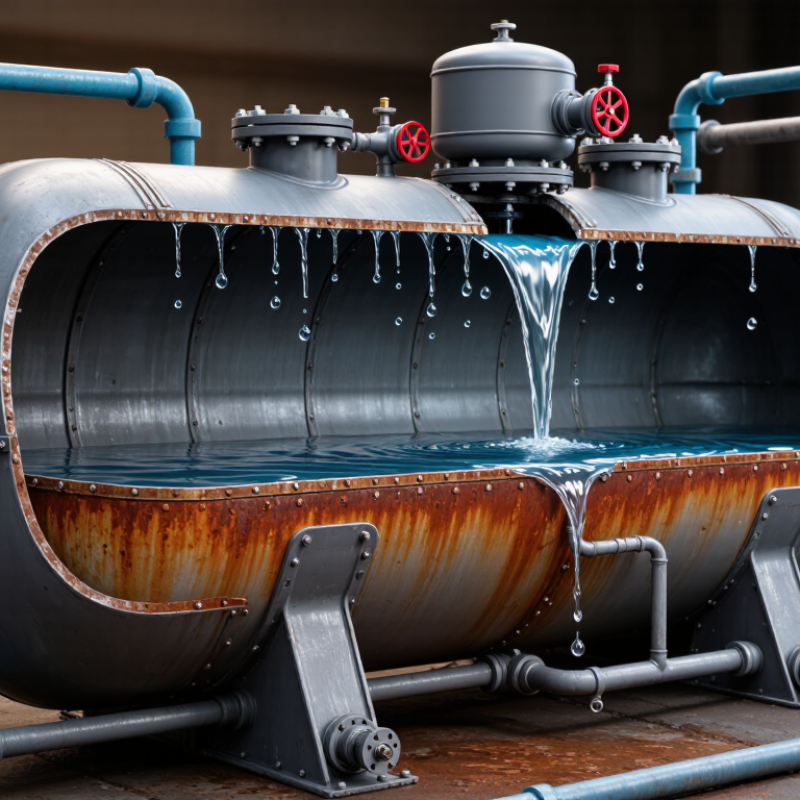
Why Do Air Compressor Tanks Rust?
What Causes Rust to Form Inside Air Compressor Tanks?
Compressed air carries water vapor into the tank. When warm air cools, that vapor becomes liquid water. The water settles at the lowest point inside the steel vessel. Rust starts quietly. Oxygen then reacts with exposed metal and moisture, creating corrosion.
Poor drainage makes the problem worse. A drain valve may remain closed for weeks, allowing a shallow pool to collect beneath the air outlet. Temperature changes can also increase condensation, especially in unheated workshops. Humid air enters during repeated compressor cycles, while dust and oil residue may hold moisture against the tank wall.
The drain matters. During practical inspections, technicians often find rust near the bottom seam, drain opening, or damaged internal coating. Scratches can expose bare steel, even when the outer surface looks clean. A tank that sounds dull during inspection may contain heavier internal corrosion, but sound alone cannot confirm its condition. A qualified inspector should examine suspicious damage using approved methods and follow the tank’s service requirements.
Some maintenance habits seem helpful but are incomplete. Draining water occasionally is better than ignoring it, yet irregular draining still leaves long wet periods. Opening the drain after shutdown may release pressure and moisture, but it does not repair thinning metal. I have seen clean-looking tanks that were already weakened inside. That contrast deserves more attention.
Moisture is the main cause of rust inside air compressor tanks. At 25°C, warmer air can hold more water vapor as relative humidity increases. When compressed air cools inside the tank, this vapor can condense into liquid water, creating the damp environment needed for corrosion. Regular draining and effective moisture separation help reduce rust formation.
Air enters a compressor carrying invisible water vapor from the surrounding room. Compression squeezes that air into a smaller space and raises its temperature. Hot air can hold more vapor, so the moisture may remain unseen at the outlet. As compressed air cools inside the receiver tank, vapor changes into liquid water. That is the risk.
During maintenance checks, I often find condensation gathered at the tank’s lowest point. Each pressure cycle can add another small amount. Small amounts become significant. Humid workshops, poor ventilation, and sudden temperature changes accelerate this process. Warm days, cool nights. Water then rests against the tank’s internal steel surface. Rust begins when moisture remains there, especially with dust or sediment.
A drain valve should be opened according to the equipment’s safety procedure, never by guessing. The tank must be depressurized when required, and discharged water should be collected safely. Draining alone may not solve the problem. A separator, suitable air dryer, and correct piping layout can reduce moisture before it reaches the receiver. The drain itself also needs inspection; a blocked valve creates false confidence. I once assumed a brief release was enough, but the tank still contained cloudy water afterward. A few seconds may leave a surprising amount behind. Inspectors should check for internal corrosion, weakened areas, and unusual rust-colored discharge. Even a clean outer surface proves little.
Carbon-steel tanks rust fastest when trapped water contacts bare interior metal. Compressed air warms during filling, then cools inside the tank. That temperature change creates condensation, often along the bottom seam. During routine inspections, a small drain can release surprisingly dark water. Humid rooms, coastal air, and frequent short cycles increase exposure. Scratches in paint or damaged internal coatings give corrosion a convenient starting point.
Water wins.
Aluminum tanks generally resist red rust, but they can pit under salty or chemically contaminated moisture. Stainless steel offers stronger corrosion resistance, yet welds and deposits still deserve inspection. Material alone does not decide service life. A sound steel tank in a dry, well-drained room may outperform a neglected “rust-resistant” tank. That is easy to overlook. External rust, bulges, leaks, or loose flakes require assessment by qualified personnel, not guesswork.
Tips: Drain the tank as directed, especially after humid operation. Keep the drain opening clear, and inspect it with a light. Check the lowest point for water, scale, or pinhole leaks. Improve ventilation and reduce rapid temperature swings where practical. Do not grind deeply into a pressure vessel or patch suspicious damage yourself. Follow the manufacturer’s instructions and applicable safety standards. Record inspection dates; memory is unreliable.
Why Do Air Compressor Tanks Rust?
How Internal Rust Affects Air Compressor Safety and Performance
Air compressor tanks rust mainly because compressed air releases moisture inside the vessel. Warm air enters, then cools against the steel walls. Water collects at the bottom. Rust is quiet. A dry-looking floor can mislead an operator, because moisture may remain hidden inside the tank.
Internal rust gradually reduces wall thickness and creates rough, weakened areas. Pressure cycling then stresses these spots during every fill and discharge. Severe corrosion can cause leaks or sudden vessel failure. Rust flakes may also travel into outlet valves, regulators, and air tools. Performance drops. The compressor may run longer while delivering less usable air.
Routine care requires more than checking external paint. Drain accumulated water according to the equipment instructions, especially after heavy use or humid weather. Listen for unusual hissing, inspect fittings, and look for bulges, deep pitting, or rusty discharge water. Never rely on a patch, welding repair, or guesswork for a pressure vessel. A qualified inspector should assess serious corrosion and confirm the tank meets applicable safety requirements. One imperfect habit causes many problems: people often drain the tank only when they remember. A written schedule is safer. When corrosion is visible inside, continued operation deserves careful review, not optimism.
| Rust-Related Factor | Typical Source or Condition | Effect on the Tank | Impact on Safety and Performance | Recommended Inspection or Control | Risk Level |
|---|---|---|---|---|---|
| Condensation | Moisture in compressed air cools and collects inside the tank when the air temperature falls. | Creates standing water that removes protective coatings and promotes oxidation on the internal steel surface. | Reduces usable tank condition over time and may contribute to leaks or pressure-boundary weakening. | Drain the receiver at the frequency specified by the manufacturer or site procedure, and verify that the drain operates correctly. | High |
| High Ambient Humidity | Humid intake air introduces more water vapor into the compression system, especially in warm or damp environments. | Increases the amount of condensate available to remain inside the receiver. | Accelerates internal corrosion and can increase maintenance interruptions. | Improve ventilation, reduce moisture entering the system, and use suitable air treatment when required. | Medium to High |
| Infrequent Draining | The tank is not drained regularly, or the drain valve is blocked, leaking, or difficult to access. | Water and sediment remain in contact with the tank bottom for extended periods. | Localized corrosion may become severe in areas that are difficult to observe from outside. | Include the drain valve in routine checks and confirm that condensate is actually removed. | High |
| Internal Coating Damage | Scratches, manufacturing defects, aging, or mechanical damage expose bare steel. | Unprotected areas become preferred sites for rust initiation and localized metal loss. | Localized thinning can be more serious than uniform surface discoloration. | Use qualified internal inspection methods and repair or replace components according to applicable requirements. | High |
| Galvanic or Dissimilar-Metal Contact | Different metals are electrically connected in the presence of moisture or conductive deposits. | Electrochemical corrosion can occur at contact points or around fittings. | May cause leaks near connections and complicate maintenance. | Inspect fittings, piping connections, and affected surfaces for pitting, staining, or leakage. | Medium |
| Internal Pitting | Corrosion penetrates into small, concentrated cavities rather than spreading evenly. | Produces localized pits that can reduce wall thickness at specific points. | Creates a potentially significant pressure-vessel hazard even when most of the tank appears sound. | Have a competent inspector assess pit depth, remaining wall thickness, and continued serviceability. | High |
| Rust Flakes and Sediment | Loose corrosion products detach from the internal surface and collect at the tank bottom or outlet. | Can obstruct drains, contaminate downstream air, and conceal further corrosion. | May reduce air quality, interfere with valves, and make inspection results less reliable. | Remove accumulated sediment safely and investigate the corrosion source rather than treating debris alone. | Medium |
| Pressure Cycling | The receiver repeatedly fills and empties during normal compressor operation. | Repeated stress acts on areas already weakened by corrosion, pits, or cracks. | Can increase the likelihood of fatigue-related failure in a damaged pressure boundary. | Do not operate a tank with suspected structural damage; arrange a qualified inspection before returning it to service. | High |
| External Rust as a Warning Sign | Corrosion appears around the tank exterior, supports, drain, welds, or fittings. | May indicate coating failure, water retention, leakage, or corrosion that also affects the interior. | External appearance alone cannot confirm the remaining strength of the tank. | Inspect the surrounding area and arrange an internal or thickness evaluation when corrosion is significant. | Medium to High |
| Blocked or Inaccurate Safety Devices | Rust, deposits, or poor maintenance affect the pressure gauge, safety valve, or related fittings. | Safety controls may not respond or indicate pressure correctly. | Increases the risk of operating above the permitted working pressure. | Test and maintain safety devices in accordance with applicable regulations and inspection procedures. | High |
| Performance Loss | Corrosion debris, leaks, or restricted drains affect the receiver and connected air system. | More frequent compressor cycling, pressure instability, and reduced air-system efficiency may occur. | Increases energy use and may cause inconsistent operation of pneumatic equipment. | Check for leaks, abnormal cycling, pressure drop, blocked drains, and contaminated downstream air. | Medium |
| Preventive Moisture Management | Routine draining is combined with appropriate filtration, drying, ventilation, and maintenance. | Limits the amount of water available to initiate and sustain internal corrosion. | Extends service life and helps maintain safe, stable compressed-air performance. | Document drain checks, inspections, repairs, and any changes in operating conditions. | Low when properly maintained |
Air compressor tanks rust mainly because compressed air releases moisture inside the vessel. Warm air enters, cools, and leaves water on the steel walls. Oil residue, damaged paint, and salty workshop air can accelerate corrosion. Rust often begins around the drain valve, fittings, welds, and tank bottom.
Drain accumulated water at the end of each workday, or use a reliable automatic drain. Keep the compressor in a dry, ventilated area. Do not place it directly on a wet floor. Check that the pressure gauge, safety valve, and drain valve work correctly. A blocked drain can quietly turn a small moisture problem into deep pitting. It happens.
Inspect the outside every month for bubbles, flaking paint, orange stains, or damp seams. Before inspection, isolate the compressor and release all pressure safely. Never scrape aggressively or drill into a pressurized tank. Internal inspection should include a light, mirror, or approved inspection method. Deep pits, bulges, cracks, or leaking welds require immediate professional evaluation. Thickness testing may reveal metal loss that paint hides. I have seen owners repaint rusty areas and assume the problem is solved. That is not a repair. Follow the tank’s inspection schedule and local pressure-vessel requirements. Records help reveal whether corrosion is spreading. A checklist helps, but it can still miss hidden damage. When doubt remains, stop using the tank until a qualified inspector confirms it is safe.