An air compressor spare parts supplier is more than a company selling filters, valves, hoses, and seals. It supports the reliability of an entire compressed-air system. In a busy factory, one worn valve can create pressure loss, louder operation, and unexpected downtime. Parts fail quietly. The right supplier identifies the cause, confirms compatibility, and recommends a safe replacement.
The U.S. Department of Energy’s Improving Compressed Air System Performance sourcebook explains that air leaks can waste 20–30% of compressor output in poorly maintained systems. This finding shows why spare parts decisions affect energy use, not only maintenance budgets. A competent supplier should understand compressor models, pressure ratings, lubrication requirements, and installation conditions. It should also provide traceable specifications, inspection records, and practical guidance for technicians. ISO 8573-1 further emphasizes the importance of controlling air quality, including particles, water, and oil. Therefore, filters and separators must match the required air-quality class.
Market reports often present impressive growth forecasts for compressed-air equipment, but forecasts are not maintenance evidence. They cannot prove that every aftermarket component will perform reliably. This is where experience matters. A trustworthy air compressor spare parts supplier compares dimensions, materials, operating temperatures, and manufacturer requirements before quoting a part. It should explain limitations honestly, including when an original component is safer than a cheaper alternative. The best supplier is not simply the lowest-price source. It becomes a technical partner, helping plants reduce failures, protect production, and make better maintenance decisions over time.
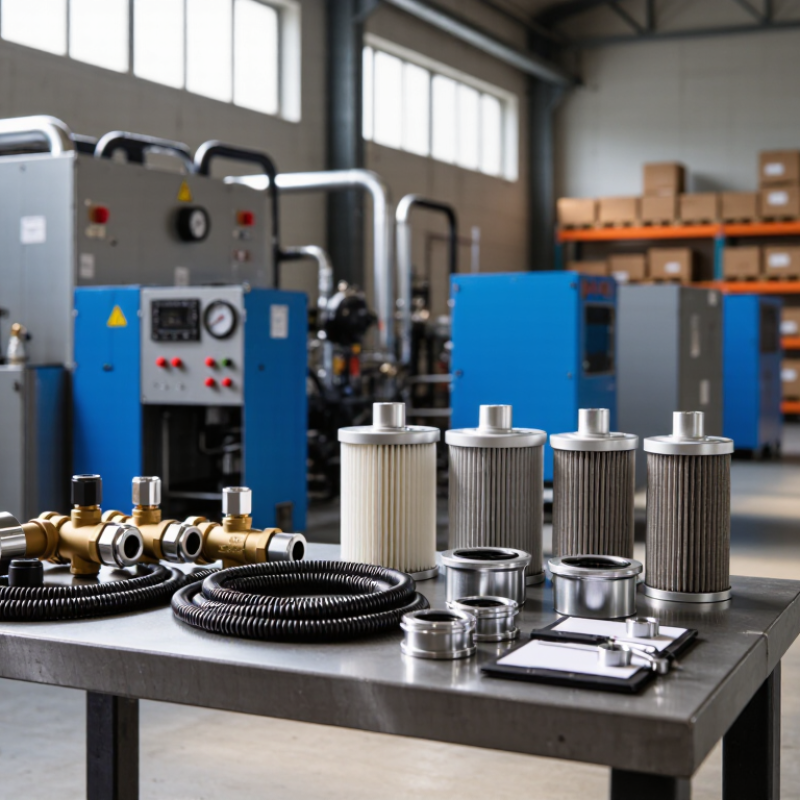
An air compressor spare parts supplier provides replacement components, technical matching, and maintenance support for compressed air equipment. Common items include air filters, oil separators, belts, valves, seals, sensors, drains, and service kits. A reliable supplier checks the compressor model, operating pressure, temperature, lubricant, and installation environment before recommending a part.
Real maintenance work is less tidy than a catalog suggests. A filter may fit physically but restrict airflow. A seal may survive briefly, then fail under heat. Good suppliers therefore provide material specifications, dimensional drawings, batch traceability, and compatibility records. They should also understand ISO 8573-1 air-quality classes and explain how each part affects pressure loss, contamination control, or energy use. Guessing is expensive.
The U.S. Department of Energy’s Improving Compressed Air System Performance sourcebook reports that leaks can waste 20–30% of compressor output in poorly maintained systems. Its guidance also shows that reducing leaks can improve system efficiency without buying a larger compressor. This makes spare parts selection an operating decision, not merely a purchasing task. In practice, a supplier should help inspect leak points, identify worn components, and keep critical seals and filters available. Some recommendations will be imperfect. Conditions change. A careful review after installation is still necessary.
An air compressor spare parts supplier provides replacement components that keep compressed-air equipment safe, stable, and serviceable. Their range usually begins with routine maintenance items. These include air filters, oil filters, separators, lubricants, gaskets, and drain valves. A filter may look simple, yet a blocked element can raise energy use and outlet temperature. Technicians often check operating hours, pressure readings, and oil condition before choosing replacements. Small details matter.
Suppliers also provide working and protection components. Common examples include intake valves, minimum-pressure valves, solenoid valves, pressure switches, temperature sensors, belts, couplings, and bearings. For screw compressors, separator vessels and rotor-related seals require accurate specifications. For piston units, users may need piston rings, valve plates, cylinder gaskets, and connecting-rod parts. Electrical items can include contactors, relays, fuses, and controller sensors. Compatibility depends on model, size, pressure, temperature, and material. A part that fits physically may still perform poorly.
Experienced suppliers usually review drawings, service records, and photographs before confirming an order. They should state dimensions, materials, shelf life, and testing information clearly. Certificates and traceable batch details improve purchasing confidence. In practice, communication is not always perfect. A rushed measurement can cause an expensive delay. Maintenance teams may overlook drain-valve threads or separator sealing surfaces. That mistake is easy to make. Asking for a complete parts list helps prevent repeat errors. Reliable support also includes installation guidance and realistic replacement intervals, rather than vague promises.
An air compressor spare parts supplier sources, verifies, and delivers replacement components for compressed air equipment. The process begins with accurate identification. Technicians record the compressor model, serial number, operating pressure, air quality, and service history. A photograph of the nameplate often prevents an expensive mistake.
After receiving the request, the supplier checks technical drawings, parts lists, and compatibility records. Critical items, such as oil separators, air filters, valves, seals, and control sensors, require closer review. The supplier then confirms stock, lead time, material specifications, and storage conditions. The U.S. Department of Energy’s Improving Compressed Air System Performance guide identifies leakage and poor maintenance as major efficiency losses. Its guidance commonly cites leakage rates near 20–30% of compressor output in poorly maintained systems. That figure makes correct replacement parts more than an inventory concern.
A reliable process includes inspection before dispatch. Staff verify dimensions, part numbers, packaging, and traceability records. Sensitive components should remain sealed and protected from dust and moisture. Delivery documents should match the quotation and the actual shipment. Installation feedback matters too. It can reveal repeated failures, incorrect settings, or unsuitable materials. The process is not flawless. A rushed order can still produce a compatible-looking part with the wrong pressure rating. For that reason, experienced suppliers ask technical questions instead of accepting incomplete descriptions. CAGI guidance also emphasizes system efficiency, maintenance, and correct component selection. Small details matter.
A reliable air compressor spare parts supplier does more than ship boxes. The supplier must understand how compressors work under heat, vibration, pressure, and continuous load. Experience matters when identifying a worn valve plate, damaged seal, or undersized filter. A knowledgeable supplier asks for the compressor model, operating pressure, service history, and installation conditions before recommending parts.
Clear technical evidence is another defining factor. Reliable suppliers provide accurate drawings, material details, dimensions, and compatibility information. They should explain whether a part is original, equivalent, or manufactured to a stated specification. Batch numbers and inspection records make products easier to trace. Practical quality checks may include seal inspection, dimensional measurement, and pressure testing. Small details matter.
Communication reveals professional reliability. A capable supplier gives realistic lead times, confirms stock, and reports changes quickly. They should also offer installation guidance without pretending to know every site condition. I have seen suppliers answer quickly but overlook thread sizes or temperature limits. That mistake can stop a machine and waste labor. Good suppliers accept questions, correct errors, and keep records of previous orders. Their packaging should protect delicate components from dust, moisture, and impact during transport.
Responsiveness matters.
Price alone is weak evidence. A cheaper seal that fails early may cost more through downtime, repeated labor, and emergency delivery. A dependable supplier supports inspection, replacement decisions, and maintenance planning with specific information rather than vague promises.
A reliable supplier is typically evaluated by parts quality, product compatibility, inventory availability, delivery performance, technical support, warranty coverage, and documentation. The chart uses a practical procurement weighting model, where a higher percentage indicates greater importance during supplier assessment.
Who Needs Air Compressor Spare Parts?
Air compressor spare parts are needed by more people than many plant managers expect. Manufacturing facilities rely on them to keep production air stable. Workshops need replacement filters, belts, valves, and seals for daily operations. Construction teams may require service kits when compressors work in dusty, demanding environments.
Maintenance technicians often purchase parts before a failure occurs. A worn air filter can increase energy use and reduce airflow. A damaged seal may cause pressure loss around a pipe connection. Small problems become expensive when ignored. I have seen a simple belt issue stop an entire shift. The repair was not technically difficult, but the delay affected several teams.
Spare parts suppliers also support rental companies, service contractors, and agricultural operations. These buyers need accurate dimensions, compatible materials, and clear installation guidance. Experienced suppliers should ask about compressor type, operating pressure, temperature, and working conditions. Part numbers alone are sometimes insufficient. Measurements can reveal an earlier replacement or an incorrect record.
Not every recommendation is perfect. Dust levels, lubricant choice, and maintenance habits can change part life significantly. Buyers should verify specifications with service manuals and trained technicians. Reliable suppliers provide traceable product information, inspection details, and responsive technical support. They should not pressure customers to replace usable components. Good advice protects equipment, workers, and production schedules.
| Audience or Industry | Why Spare Parts Are Needed | Common Spare Parts | Typical Replacement Trigger | Supplier Support Required | Maintenance Priority |
|---|---|---|---|---|---|
| Compressed-Air System Owners | To keep compressors available, safe, and capable of delivering the required pressure and flow. | Air filters, oil filters, separators, belts, hoses, gaskets, pressure switches, and drain valves. | Planned maintenance, visible wear, abnormal noise, pressure loss, or increased energy consumption. | Part identification by compressor model, technical compatibility checks, and maintenance guidance. | High |
| Manufacturing Plants | Production equipment may depend on a stable supply of compressed air for automation, tools, actuators, and process equipment. | Air-end service kits, separator elements, intake filters, control valves, solenoid valves, and cooling components. | Scheduled service intervals, production quality problems, pressure fluctuations, or unplanned downtime. | Fast order processing, accurate cross-reference information, and emergency replacement availability. | High |
| Automotive Workshops | Compressed air is commonly used for pneumatic tools, tire equipment, spray applications, and cleaning operations. | Regulator kits, lubricators, couplers, hoses, filters, drain components, and replacement belts. | Air leaks, reduced tool performance, water in air lines, or failure of pressure-control components. | Correct pressure ratings, suitable connection sizes, and parts compatible with workshop duty cycles. | High |
| Construction Contractors | Portable and stationary compressors support pneumatic breakers, nailers, drills, pumps, and other job-site tools. | Engine or motor service parts, intake filters, fuel filters, belts, hoses, couplings, and safety valves. | Dust exposure, transportation damage, heavy operating hours, overheating, or difficult starting. | Durable parts, portable-equipment compatibility, rapid delivery, and clear installation instructions. | High |
| Food and Beverage Facilities | Compressed air may contact products or packaging, so air quality and system cleanliness are important. | High-efficiency filters, condensate drains, seals, separator elements, and approved lubricant-related components. | Filter loading, moisture carryover, oil carryover, pressure drop, or sanitation-related maintenance requirements. | Material traceability, cleanliness documentation, correct filtration specifications, and contamination-control support. | High |
| Pharmaceutical and Laboratory Operations | Reliable and clean compressed air can be required for instrumentation, controlled processes, and equipment operation. | Sterile or high-efficiency filters, seals, valves, drains, pressure regulators, and monitoring components. | Filter differential-pressure limits, validation requirements, leakage, moisture, or control instability. | Technical documentation, material information, batch traceability, and support for quality procedures. | High |
| Hospitals and Healthcare Facilities | Medical air and instrument air systems require dependable operation and controlled air quality. | Coalescing filters, bacteria-removal filters, pressure regulators, alarms, valves, and condensate-management parts. | Alarm activation, pressure deviation, filter loading, leakage, or scheduled compliance testing. | Documented specifications, safety-focused replacement procedures, and dependable technical assistance. | High |
| Mining and Heavy Industry | Compressors often operate under demanding conditions involving dust, vibration, temperature changes, and long duty cycles. | Heavy-duty filters, separator elements, coolers, hoses, belts, bearings, valves, and service kits. | High contamination levels, vibration, overheating, oil degradation, or extended operating hours. | Rugged specifications, condition-based maintenance advice, inventory planning, and field-service support. | High |
| Water and Wastewater Facilities | Compressed air is used in aeration, pneumatic controls, valves, and sludge-handling processes. | Air filters, blower or compressor service kits, check valves, solenoid valves, pressure regulators, and seals. | Reduced aeration, moisture accumulation, pressure instability, or increased operating temperature. | Corrosion-resistant materials, correct flow requirements, and support for continuous-duty applications. | Medium to High |
| Original Equipment Builders | Equipment manufacturers integrate compressors or compressed-air systems into machinery and need repeatable component supply. | Custom seals, valves, filters, fittings, control components, mounting parts, and packaged service kits. | New equipment production, service-contract demand, design revisions, or component obsolescence. | Dimensional accuracy, drawings, sample approval, batch consistency, and reliable order scheduling. | Medium to High |
| Maintenance and Repair Service Providers | Service companies repair and maintain compressors for multiple end users and require a broad parts range. | Overhaul kits, seals, gaskets, bearings, filters, valves, sensors, belts, and electrical control parts. | Customer service calls, inspection findings, preventive-maintenance schedules, or equipment failure. | Wide product coverage, model cross-referencing, technical manuals, and dependable delivery times. | High |
| Equipment Rental Companies | Frequent equipment movement and high utilization can increase wear and the need for fast restoration. | Air filters, oil filters, belts, hoses, couplings, tires or wheels for portable units, and engine service parts. | Return inspections, operating-hour intervals, accidental damage, or preparation for the next rental. | Fast-moving inventory, durable replacement parts, clear identification, and standardized service kits. | High |
| Distributors and Industrial Resellers | They stock frequently requested components and supply parts to local industrial customers. | Filters, separators, belts, hoses, drains, valves, regulators, fittings, and maintenance kits. | Customer demand, minimum stock levels, seasonal projects, or supplier lead-time changes. | Consistent product quality, packaging details, stock information, and accurate product data. | Medium |
| Small Workshops and Commercial Users | They need affordable replacement parts to maintain basic compressors and pneumatic tools. | Air filters, oil filters, drain valves, pressure switches, hoses, couplers, and replacement belts. | Routine servicing, visible damage, air leakage, poor pressure recovery, or moisture in the receiver. | Simple ordering, compatibility confirmation, installation guidance, and reasonable minimum order quantities. | Routine |
Note: Replacement timing depends on compressor design, operating hours, ambient conditions, lubricant type, air quality requirements, and the maintenance instructions for the specific equipment.